• Skip to primary navigation
  • Skip to main content
  • Skip to primary sidebar

Carnegie Museum of Natural History

One of the Four Carnegie Museums of Pittsburgh

  • Visit
    • Buy Tickets
    • Visitor Information
    • Exhibitions
    • Events
    • Dining at the Museum
    • Celebrate at the Museum
    • Powdermill Nature Reserve
    • Event Venue Rental
  • Learn
    • Field Trips
    • Educator Information
    • Programs at the Museum
    • Bring the Museum to You
    • Guided Programs FAQ
    • Programs Online
    • Climate and Rural Systems Partnership
  • Research
    • Scientific Sections
    • Science Stories
    • Science Videos
    • Senior Science & Research Staff
    • Museum Library
    • Science Seminars
    • Scientific Publications
    • Specimen and Artifact Identification
  • About
    • Mission & Commitments
    • Directors Team
    • Museum History
  • Tickets
  • Give
  • Shop

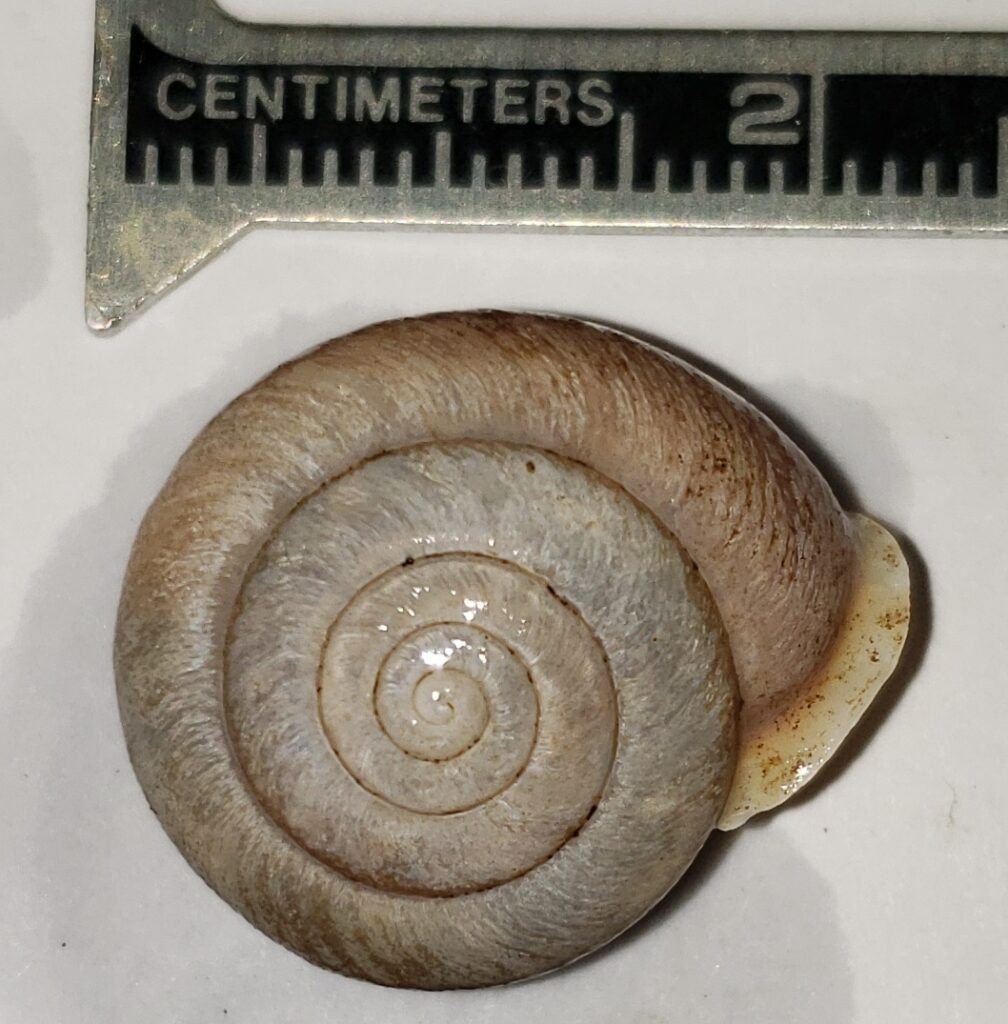
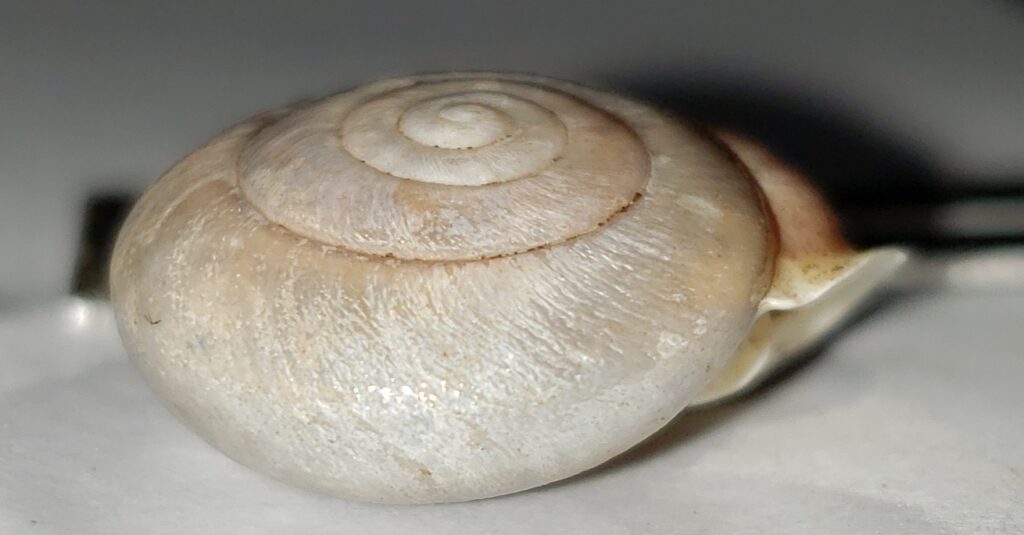
Xolotrema denotatum

Image Usage Information

  • Tina Marie Camp Scheff
  • CC BY-NC 4.0 DEED
  • Additional information about this specimen

Family: Polygyridae

Common name: Velvet Wedge

Discovery: Férussac, 1821

Identification

Width: 18-26 mm
Height: 10-14 mm
Whorls: 5+

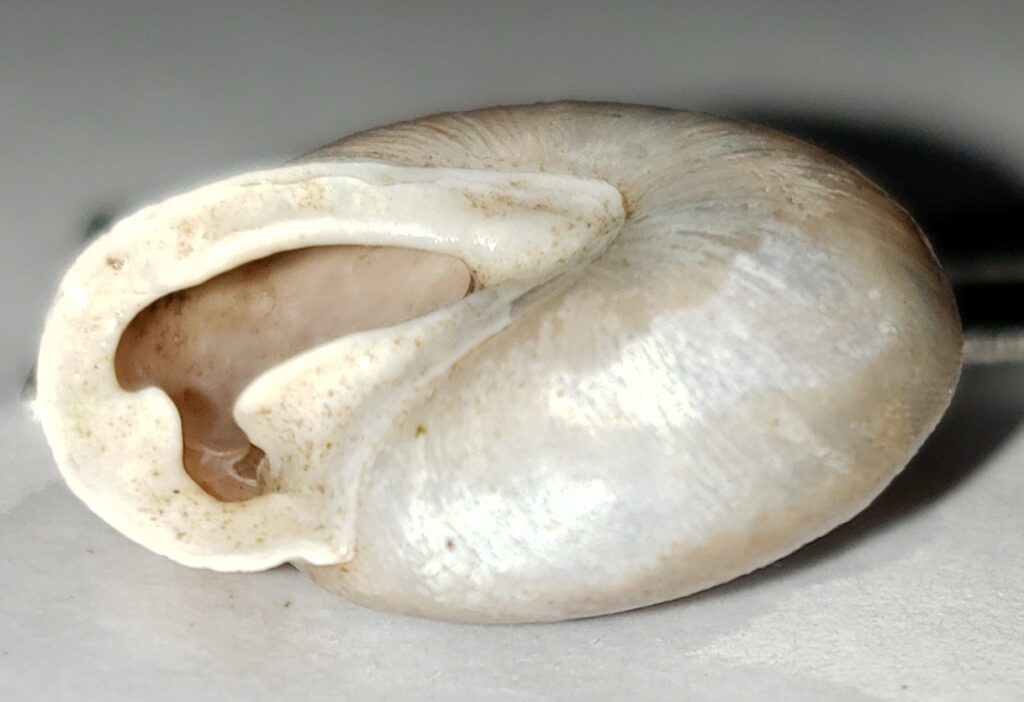
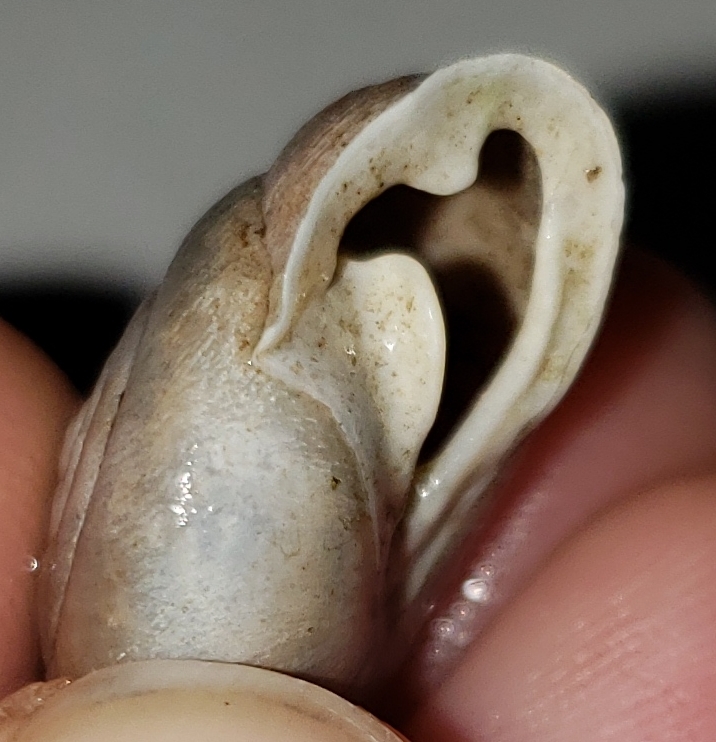
Xolotrema denotatum has an exceptional shell – large, dark, and fuzzy with a striking flared lip. The outer coat of its shell is covered with fine, hair-like processes, giving it a moleskin-like texture, and it is often draped with cobwebs that provide a sort of camouflage. Old shells lose this fine coating as it is part of the outer protein coat, or periostracum. The lip is concave and has elongate parietal and basal teeth, and a shorter, blunt palatal tooth. The umbilicus is usually closed and the animal itself is very dark-colored.

Ecology

This species is often found near or upon big logs and snags, sometimes on steep, damp slopes where large trees have fallen. It may also occasionally be found on floodplains (Hubricht, 1985).

Taxonomy

Synonyms for X. denotatum are Helix denotata, Triodopsis denotata, Triodopsis notata, and Xolotrema denotata.

Distribution

This animal lives in upland forests from Vermont, southeastern Canada, and Michigan, south to eastern Arkansas, northern Mississippi, and Alabama. In Virginia it is mainly in the western counties but is also reported from Fairfax County (Hubricht, 1985).

Conservation

NatureServe Global Rank: G5
NatureServe State Rank: S3S4

sidebar

About

  • Mission & Commitments
  • Directors Team
  • Museum History

Get Involved

  • Volunteer
  • Membership
  • Carnegie Discoverers
  • Donate
  • Employment
  • Events

Bring a Group

  • Groups of 10 or More
  • Birthday Parties at the Museum
  • Field Trips

Powdermill

  • Powdermill Nature Reserve
  • Powdermill Field Trips
  • Powdermill Staff
  • Research at Powdermill

More Information

  • Image Permission Requests
  • Science Stories
  • Accessibility
  • Shopping Cart
  • Contact
  • Visitor Policies
One of the Four Carnegie Museums | © Carnegie Institute | Privacy Policy | Terms of Use | Accessibility
Rad works here logo