• Skip to primary navigation
  • Skip to main content
  • Skip to primary sidebar

Carnegie Museum of Natural History

One of the Four Carnegie Museums of Pittsburgh

  • Visit
    • Buy Tickets
    • Visitor Information
    • Exhibitions
    • Events
    • Dining at the Museum
    • Celebrate at the Museum
    • Powdermill Nature Reserve
    • Event Venue Rental
  • Learn
    • Field Trips
    • Educator Information
    • Programs at the Museum
    • Bring the Museum to You
    • Guided Programs FAQ
    • Programs Online
    • Climate and Rural Systems Partnership
  • Research
    • Scientific Sections
    • Science Stories
    • Science Videos
    • Senior Science & Research Staff
    • Museum Library
    • Science Seminars
    • Scientific Publications
    • Specimen and Artifact Identification
  • About
    • Mission & Commitments
    • Directors Team
    • Museum History
  • Tickets
  • Give
  • Shop

Star Wars

May 3, 2019 by wpengine

Is Jabba the Hutt a Slug?

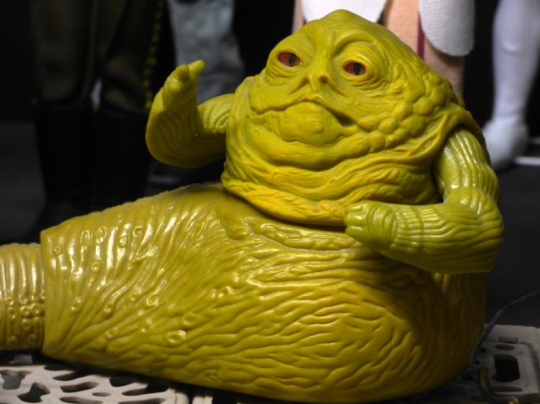
Jabba the Hutt action figure
Image credit: Tomasz Mikołajczyk from Pixabay.

The movie Star Wars introduced us to Jabba the Hutt, with a slug-like body form. In the movie, he was an unsavory character and notorious Crime Lord with a fondness for Princess Leia.

Was Jabba the Hutt a real slug, or did he just look like one? In biology, we know that creatures can look similar either by descent or convergence. Two individuals that look similar by descent implies that their past common ancestor also looked similar. An example of similarity by descent is crows and canaries, that fly and look similar because their common ancestor could fly and looked similar. On the other hand, two individuals that look similar by convergence implies that their past common ancestor looked different, but they acquired their similar features independently. An example of similarity by convergence is birds and bats, that both fly and have wings, but their common ancestor did not fly or have wings.

It is easy to notice that Jabba the Hutt has a body shape like a slug, but I also noticed that he has features of other groups of creatures, for example, he has arms with fingers, as many tetrapod vertebrate animals have.
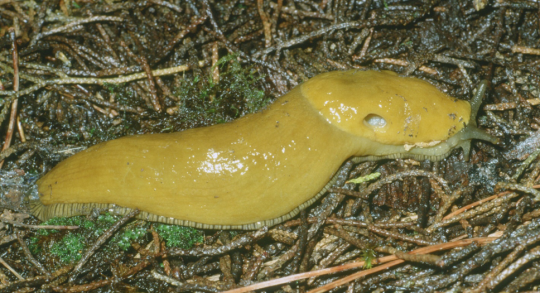
California banana slug (Ariolimax cf californicus), photo by Tim Pearce.

To evaluate whether Jabba the Hutt is slug-like because he is a real slug by descent or due to convergence, let’s compare Jabba the Hutt’s features with those of slugs and tetrapod vertebrates.

Table comparing 10 features of Jabba the Hutt to those of slugs and Tetrapoda
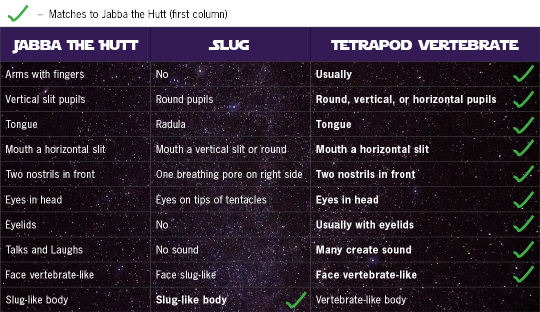
table comparing Jabba the Hutt to slugs vs. tetrapod vertebrates

The table shows that Jabba the Hutt’s features match those of Tetrapoda in 9 out of 10 features (checked off in the table), suggesting he belongs to Tetrapoda vertebrates.

I conclude that Jabba the Hutt was not a slug.

I note that one can find suggestions on the internet that Jabba the Hutt had a skeleton, which is further support for my conclusion that he was not a slug.

Finally, I want to note that slugs can be very nice creatures. Comparing the villainous Jabba to a slug is disrespectful to slugs.

Timothy A. Pearce, PhD, is the head of the mollusks section at Carnegie Museum of Natural History. Museum employees are encouraged to blog about their unique experiences and knowledge gained from working at the museum.
Filed Under: Blog Tagged With: mollusks, Section of Mollusks, Star Wars, Tim Pearce

July 30, 2018 by wpengine

We are one with the force; the force is with science!

By Breann Thompson

In a galaxy far, far away…is life really all that different?  Campers at Carnegie Museum of Natural History have the opportunity to answer that very question this summer!

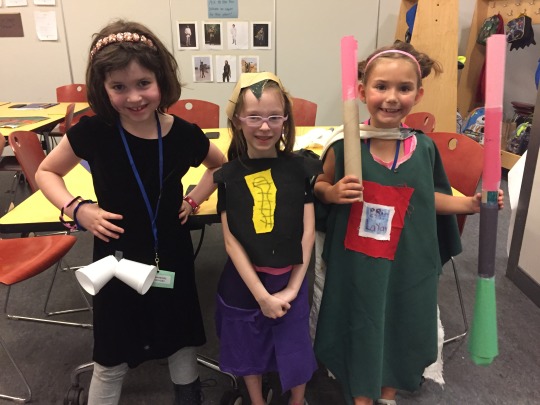
Star Warriors campers

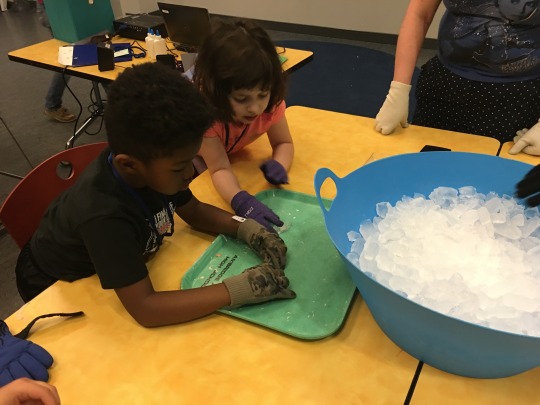
One recent class of padawans was tasked with selecting a new home planet for the Rebel Alliance—and you can’t choose the best location for a rebel base without a deep understanding of biomes and the types of life that thrive in each!  With that in mind, we travelled the galaxy, and the museum, to devise a plan.  Exploration of Walton Hall of Ancient Egypt helped uncover the landscape of Tatooine.  We imagine that Dagobah wildlife would have much in common with the ancient Pennsylvanian Coal Forests on display in Benedum Hall of Geology.  We even tried our hand at building ice houses, inspired by Inuit culture in Polar World, to test our survival skills on the frigid planet of Hoth.

Star Warriors campers

For now, we’ve been tasked with guarding the base’s location, but I have faith our budding Jedi are responsibly wielding the light side of the force.

The quest for knowledge continues—and you can join in!  The 2018 camp season runs through August 24, and there are chances to join in us in nature exploration throughout the year.

Breann Thompson works in the Education department of Carnegie Museum of Natural History. Museum employees are encouraged to blog about their unique experiences and knowledge gained from working at the museum.

Filed Under: Blog Tagged With: Benedum Hall of Geology, Star Wars, Summer camps, Walton Hall of Ancient Egypt

sidebar

About

  • Mission & Commitments
  • Directors Team
  • Museum History

Get Involved

  • Volunteer
  • Membership
  • Carnegie Discoverers
  • Donate
  • Employment
  • Events

Bring a Group

  • Groups of 10 or More
  • Birthday Parties at the Museum
  • Field Trips

Powdermill

  • Powdermill Nature Reserve
  • Powdermill Field Trips
  • Powdermill Staff
  • Research at Powdermill

More Information

  • Image Permission Requests
  • Science Stories
  • Accessibility
  • Shopping Cart
  • Contact
  • Visitor Policies
One of the Four Carnegie Museums | © Carnegie Institute | Privacy Policy | Terms of Use | Accessibility
Rad works here logo