by Tim Pearce
Most people have heard of 6 to 10 of the 30 modern animal phyla. (A phylum is a major group of animals). In fact, most of us have (intentionally) eaten at least 3 phyla: Chordata (including vertebrates), Arthropoda (including shrimp), and Mollusca (including clams and snails). The adventurous among us might have (intentionally) eaten three additional phyla: Annelida (including earthworms), Cnidaria (including jellyfish), and Echinodermata (including sea urchin [as roe] and sea cucumbers). Beyond those 6 phyla, some of us might have heard of parasitic or pest organisms such as Nematoda (round worms) and Platyhelminthes (flat worms), or other interesting phyla such as Porifera (sponges) and Tardigrada (water bears), but most phyla are unknown to most people.
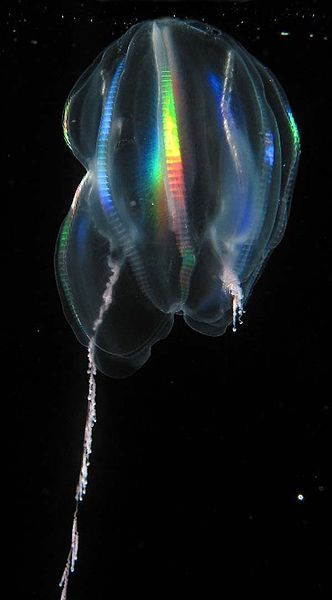
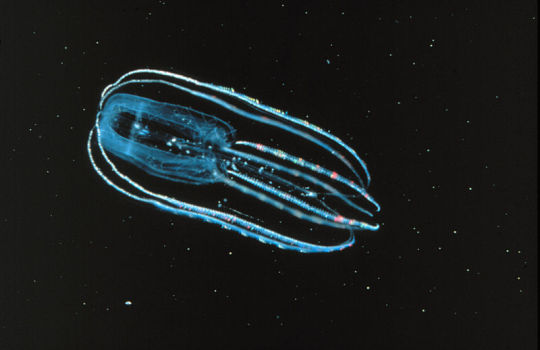
Behold the phylum Ctenophora or comb jellies, which live in ocean water around the world. Their jelly bodies somewhat resemble jellyfish but ctenophores lack stinging cells. They have 8 rows of cilia that look like combs, hence the name (ctene means comb and phora means bearing). Their two longer, retractable tentacles are fringed with smaller tentacles covered with sticky cells that capture prey. Ctenophores range in size from as small as a millimeter (1/25 inch), through the 1-3 cm (0.6-1.25 inch) typical ovoid forms, to the 1.5 meter (5 foot) long belt-like forms known as the Venus girdle.
The “C” in ctenophore is silent, so when pronounced, the name sounds like 10 oh 4, which in the United States date system corresponds to October 4th. Consequently, October 4th is Ctenophore Day!
How to celebrate? Tasty fare could include gooseberries and walnuts, given that common names for ctenophores include sea gooseberry and sea walnut. Kiwi fruits are known as Chinese gooseberries (even though they are neither from China nor are they gooseberries), and they are in season in North America in October, so you could enjoy some kiwi fruit this Ctenophore Day!
Timothy A. Pearce, PhD, is the head of the mollusks section at Carnegie Museum of Natural History. Museum employees are encouraged to blog about their unique experiences and knowledge gained from working at the museum.
