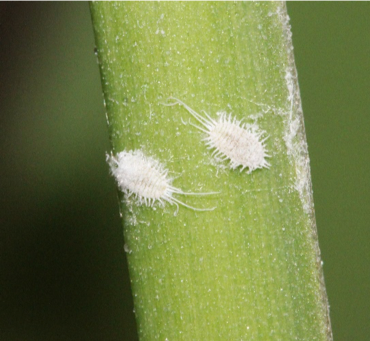
The Marsh Machine at Powdermill is great for recycling the nature center’s wastewater. It’s also great for building up huge populations of pests, such as aphids, scales, and mealy bugs (Picture 1). These plant-feeding insects thrive in the warm greenhouse environment, free from the natural predators they would encounter in an outdoor setting.
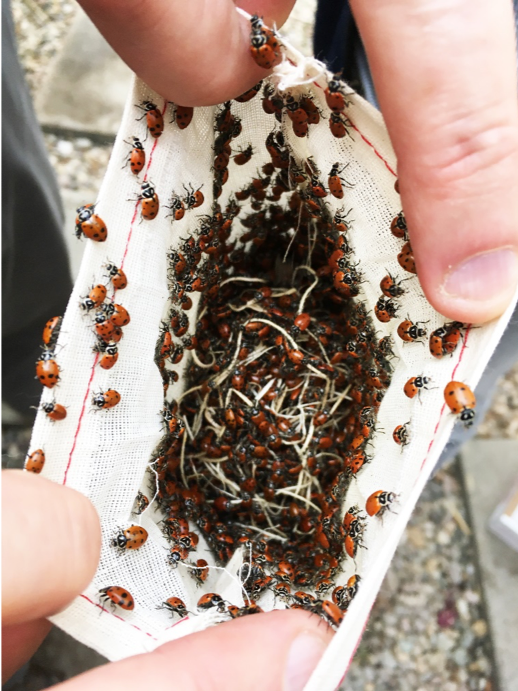
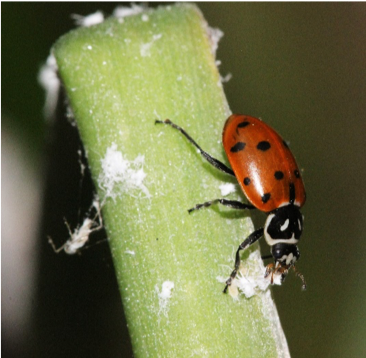
So what would be the logical solution to combatting these pests, which are highly destructive to the Marsh Machine plants that are working so hard to treat our wastewater? Bring the predators in, of course! The convergent ladybug (Hippodamia convergens), is a native predatory beetle that prefers just the types of insects that infest the Marsh Machine. We purchased 4,000 of these ladybugs (Picture 2) and have just released them into our greenhouse. The voracious predators immediately began their search and started feasting on a buffet of teeny bugs (Picture 3).
According to our ladybug vendor, each adult ladybug can consume about 5,000 aphids in its lifetime! The adult females lay about 10-15 eggs a day, and the larvae that hatch out consume 50-60 aphids per day. At this rate, we anticipate our infestation will be under control in no time!
Note: While releasing ladybugs is an effective way to control greenhouse pests, releasing them outdoors generally results in the ladybugs flying away from the intended target, so keep this in mind when considering pest control options in your own backyard. Other options include eliminating the use of pesticides, which also kill the beneficial predators (and pollinators), and gardening with native plants, which are adapted to defend against native pests.
Andrea Kautz is a Research Entomologist at Carnegie Museum of Natural History’s Powdermill Nature Reserve. Museum employees are encouraged to blog about their unique experiences and knowledge gained from working at the museum.
