By Erin Peters
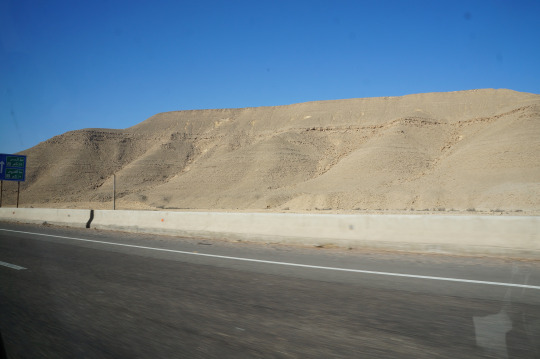
Today I travel for the first time to the famous city established by the emperor Hadrian in Middle Egypt, now next to the small modern village of Sheikh Abada. After meeting the car to drive to the site, we pull into familiar and infamous grid-lock Cairo traffic—it is a quick jolt to returning to Egypt after a period of three years away. The cars and mini-buses with all their decorations look the same, and the horns and shouts in Arabic sound the same and remind me of past visits to the lively city where I spent time in 2011 and 2013. During this trip, however, the aim is to get directly to the site, so after making it through the road block, we emerge on the comparatively quiet desert road for the four-and-a-half-hour drive south.
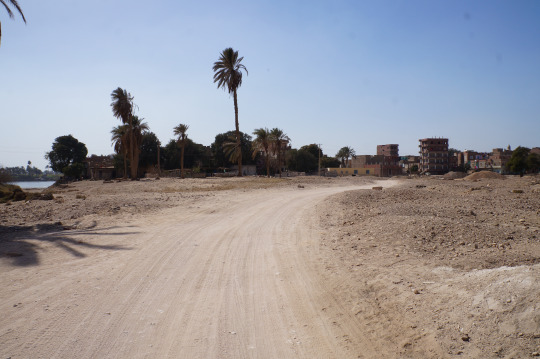
Sheikh Abada is located on the east bank of the Nile River and forms the modern Nile edge of a huge archaeological site you can see sprawling to the east (right) of the strip of buildings at the Nile.
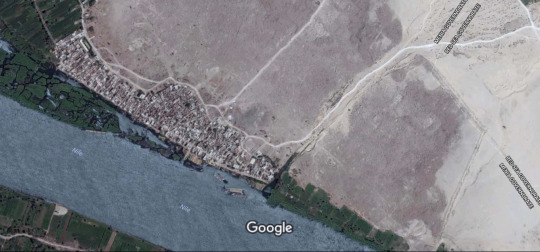
The village is home to approximately seven major families who are primarily farmers. The other main industry of the village is unfortunately the illegal selling of antiquities land for domestic and agricultural reclamation and modern tomb plots. The illegal encroachment of the village makes the mission’s excavation and documentation of the ancient lives of this once resplendent city all the more important.
Much about this site is new to me because my past field work was very different. In addition to consulting museum collections in Cairo and Alexandria, I completed three rounds of independent spatial analysis at temple complexes in upper Egypt from 2011–2014, many of which are major tourist sites. Additionally, a number of these complexes have been removed from their original context because of the 1960s UNESCO Campaign to Save the Monuments of Nubia due to the building of the Aswan High Dam, like the temple complex on the island of Philae.
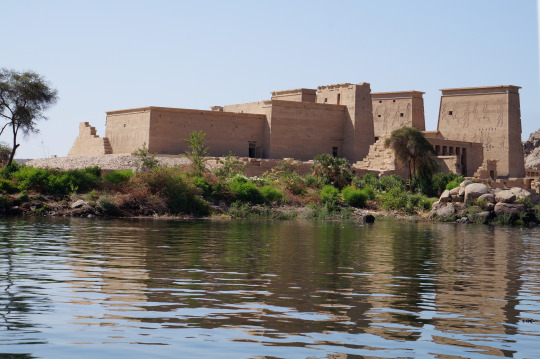
The temple complex originally at Philae (and now relocated to a nearby island) is one of the primary sites I research because it was added to after Egypt was annexed as a Roman province in 30 BCE by the first Roman
emperor Augustus. The main “Egyptian” temple of Isis (with its soaring pylons) was carved with relief decoration depicting Augustus as pharaoh and is one of many temples that ushered in a long tradition in which the Roman emperors took on the role of Egyptian pharaoh.
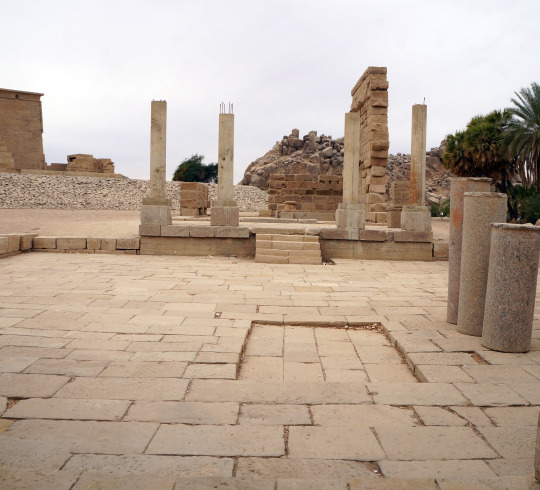
Fascinatingly, at the same complex, a temple to the imperial cult that looks like a “Roman” podium temple was also built under Augustus. My research uses the archaeological method of spatial analysis to demonstrate that
the two seemingly different monuments communicate spatially, combining what we want to separate into different cultures into one functioning sacred landscape.
I was invited to Antinoupolis in part because we have the same thing at Hadrian’s famous city in Egypt. I’m thrilled to get a sense of the site and current work in the ancient city and modern village by joining a large
international team this season.
Erin Peters is an assistant curator of science and research at Carnegie Museum of Natural History and is currently in Egypt for an archaeological research study. This blog is part of a series of blog posts she has written while in the field. Check back for more!