• Skip to primary navigation
  • Skip to main content
  • Skip to primary sidebar

Carnegie Museum of Natural History

One of the Four Carnegie Museums of Pittsburgh

  • Visit
    • Buy Tickets
    • Visitor Information
    • Exhibitions
    • Events
    • Dining at the Museum
    • Celebrate at the Museum
    • Powdermill Nature Reserve
    • Event Venue Rental
  • Learn
    • Field Trips
    • Educator Information
    • Programs at the Museum
    • Bring the Museum to You
    • Guided Programs FAQ
    • Programs Online
    • Climate and Rural Systems Partnership
  • Research
    • Scientific Sections
    • Science Stories
    • Science Videos
    • Senior Science & Research Staff
    • Museum Library
    • Science Seminars
    • Scientific Publications
    • Specimen and Artifact Identification
  • About
    • Mission & Commitments
    • Directors Team
    • Museum History
  • Tickets
  • Give
  • Shop

Bard Birds

By Pat McShea

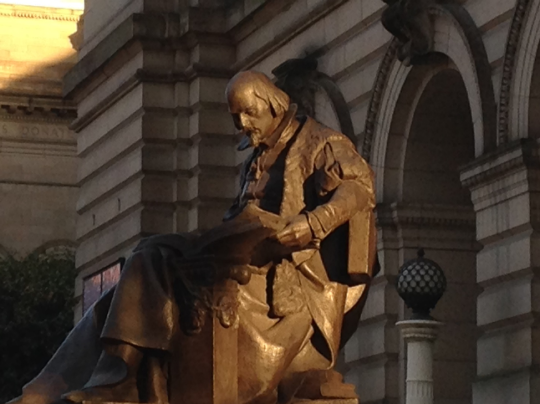
Statue of William Shakespeare along Forbes Avenue entrance to Carnegie Music Hall

Visitors to We Are Nature are challenged to make connections between short-sighted human actions and a range of persistent wide-ranging negative impacts.

If the displays profiling the unintended consequences of such practices create interest in an example with literary connections, the William Shakespeare statue outside the museum building and a Common Starling taxidermy mount within the exhibit provide requisite props.
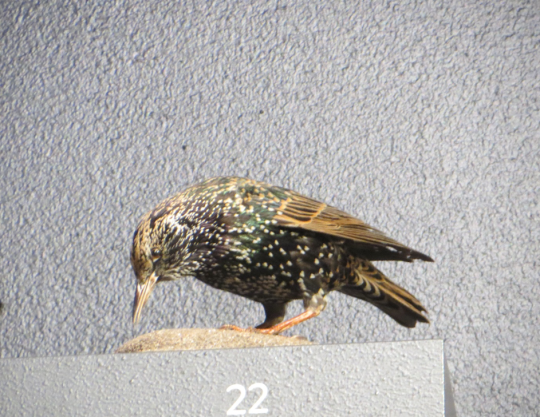
Common Starling on display

The Common Starling, also known as the European Starling, is number 22 in a wall-mounted array of 33 creatures whose assemblage celebrates the diversity of wildlife found in Pittsburgh.

Unlike most of its display neighbors, however, the starling is not native to North America. The species was deliberately introduced to the continent, beginning in New York City’s Central Park, during the 1890s through the efforts of the American Acclimatization Society. Members of this group attempted to introduce every bird mentioned, more than two centuries earlier, in the works of William Shakespeare. The starling was their only “success.”

The species’ population in territory ranging from Alaska to Mexico is now measured in hundreds of millions, and starlings, which frequently congregate in enormous flocks, are considered agricultural pests and airport navigation hazards.

Ironically, although Shakespeare’s works frequently mention nightingales and several other bird species, starlings are only mentioned once, in the play Henry IV Part I.

Patrick McShea works in the Education and Visitor Experience department of Carnegie Museum of Natural History. Museum employees are encouraged to blog about their unique experiences and knowledge gained from working at the museum.

sidebar

About

  • Mission & Commitments
  • Directors Team
  • Museum History

Get Involved

  • Volunteer
  • Membership
  • Carnegie Discoverers
  • Donate
  • Employment
  • Events

Bring a Group

  • Groups of 10 or More
  • Birthday Parties at the Museum
  • Field Trips

Powdermill

  • Powdermill Nature Reserve
  • Powdermill Field Trips
  • Powdermill Staff
  • Research at Powdermill

More Information

  • Image Permission Requests
  • Science Stories
  • Accessibility
  • Shopping Cart
  • Contact
  • Visitor Policies
One of the Four Carnegie Museums | © Carnegie Institute | Privacy Policy | Terms of Use | Accessibility
Rad works here logo