Studying anatomical details on taxidermy mounts can enhance field observations of wildlife. A common loon in the museum’s Discovery Basecamp, offers a great example of this benefit.
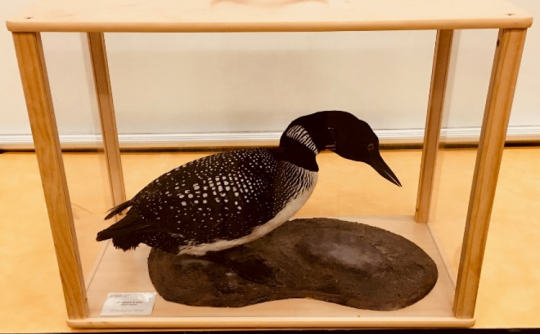
Within an acrylic-sided display box, the nearly two-foot long stuffed bird rests on a tiny simulated mud island, as if the spear-billed creature just waddled from the water on its large and widely-spaced webbed feet.
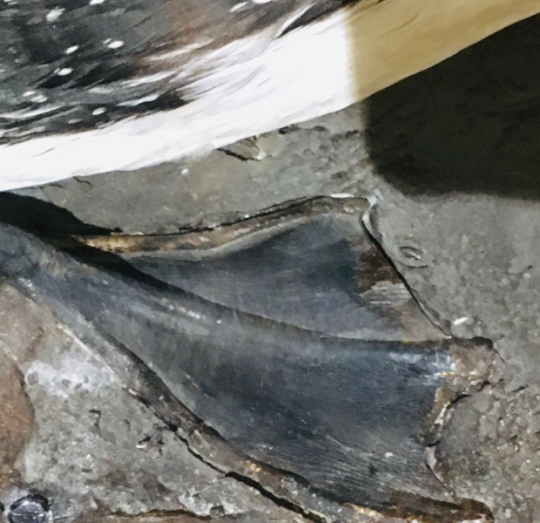
Common loons don’t do much waddling from the water in western Pennsylvania. That behavior occurs much farther north where the species’ summer range includes much of Canada and a northerly strip of the US stretching eastward from the upper Great Lakes to New England. Here the fish-eating birds push themselves from the waters of their home lakes mostly to reach immediately adjacent nests.
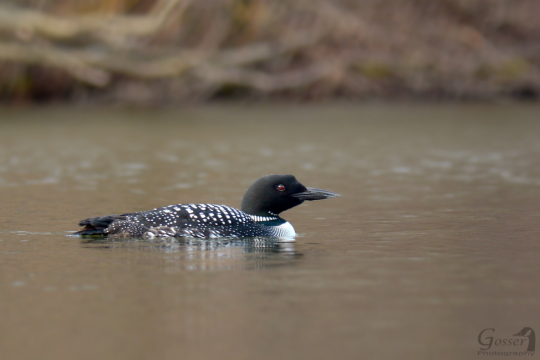
Photo by Steve Gosser.
Loons do make seasonal appearances on Pittsburgh area waters during migration rest stops, however. Although their big feet aren’t visible to shore-bound observers during these visits, it’s the hidden actions of the flexible spatula-sized paddles, that makes loon watching such a challenging endeavor.
Just when you bring a resting loon into binocular focus, the bird can disappear in a minute-long feeding dive and reappear, in an unpredictable direction, many yards from its original location.
The bird’s unseen propulsion is well explained in a 2012 post in Maine Birds, a blog by Colby College biology professor Herb Wilson.
When a loon is first diving from the surface, it breaks the surface by alternating strokes with the left and right leg. Once underwater, the legs beat synchronously.
The lateral placement of the legs makes for hydrodynamic efficiency. If the legs were close together, the turbulent eddies created by one leg would interfere with smooth movement through the water of the other leg. The lateral arrangement allows a loon to generate maximum thrust while minimizing hydrodynamic drag.
The feet of loons are large and webbed. The real power in swimming is generated by the rearward movement of those webbed feet against the water. When the loon moves its feet forward during the recovery stroke, the toes are brought together causing the web to collapse and minimizing the effort needed to get the foot ready for the next power stroke.
Spring appearances of migrating loons in western Pennsylvania normally occur between mid-March and early May. Forty miles north of Pittsburgh, common loons are known to visit the deep water sections of Lake Arthur in Moraine State Park.
Patrick McShea works in the Education and Visitor Experience department of Carnegie Museum of Natural History. Museum employees are encouraged to blog about their unique experiences and knowledge gained from working at the museum.
