With winter approaching, visitors to Powdermill Nature Reserve can anticipate seeing the tracks in the snow of one of our most splendid residents, the bobcat! These wild felines do not hibernate, rather they remain very active in winter because of their high metabolism. Although they are commonly photographed on trail cameras at Powdermill Nature Reserve, bobcats have excellent vision and hearing and are unlikely to show themselves to people. The stealthy and efficient predators are found state-wide, and the range for the species known scientifically as Lynx rufus stretches across the North American continent from southern Canada to northern Mexico.
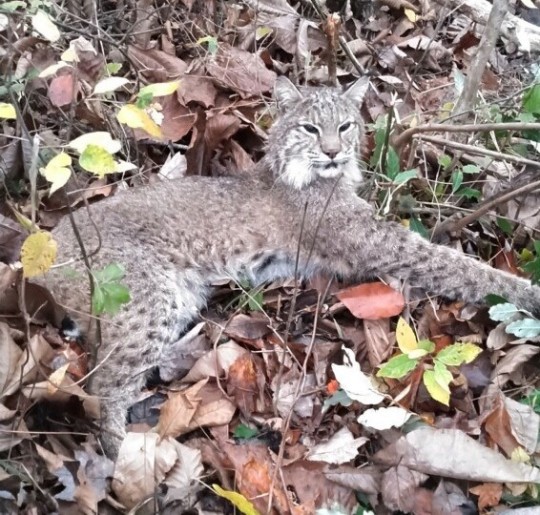
Bobcats are known to walk on top of fallen logs to move silently through the understory. Adults weigh up to 20 pounds, feed mostly on rodents and birds, but are capable of taking small fawns and perhaps even yearling deer. Bobcats are highly adaptable and do well even in close proximity to humans and coyotes. In our area, males wander over areas as large as 10 square miles, territories that span the smaller territories of several females. Bobcats are protected except for a brief trapping season in winter. Their coats are highly variable, and pelts are considered prime in winter, and more valuable when spotted. The highest quality, large pelts from the Rocky Mountains may sell for as much as $900. However, luckily for our cats, the market here is unlikely to provide $40 for a pelt, which will keep them safe from most trappers.
John Wenzel is the Director at Powdermill Nature Reserve, Carnegie Museum of Natural History’s environmental research center. Museum employees are encouraged to blog about their unique experiences and knowledge gained from working at the museum.
Related Content
The Christmas Bird Count During an Irruption Year
