• Skip to primary navigation
  • Skip to main content
  • Skip to primary sidebar

Carnegie Museum of Natural History

One of the Four Carnegie Museums of Pittsburgh

  • Visit
    • Buy Tickets
    • Visitor Information
    • Exhibitions
    • Events
    • Dining at the Museum
    • Celebrate at the Museum
    • Powdermill Nature Reserve
    • Event Venue Rental
    • Gift Cards
  • Learn
    • Field Trips
    • Educator Information
    • Programs at the Museum
    • Bring the Museum to You
    • Guided Programs FAQ
    • Programs Online
    • Climate and Rural Systems Partnership
  • Research
    • Scientific Sections
    • Science Stories
    • Science Videos
    • Senior Science & Research Staff
    • Museum Library
    • Science Seminars
    • Scientific Publications
    • Specimen and Artifact Identification
  • About
    • Mission & Commitments
    • Directors Team
    • Museum History
  • Tickets
  • Give
  • Shop

Broken Egg Evidence

Challenges involving eggs aren’t limited to the Easter season. The pictures below are of songbird egg shells I came across in early July of 2018. Each fragment hints at a different outcome for the developing bird that once occupied the structure. My speculation about those outcomes is mainly informed by details about the places where the shells were found, critical information not captured in the photographs.
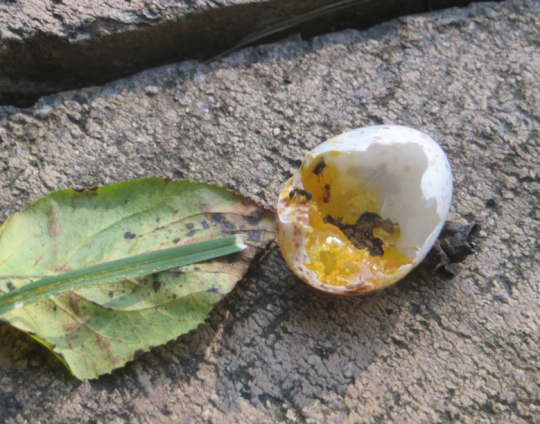
broken egg on the ground

This northern cardinal egg shell fragment rested on a brick sidewalk near a forsythia bush where a pair of the birds had been observed nesting. Blue jays frequented the area, as did eastern chipmunks. Either could have removed an egg from the nest, broken the shell, eaten much of the contents, and left drying yolk for ants to scavenge.
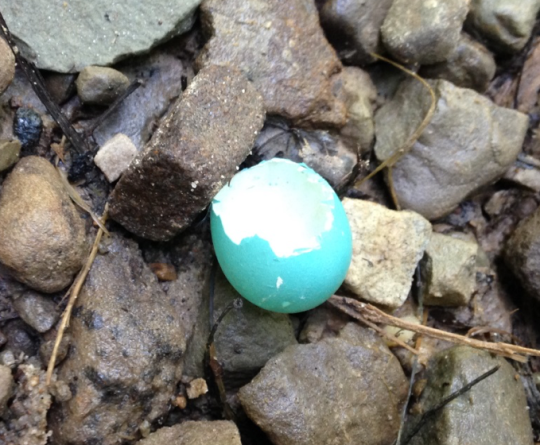
broken blue egg among rocks

It’s likely this wood thrush egg fragment was deliberately dropped by a parent bird as part of routine post-hatch nest-keeping duties. The blue shell rested on a gravel State Game Lands road inMercer County, a place that echoed with flute-like Wood Thrush song. The fragment’s spotless interior was evidence that this egg had almost certainly been opened by its occupant rather than a nest visitor.

Patrick McShea works in the Education and Visitor Experience department of Carnegie Museum of Natural History. Museum employees are encouraged to blog about their unique experiences and knowledge gained from working at the museum.

sidebar

About

  • Mission & Commitments
  • Directors Team
  • Museum History

Get Involved

  • Volunteer
  • Membership
  • Carnegie Discoverers
  • Donate
  • Employment
  • Events

Bring a Group

  • Groups of 10 or More
  • Birthday Parties at the Museum
  • Field Trips

Powdermill

  • Powdermill Nature Reserve
  • Powdermill Field Trips
  • Powdermill Staff
  • Research at Powdermill

More Information

  • Image Permission Requests
  • Science Stories
  • Accessibility
  • Shopping Cart
  • Contact
  • Visitor Policies
One of the Four Carnegie Museums | © Carnegie Institute | Privacy Policy | Terms of Use | Accessibility
Rad works here logo