At one point in the long history of Invertebrate Zoology, we went by the name “Section of Insects & Spiders.” It may be surprising to some readers, but spiders aren’t actually insects. Insects and Arachnids (spiders and their kin) are two very distinct groups of animals that make up part of the mega-diverse lineage of organisms known as the Arthropods (phylum Arthropoda; which also includes the crustaceans (crabs, shrimps, and lobsters, etc.) and myriapods (centipedes and millipedes).
Arthropods are characterized by having segmented bodies, the presence of an exoskeleton, bilateral symmetry, and paired jointed appendages. Within this phylum, the classes Insecta and Arachnida vary in several key ways. Arachnids have a fused head and thorax (called a cephalothorax) with a separate abdomen, while insects have three distinct regions: a head, thorax, and abdomen, typically unfused. Additionally, insects have 6 legs, while spiders have 8.
Within arachnids, there are several orders, including Araneae (spiders), Acari (mites & ticks), Opiliones (Harvestmen/“Daddy Long Legs”), Scorpionida (scorpions), Solifugae (camel or sun spiders), and others. Spiders comprise the majority of the order Araneae and includes the tarantulas.
Historically, spiders have been treated differently from most of the insects housed here in IZ. As largely a section of entomology, the main focus has been on class Insecta, while still building on donated arachnid materials where applicable.
In early 2019, I was tasked with bringing the arachnid holdings together and began databasing its contents. This was part of a larger digitization initiative pioneered in IZ as well as many museum collections world-wide. As with many soft-bodied organisms, we store our spider specimens in alcohol (80% ethanol), as shown in Figure 1.
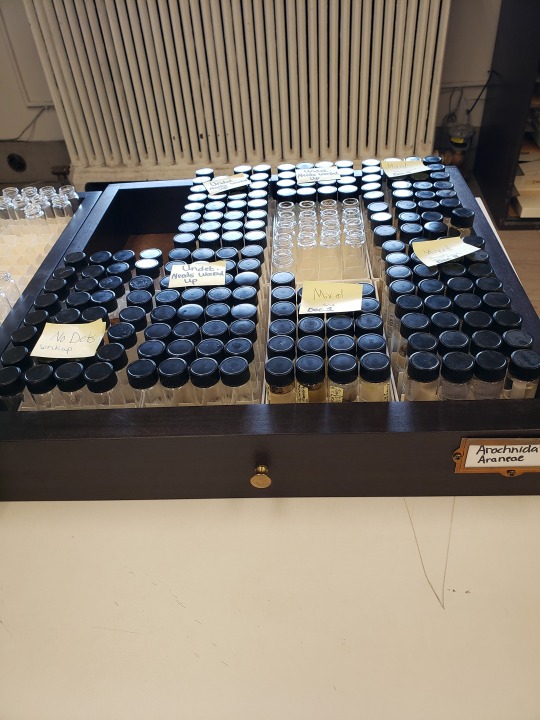
Figure 1. A standard alcohol drawer, containing arachnid specimens in 6 dram vials.
I began by bringing determined material together taxonomically. Determined materials are those that an expert has identified to the genus and/or species level. I can then catalogue that information into a database so that the holdings here can be shared electronically to other arachnologists around the globe.
Currently, we have over 900 spiders databased of the estimated 2700+ arachnids in our collection. Most of our spiders are from field expeditions to the Dominican Republic, from a large donated collection from Brazil, and from a former curator’s backyard in Gibsonia, PA.
We plan to move on to other arachnid groups in the future, and ultimately hope to have our specimens completely digitized and available for loans to the scientific community.
I’d like to give a special thank you to two of our wonderful volunteers, J. Murphy and A. Bianco. Their dedication and hard work have allowed this project to really blossom and our “web” of arachnid lovers to grow ever larger.
Catherine Giles is the Curatorial Assistant of Invertebrate Zoology at the Carnegie Museum of Natural History. Museum employees are encouraged to blog about their unique experiences working at the museum.
