When most people think of camouflage occurring in nature, they think of exotic frogs blending into vivid plants and jaguars’ spots helping them melt into the shadows. However, did you know that there are lots of examples of camouflage you can find in your backyard or a park? Here are some fun examples I have personally found in nature, and I hope you can find some, too!
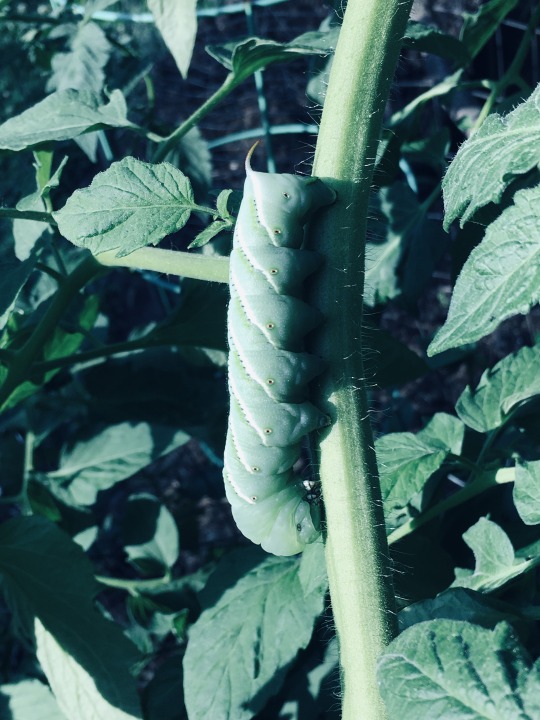
An impressive example of camouflage is the tobacco hornworm (Manduca sexta)! Unless you are looking carefully, tobacco hornworms will blend right in with your tomato plant. These caterpillars are viewed by gardeners as pesky tomato munchers, but they have AMAZING camouflage! Tobacco hornworms, which can be four to five inches long, are the same shade of green as a tomato plant. Tobacco hornworms also have white stripes to help break up their outline, almost appearing like a part of the tomato stalk. Sometimes their camouflage doesn’t always work. In one of the photos, the caterpillar has parasitic wasp larvae on it! The wasps naturally control tobacco hornworm populations by using a few unlucky caterpillars as both nursery and food source for their young. I thought this method of predation was really neat!

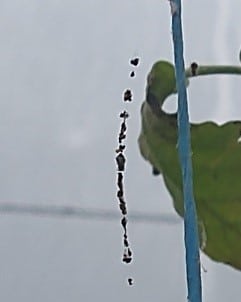
Noteworthy camouflage often goes unnoticed! Everyone knows of spiders, but do you know about the group known as trashline orbweavers (Cyclosa sp.)? A trashline orbweaver will arrange desiccated insect carcasses in a line on their orb web and then sit among them, waiting for the next victim. To the average pair of eyes, the spider’s “trash” will not look any different from the spider itself, so both predators and prey of the spider will not be able to find the concealed hunter. Trashline webs are actually very common; I’ve found more than 15 in my garden, and so far have not been able to find the actual spider. My garden and especially tomato plants are full of them!
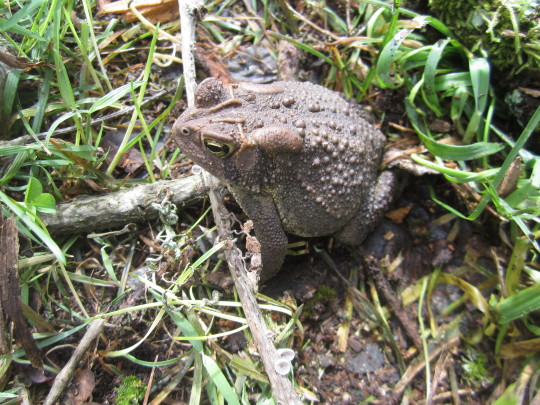
One of the most impressively camouflaged creatures is the common toad (Bufo sp.). If a toad is not moving, it can be one of the hardest creatures to spot. Walking through my garden, I have had many experiences of only noticing a toad when it suddenly jumps away from my approach. The toad might have been just as startled as I! Toads are often found in the woods, on grass, or perhaps in a garden tucked under some soil. Toads come in many colors, sizes, and shapes, with those I’ve noticed typically being gray with speckled spots. It’s hard to beat a toad’s camouflage.
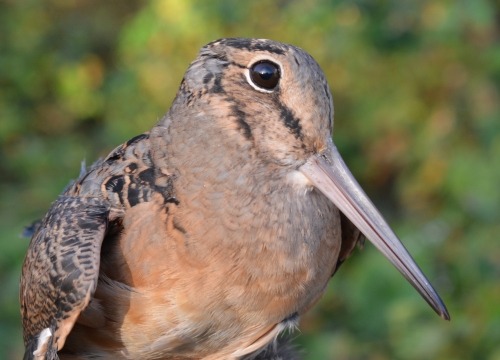
The American Woodcock (Scolopax minor) is a bird with various shades of brown, white, and beige to blend into thickets and woods. They blend into grass thickets so well that my father almost stepped on one on the ground! Woodcocks are an interesting bird because they have a long beak to help probe for worms. A fun fact about woodcocks is that they do a strange but cute dance to help bring worms to the surface. If you are interested about learning more about woodcocks, I recommend watching their dance on YouTube.
Make sure to look carefully on your tomato plants for tobacco hornworms and a very similar caterpillar known appropriately as the tomato hornworm. Also, investigate strange orb webs with what seems to be a line of dead bodies on it, look carefully when a toad-like rock moves, and make sure to not step on any woodcocks. I chose these four creatures because I thought they were some of the coolest examples that are native, but they are also common to areas surrounding Carnegie Museum of Natural History. On personal reflection, I will definitely choose to write about something that’s easier to take pictures of next time. Thanks for reading, I hope you enjoyed my impressions and learned something new, and finally, I hope you can find some of these in your yard or at a local park.
Caroline Lee is a Teen Volunteer in the Education Department. Museum employees, volunteers, and interns are encouraged to blog about their unique experiences and knowledge gained from working at the museum.
