• Skip to primary navigation
  • Skip to main content
  • Skip to primary sidebar

Carnegie Museum of Natural History

One of the Four Carnegie Museums of Pittsburgh

  • Visit
    • Buy Tickets
    • Visitor Information
    • Exhibitions
    • Events
    • Dining at the Museum
    • Celebrate at the Museum
    • Powdermill Nature Reserve
    • Event Venue Rental
  • Learn
    • Field Trips
    • Educator Information
    • Programs at the Museum
    • Bring the Museum to You
    • Guided Programs FAQ
    • Programs Online
    • Climate and Rural Systems Partnership
  • Research
    • Scientific Sections
    • Science Stories
    • Science Videos
    • Senior Science & Research Staff
    • Museum Library
    • Science Seminars
    • Scientific Publications
    • Specimen and Artifact Identification
  • About
    • Mission & Commitments
    • Directors Team
    • Museum History
  • Tickets
  • Give
  • Shop

Scientific Sections

July 3, 2018 by Kathleen

Grant Supports Digitization of Specimens in Carnegie Museum of Natural History’s Herbarium

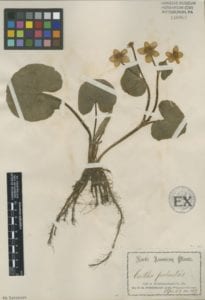
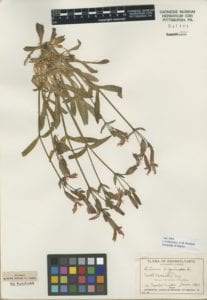
Oldest Allegheny County specimen collected in 1869Caltha palustris collected in 1874

 Carnegie Museum Herbarium specimens: (left) the oldest Allegheny County specimen collected in 1869 (right) Caltha palustris collected in 1874
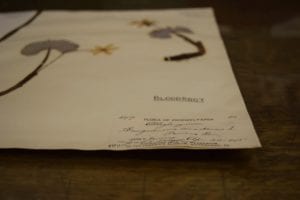
Sanguinaria canadensis specimen

Sanguinaria canadensis specimen collected in 1905

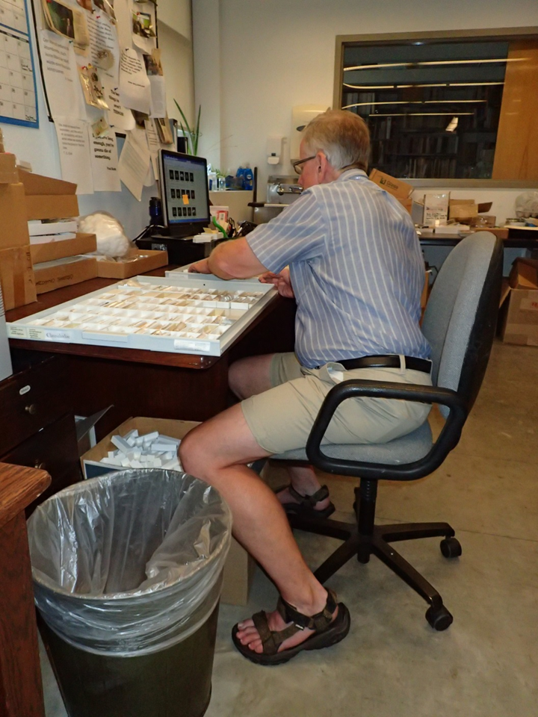
Botanists from Carnegie Museum of Natural History (Pittsburgh, PA) received funding from the US National Science Foundation (NSF) totaling $173,614 to partner with the ongoing Mid-Atlantic Megalopolis (MAM) Project. Along with students and volunteers, Mason Heberling, Postdoctoral Research Fellow, and Bonnie Isaac, Collection Manager, of the Botany Department will be working with the team to digitize nearly 190,000 plant specimens in the museum’s collection to better understand plant life in urban environments. This three-year project begins August 1, 2018.

Carnegie Museum’s Herbarium (CM) is the major botanical facility in the Upper Ohio Valley region and ranks among the top 25 herbaria in North America. In addition to large holdings from the region dating back to the 1800s, the more than 540,000 vascular plant specimens include worldwide geographic and taxonomic representation.

The Mid-Atlantic Megalopolis (MAM) Project includes specimens from 13 institutions in Pennsylvania, New York, New Jersey, Delaware, Maryland, and District of Columbia. According to the MAM Project website, “The data mobilized in this effort will help us achieve a better scientific understanding of living urban systems, a critical need for urban planners, restoration ecologists, environmental engineers, (landscape) architects, and conservationists engaged in creating more sustainable and better designed cities, including the constructed and restored natural environments of our urban areas.”

The initial MAM Project’s focus was on the densely-populated urban corridor from Washington, D.C. to New York City. This funding to the Carnegie Museum of Natural history substantially expands the project’s scope by adding the unique industrial and environmental history of the Greater Pittsburgh Region. The addition of the Carnegie Museum Herbarium will increase the number of digitized specimens in the MAM Project by more than 25% (nearly 190,000 plant specimens).

A digital herbarium will be publicly available online, making plant specimens in the Carnegie Museum of Natural History, and the information within, accessible to researchers worldwide. Along with high-resolution images for nearly 190,000 plant specimens at the Carnegie Museum of Natural History, the project will mobilize additional data, including who collected the specimen, where it was collected it (including GPS coordinates), when it was collected, and more.

The project also funds activities that enhance the ongoing Anthropocene initiatives at the Carnegie Museum of Natural History, including programs in invasive species management, education of nature in the city, and museum exhibition. Taken together, this project will improve scientific and public understanding of urban environments, highlighting sustainability and the future of this increasingly common biome in the current era of environmental change.

Filed Under: Press Release, Scientific Sections Tagged With: Bonnie Isaac, Botany, Mason Heberling

July 2, 2018 by wpengine

Without Volunteers, Carnegie Museum Mollusk Collection Could Not Exist

By Charles F. Sturm and Timothy A. Pearce

Volunteer Dan Cornell helps to sort and distribute specimens to their proper places in the research collection.

Scientists from around the world converged at the joint meeting of the American Malacological Society and the Western Society of Malacologists in Honolulu for a symposium on Museums and Modern Society on 21st of June 2018. One topic covered the importance of volunteers in Museums. Our paper in the symposium, entitled, “Without volunteers, collections as we know them could not exist,” highlighted some of the myriad ways volunteers play vital roles in the section of mollusks.

Volunteers provide essential efforts in the process of acquiring, sorting specimens from matrix, identifying and updating identifications, rehousing, labeling, cataloging and databasing, distributing
(shelving), and organizing.

One example of the crucial role of volunteers is the incorporation of the extensive Aldrich collection (collected pre-1953) into our research collection. The Aldrich collection, sent to us from California,
included material from around the world and most of it was housed in non-archival boxes. Volunteers recorded locality information for each lot, re-housed the specimens in archival vials and trays, updated the nomenclature, and then distributed the specimens into the collection. In total some 17,000 lots were processed, by dedicated volunteers, over a six-year period. The specimens are now housed in their proper places in the research collection, and the information is available on the internet.

In another example, Carnegie Museum received, in 1931, a large donation from the research
of Herman Wright. This material sat unprocessed for 9 decades and over the past few years, is being curated to be more accessible to scientists. While most of the lots have locality numbers, the original data cards were lost, so the meaning of most of the locality numbers was unknown. Volunteers have recovered approximately 80% of the locality information from some lots that did have locality data with the locality numbers, from reviewing published literature, and from other sources of information such as archival records. These efforts are allowing us to incorporate this material into the collection.

Another example of the necessity of volunteers is the Pennsylvania Land Snail Atlas Project. Volunteers have helped by collecting samples from around Pennsylvania and assisting with other field collecting. Volunteers accomplished a major part of picking minute snails (mostly less than 3 mm or 1/8 inch) from leaf litter samples. Following identification and cataloging of the specimens, volunteers distributed them to their proper places in the research collection and helped upload the information to the internet. This material is readily available for study by amateur and professional naturalists. These efforts have facilitated the production of updated distribution maps of Pennsylvania land snails, as well as imperilment ranks (how rare or secure they are).

These are some of the many projects that could not have been accomplished without the vital assistance of many men and women volunteers over the years.


Teens, college students, and adults of all ages may become volunteers to support almost every department at Carnegie Museum of Natural History. Learn more about volunteering at carnegiemuseums.org.

Filed Under: Blog, Scientific Sections Tagged With: mollusks, volunteers

sidebar

About

  • Mission & Commitments
  • Directors Team
  • Museum History

Get Involved

  • Volunteer
  • Membership
  • Carnegie Discoverers
  • Donate
  • Employment
  • Events

Bring a Group

  • Groups of 10 or More
  • Birthday Parties at the Museum
  • Field Trips

Powdermill

  • Powdermill Nature Reserve
  • Powdermill Field Trips
  • Powdermill Staff
  • Research at Powdermill

More Information

  • Image Permission Requests
  • Science Stories
  • Accessibility
  • Shopping Cart
  • Contact
  • Visitor Policies
One of the Four Carnegie Museums | © Carnegie Institute | Privacy Policy | Terms of Use | Accessibility
Rad works here logo