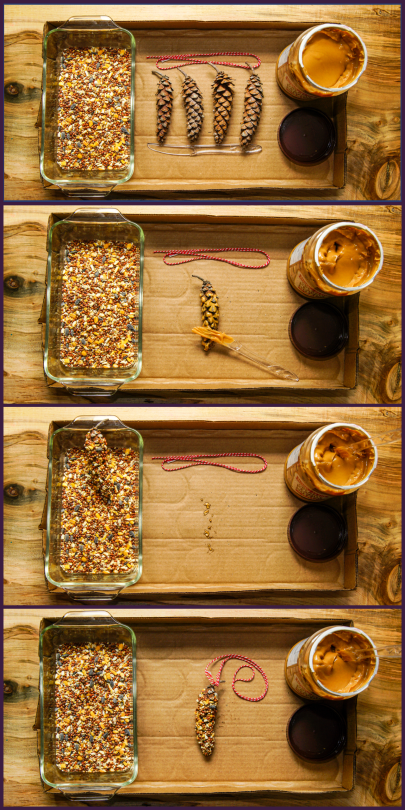
During the City Nature Challenge (April 29-2, 2022) you can share your nature discoveries with people around the world! And one great way to find nature is to bring it right to you. A simple bird feeder made with items you can find inside or around your house can turn your front or back porch into a bird sanctuary. If you are lucky, you might observe some other visitors from nature. By using the iNaturalist app you can share photos with others and be a part of the City Nature Challenge.
Here’s what you need:
· Pinecones (collect as many as you want to make!)
· Birdseed in a plastic or glass container
· Peanut butter (use an alternative if you have a nut allergy)
· A spreading utensil
· String
· Cardboard, wax paper or foil
Here’s what to do:
· First, gather your materials and get your station ready. Lay down a piece of cardboard, wax paper or foil to contain any mess. Trust us, your parents will thank you.
· Smear some peanut butter on your first pinecone with your spreading utensil. This layer will give the pinecone a sticky surface and one more layer of flavor for your feathered friends to enjoy.
· Next, roll the pinecone in the container of bird seed until it has a nice, even coat.
· Tie your string around the stem of the pinecone and make sure it is secure enough to hang. If your pinecone does not have a stem, that’s not a problem. Just tie it around the widest end.
Hang it from a secure location and wait for nature to come to you!
What happens next?
Now it’s time to get scientific! Use a journal to keep track of the different birds and animals that visit. Check at different times of the day, too – does anything change from morning to evening? If you take photos or record sound files, you can share them on the iNaturalist app (with a grownup’s permission!) and learn more about what you found. Bonus: any photos you take & share on iNaturalist between April 24-27 count for the City Nature Challenge. We would love to see your findings as well! Use the hashtag #CityNatureChallenge and tag @CarnegieMNH on Facebook, Instagram, Twitter, or TikTok.
Fun Fact
One of the earliest known bird feedings took place in India in roughly 1500 B.C. The practice of “bhuta yajna” involved feeding birds traditional rice cakes. This practice is still occurs today and the birds remain well fed!
