• Skip to primary navigation
  • Skip to main content
  • Skip to primary sidebar

Carnegie Museum of Natural History

One of the Four Carnegie Museums of Pittsburgh

  • Visit
    • Buy Tickets
    • Visitor Information
    • Exhibitions
    • Events
    • Dining at the Museum
    • Celebrate at the Museum
    • Powdermill Nature Reserve
    • Event Venue Rental
  • Learn
    • Field Trips
    • Educator Information
    • Programs at the Museum
    • Bring the Museum to You
    • Guided Programs FAQ
    • Programs Online
    • Climate and Rural Systems Partnership
  • Research
    • Scientific Sections
    • Science Stories
    • Science Videos
    • Senior Science & Research Staff
    • Museum Library
    • Science Seminars
    • Scientific Publications
    • Specimen and Artifact Identification
  • About
    • Mission & Commitments
    • Directors Team
    • Museum History
  • Tickets
  • Give
  • Shop

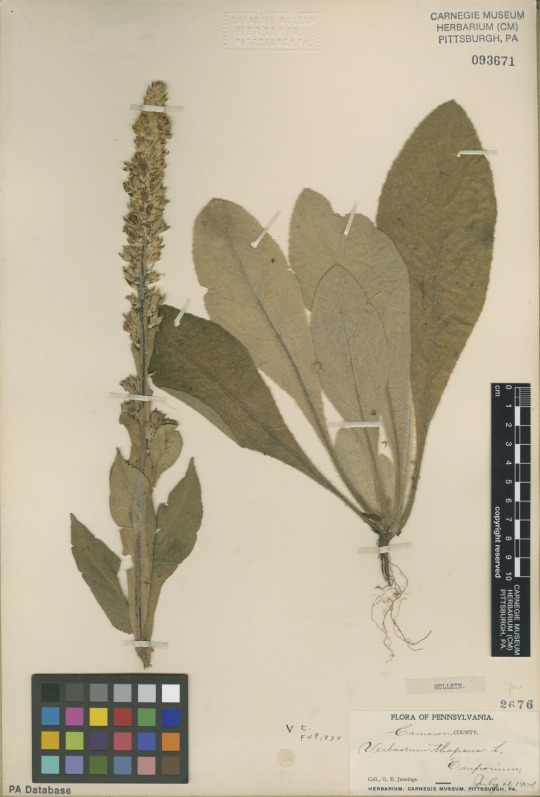
Collected on this Day in 1904

Herbarium specimen Common mullein (Verbascum thapsus)

Collected on July 21, 1904, this specimen was found by Otto Jennings (a former curator of botany at Carnegie Museum of Natural History) in Cameron County, Pennsylvania. Common mullein (Verbascum thapsus) is a weedy species from Eurasia and is now common in roadsides and disturbed fields across the United States.

When you know to look for it, it is hard to miss at up to 6 feet tall with bright yellow flowers and velvety leaves. It was introduced at least 230 years ago, cultivated by early European colonists for use as a fish poison (the seeds contain several compounds deadly to fish).

Throughout history, the plant has had many medicinal uses—one Greek botanist recommended it for pulmonary diseases over 2,000 years ago. It can be found in herbal products for this purpose, but many of these products have not yet been tested for safety or effectiveness.
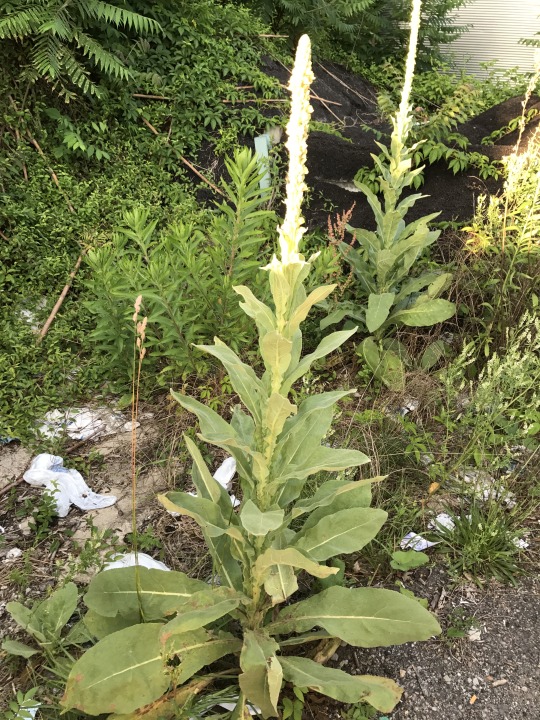
Common mullein (Verbascum thapsus)

Botanists at Carnegie Museum of Natural History share pieces of the herbarium’s historical hidden collection on the dates they were discovered or collected. Check back for more!

sidebar

About

  • Mission & Commitments
  • Directors Team
  • Museum History

Get Involved

  • Volunteer
  • Membership
  • Carnegie Discoverers
  • Donate
  • Employment
  • Events

Bring a Group

  • Groups of 10 or More
  • Birthday Parties at the Museum
  • Field Trips

Powdermill

  • Powdermill Nature Reserve
  • Powdermill Field Trips
  • Powdermill Staff
  • Research at Powdermill

More Information

  • Image Permission Requests
  • Science Stories
  • Accessibility
  • Shopping Cart
  • Contact
  • Visitor Policies
One of the Four Carnegie Museums | © Carnegie Institute | Privacy Policy | Terms of Use | Accessibility
Rad works here logo