• Skip to primary navigation
  • Skip to main content
  • Skip to primary sidebar

Carnegie Museum of Natural History

One of the Four Carnegie Museums of Pittsburgh

  • Visit
    • Buy Tickets
    • Visitor Information
    • Exhibitions
    • Events
    • Dining at the Museum
    • Celebrate at the Museum
    • Powdermill Nature Reserve
    • Event Venue Rental
  • Learn
    • Field Trips
    • Educator Information
    • Programs at the Museum
    • Bring the Museum to You
    • Guided Programs FAQ
    • Programs Online
    • Climate and Rural Systems Partnership
  • Research
    • Scientific Sections
    • Science Stories
    • Science Videos
    • Senior Science & Research Staff
    • Museum Library
    • Science Seminars
    • Scientific Publications
    • Specimen and Artifact Identification
  • About
    • Mission & Commitments
    • Directors Team
    • Museum History
  • Tickets
  • Give
  • Shop

Collected on this Day in 1919

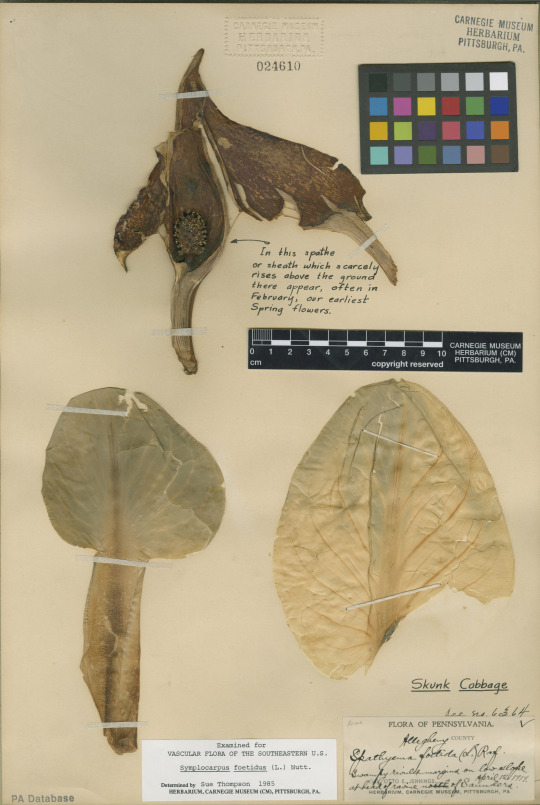
Skunk Cabbage specimen

Collected on April 12, 1919, this specimen was found by Otto Jennings “North of Saunders” in Allegheny County. Jennings was an extremely influential botanist, focusing on nearly all aspects of plants in our region. He made many contributions throughout his career, serving as the curator of botany, director of education, and eventually director of Carnegie Museum of
Natural History. He was also a professor and head of the Department of Biological Sciences at the University of Pittsburgh and advised many students. His legacy is his influence on the museum, botany, conservation, and environmental education.

Skunk cabbage grows in wet, forested areas across the eastern United States.  Although easily overlooked, it is one of the
earliest plants to flower in our region. Its flowers produce heat that melts the snow around it. The flowers smell like rotting meat, which attracts the flies that pollinate it. As the name suggests, the leaves smell like skunk when they are crushed.
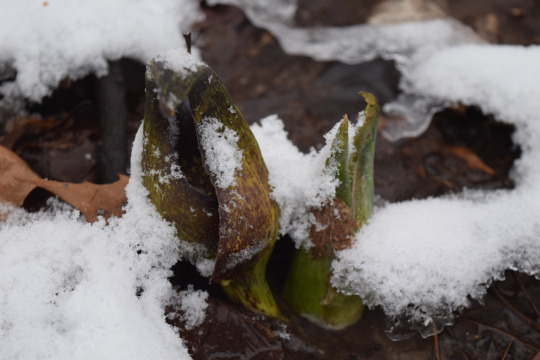
Skunk cabbage coming up in the snow

Botanists at Carnegie Museum of Natural History share pieces of the herbarium’s historical hidden collection on the dates they were discovered or collected. Check back for more!

sidebar

About

  • Mission & Commitments
  • Directors Team
  • Museum History

Get Involved

  • Volunteer
  • Membership
  • Carnegie Discoverers
  • Donate
  • Employment
  • Events

Bring a Group

  • Groups of 10 or More
  • Birthday Parties at the Museum
  • Field Trips

Powdermill

  • Powdermill Nature Reserve
  • Powdermill Field Trips
  • Powdermill Staff
  • Research at Powdermill

More Information

  • Image Permission Requests
  • Science Stories
  • Accessibility
  • Shopping Cart
  • Contact
  • Visitor Policies
One of the Four Carnegie Museums | © Carnegie Institute | Privacy Policy | Terms of Use | Accessibility
Rad works here logo