• Skip to primary navigation
  • Skip to main content
  • Skip to primary sidebar

Carnegie Museum of Natural History

One of the Four Carnegie Museums of Pittsburgh

  • Visit
    • Buy Tickets
    • Visitor Information
    • Exhibitions
    • Events
    • Dining at the Museum
    • Celebrate at the Museum
    • Powdermill Nature Reserve
    • Event Venue Rental
    • Gift Cards
  • Learn
    • Field Trips
    • Educator Information
    • Programs at the Museum
    • Bring the Museum to You
    • Guided Programs FAQ
    • Programs Online
    • Climate and Rural Systems Partnership
  • Research
    • Scientific Sections
    • Science Stories
    • Science Videos
    • Senior Science & Research Staff
    • Museum Library
    • Science Seminars
    • Scientific Publications
    • Specimen and Artifact Identification
  • About
    • Mission & Commitments
    • Directors Team
    • Museum History
  • Tickets
  • Give
  • Shop

Collected on this Day in 1993

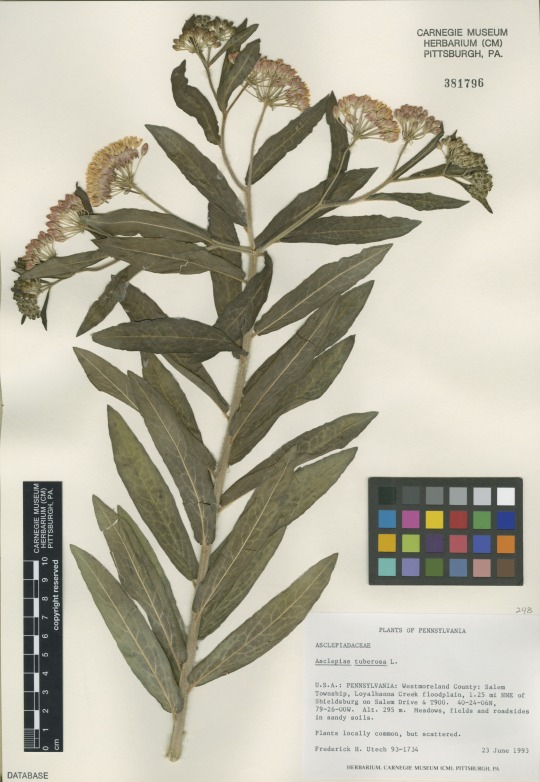
herbarium specimen of the milkweed plant

Collected on June 23, 1993, this specimen was found by Fred Utech near the Loyalhanna Creek in Salem Township, Pennsylvania.

Do not let the common name affect your opinion of this plant! Butterfly weed (Aclepias tuberosa) is a beautiful plant, and the pollinators love the bright orange flowers. Native to eastern North America, it can be found in dry, full sun conditions. It is a great plant to add to your garden!

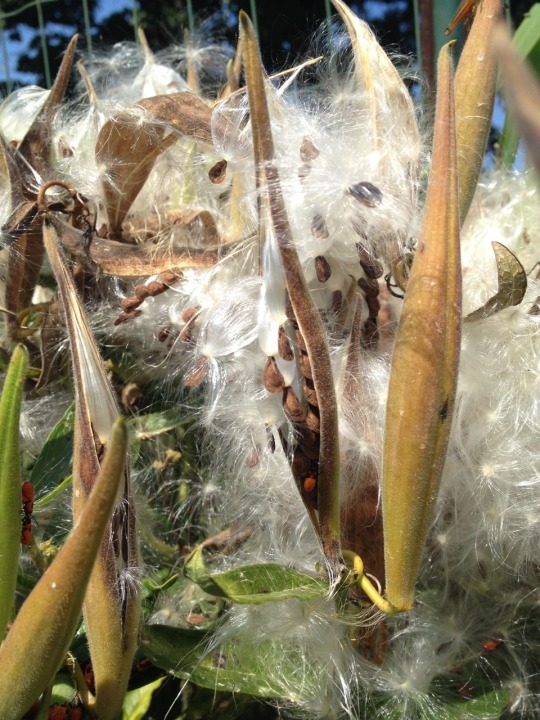
Like other milkweeds (butterfly weed is in the milkweed genus), butterfly weed flower clusters mature into seed pods, which eventual dry up to release airborne seeds in the late summer. The long, silk-like hairs (called pappi) have been used by Native Americans to make textiles.

Despite its looks, butterfly weed is poisonous to ingest. Like other milkweeds, this plant contains defensive chemicals called cardiac glycosides, which are poisonous to humans, livestock, and pets.  Milkweeds vary in their toxicity depending on species and age of plant. Symptoms can include weakness, difficulty breathing, kidney damage, cardiac distress, pupil dilation, loss of muscle control, and respiratory paralysis.
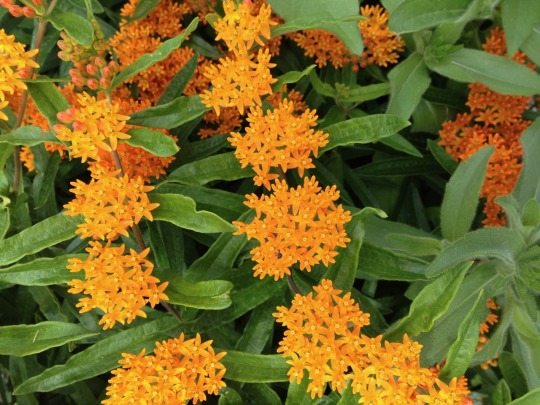
vibrant orange milkweed flowers
open seed pods of a milkweed

Botanists at Carnegie Museum of Natural History share pieces of the herbarium’s historical hidden collection on the dates they were discovered or collected. Check back for more!

sidebar

About

  • Mission & Commitments
  • Directors Team
  • Museum History

Get Involved

  • Volunteer
  • Membership
  • Carnegie Discoverers
  • Donate
  • Employment
  • Events

Bring a Group

  • Groups of 10 or More
  • Birthday Parties at the Museum
  • Field Trips

Powdermill

  • Powdermill Nature Reserve
  • Powdermill Field Trips
  • Powdermill Staff
  • Research at Powdermill

More Information

  • Image Permission Requests
  • Science Stories
  • Accessibility
  • Shopping Cart
  • Contact
  • Visitor Policies
Stay in the loop! Sign up for our newsletter(s).
One of the Four Carnegie Museums | © Carnegie Institute | Privacy Policy | Terms of Use | Accessibility
Rad works here logo