• Skip to primary navigation
  • Skip to main content
  • Skip to primary sidebar

Carnegie Museum of Natural History

One of the Four Carnegie Museums of Pittsburgh

  • Visit
    • Buy Tickets
    • Visitor Information
    • Exhibitions
    • Events
    • Dining at the Museum
    • Celebrate at the Museum
    • Powdermill Nature Reserve
    • Event Venue Rental
  • Learn
    • Field Trips
    • Educator Information
    • Programs at the Museum
    • Bring the Museum to You
    • Guided Programs FAQ
    • Programs Online
    • Climate and Rural Systems Partnership
  • Research
    • Scientific Sections
    • Science Stories
    • Science Videos
    • Senior Science & Research Staff
    • Museum Library
    • Science Seminars
    • Scientific Publications
    • Specimen and Artifact Identification
  • About
    • Mission & Commitments
    • Directors Team
    • Museum History
  • Tickets
  • Give
  • Shop

Collected on this Day in 1997

Kudzu is one of the more well-known weeds, at least by name, sometimes known as “the vine that ate the South.”

Kudzu is one of the more
well-known weeds, at least by name, sometimes known as “the vine that ate the
South.”

Collected on October 13, 1997, this specimen was found by Sue Thompson and
Bonnie Isaac near the I-376 Squirrel Hill Tunnel, Pittsburgh. Kudzu (Pueraria lobata) was introduced to the
United States as an ornamental plant in 1876 at the Centennial International
Exhibition in Philadelphia. The vine was initially prized in the South to
provide shade.

The vine was later promoted
for use in erosion control.  Although
listed as a noxious weed in Pennsylvania, it is more invasive in southern
states. There, it has been estimated to spread at a rate of 2,500 acres per
year (some say up to 150,000 acres per year, although this estimate has been
questioned).

Infestations of this plant undoubtedly cause ecological and
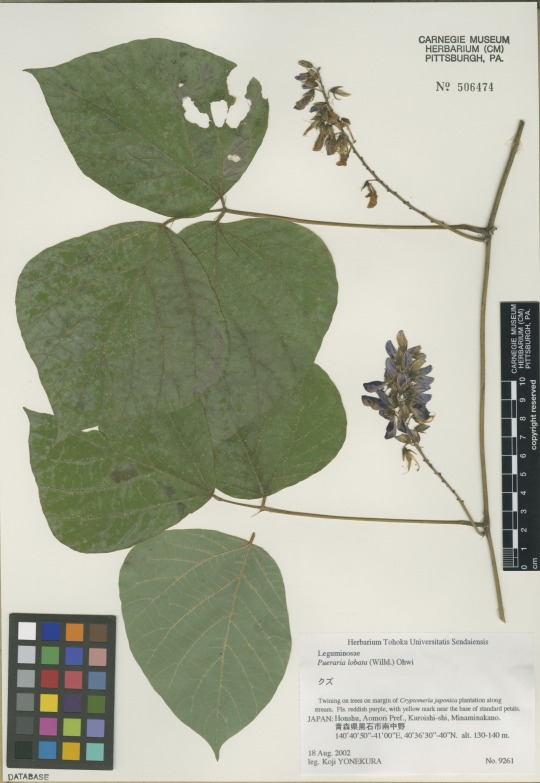
economic damage. Below is another specimen of kudzu, collected in its native
range in Japan in 2002.


Botanists at Carnegie Museum of Natural History share
pieces of the herbarium’s historical hidden collection on the dates they were
discovered or collected. Check back for more!

sidebar

About

  • Mission & Commitments
  • Directors Team
  • Museum History

Get Involved

  • Volunteer
  • Membership
  • Carnegie Discoverers
  • Donate
  • Employment
  • Events

Bring a Group

  • Groups of 10 or More
  • Birthday Parties at the Museum
  • Field Trips

Powdermill

  • Powdermill Nature Reserve
  • Powdermill Field Trips
  • Powdermill Staff
  • Research at Powdermill

More Information

  • Image Permission Requests
  • Science Stories
  • Accessibility
  • Shopping Cart
  • Contact
  • Visitor Policies
One of the Four Carnegie Museums | © Carnegie Institute | Privacy Policy | Terms of Use | Accessibility
Rad works here logo