• Skip to primary navigation
  • Skip to main content
  • Skip to primary sidebar

Carnegie Museum of Natural History

One of the Four Carnegie Museums of Pittsburgh

  • Visit
    • Buy Tickets
    • Visitor Information
    • Exhibitions
    • Events
    • Dining at the Museum
    • Celebrate at the Museum
    • Powdermill Nature Reserve
    • Event Venue Rental
    • Gift Cards
  • Learn
    • Field Trips
    • Educator Information
    • Programs at the Museum
    • Bring the Museum to You
    • Guided Programs FAQ
    • Programs Online
    • Climate and Rural Systems Partnership
  • Research
    • Scientific Sections
    • Science Stories
    • Science Videos
    • Senior Science & Research Staff
    • Museum Library
    • Science Seminars
    • Scientific Publications
    • Specimen and Artifact Identification
  • About
    • Mission & Commitments
    • Directors Team
    • Museum History
  • Tickets
  • Give
  • Shop

Collected on this Day in 1998

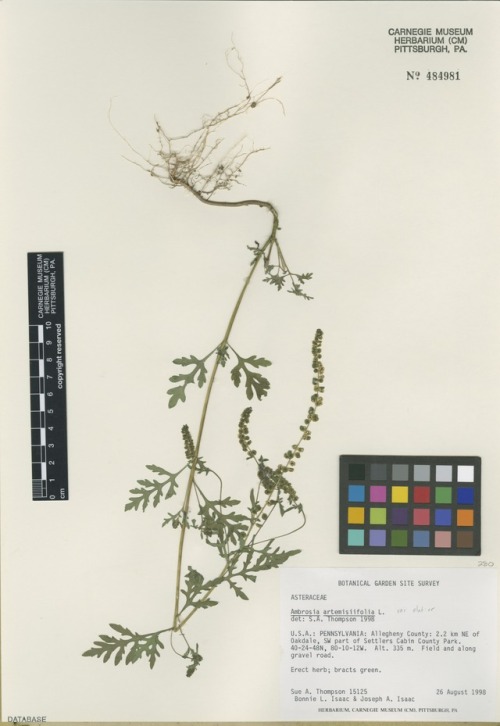
Herbarium specimen of common ragweed (Ambrosia artemisiifolia)

Collected on August 26, 1998, this specimen was found along a gravel road not far from Settlers Cabin County Park. Ragweed is a plant that is (all too) familiar to many people.

Common ragweed (Ambrosia artemisiifolia) is native to North America, but it has been introduced across the world. In many cases, this plant (or other ragweed species) are to blame for seasonal pollen allergies known as hay fever. In summer and early fall, ragweed plants produce copious numbers of pollen grains, which are dispersed in the wind. Although ragweed is native in the United States, historical records (pollen deposited in sediment cores) suggest that this species was far less common in North America before European colonization. This is perhaps not too surprising considering the species thrives in disturbed habitats that came with European colonization and urbanization.

A study published in 2014 in the journal Molecular Ecology extracted DNA from nearly 500 historic herbarium specimens dating back to the 1800s to measure the genetic makeup prior to widespread changes to the landscape in the late 19th century. Combined with data from recent collections, they found shifts in the genetic makeup of ragweed populations as the species was expanding in the United States.


Botanists at Carnegie Museum of Natural History share pieces of the herbarium’s historical hidden collection on the dates they were discovered or collected. Check back for more!

sidebar

About

  • Mission & Commitments
  • Directors Team
  • Museum History

Get Involved

  • Volunteer
  • Membership
  • Carnegie Discoverers
  • Donate
  • Employment
  • Events

Bring a Group

  • Groups of 10 or More
  • Birthday Parties at the Museum
  • Field Trips

Powdermill

  • Powdermill Nature Reserve
  • Powdermill Field Trips
  • Powdermill Staff
  • Research at Powdermill

More Information

  • Image Permission Requests
  • Science Stories
  • Accessibility
  • Shopping Cart
  • Contact
  • Visitor Policies
One of the Four Carnegie Museums | © Carnegie Institute | Privacy Policy | Terms of Use | Accessibility
Rad works here logo