• Skip to primary navigation
  • Skip to main content
  • Skip to primary sidebar

Carnegie Museum of Natural History

One of the Four Carnegie Museums of Pittsburgh

  • Visit
    • Buy Tickets
    • Visitor Information
    • Exhibitions
    • Events
    • Dining at the Museum
    • Celebrate at the Museum
    • Powdermill Nature Reserve
    • Event Venue Rental
    • Gift Cards
  • Learn
    • Field Trips
    • Educator Information
    • Programs at the Museum
    • Bring the Museum to You
    • Guided Programs FAQ
    • Programs Online
    • Climate and Rural Systems Partnership
  • Research
    • Scientific Sections
    • Science Stories
    • Science Videos
    • Senior Science & Research Staff
    • Museum Library
    • Science Seminars
    • Scientific Publications
    • Specimen and Artifact Identification
  • About
    • Mission & Commitments
    • Directors Team
    • Museum History
  • Tickets
  • Give
  • Shop

Collected on this Day in 2001

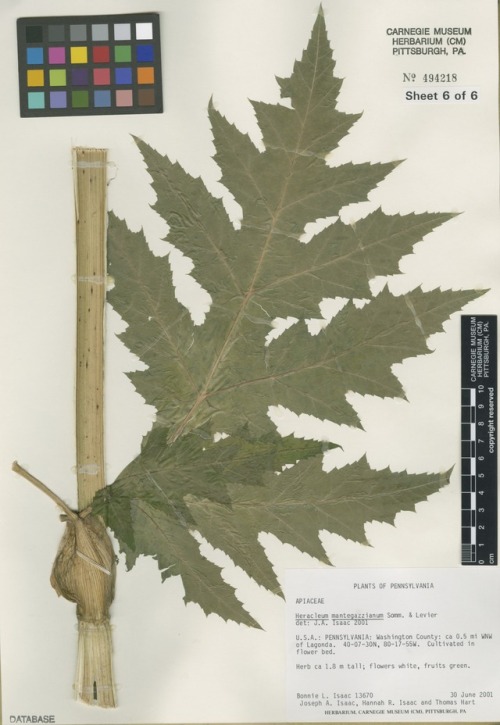
herbarium sheet 6 of 6 showing the leaf and stock of a giant hogweed
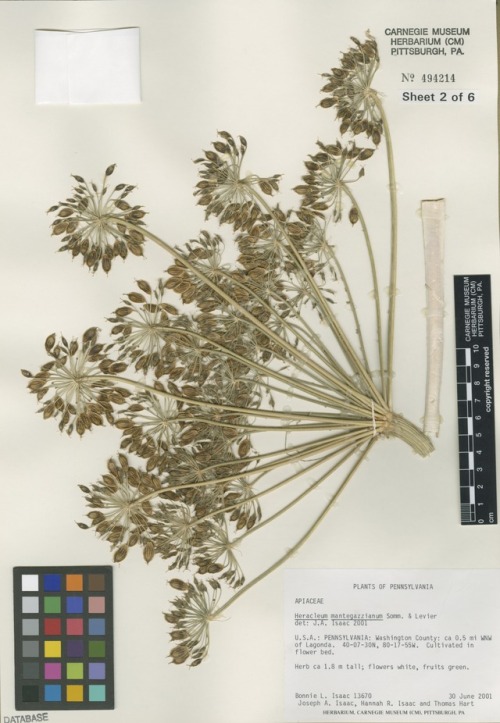
herbarium sheet 2 of 6 showing the flower after turning to seed
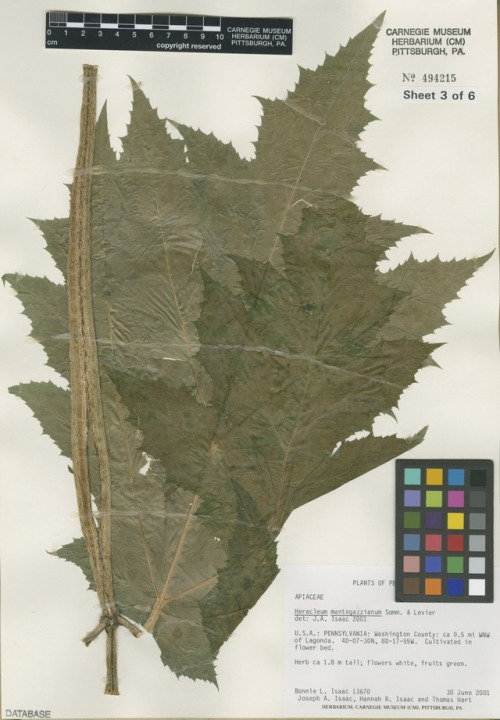
herbarium sheet 3 of 6 showing the leaf and stem of a giant hogweed
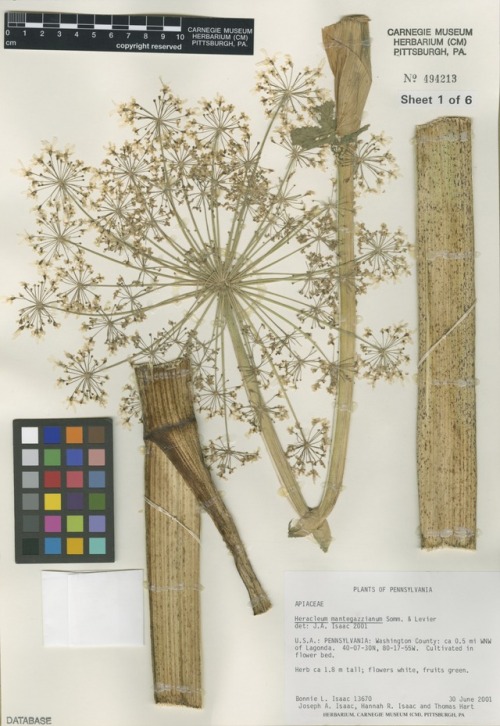
herbarium sheet 1 of 6 showing the flower of a giant hogweed
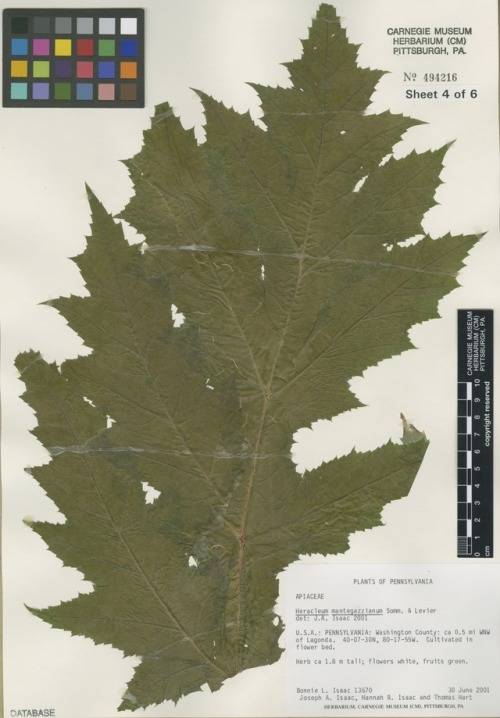
herbarium sheet 4 of 6 showing the leaf of a giant hogweed

Collected on this Day in 2001

Giant hogweed (Heracleum mantegazzianum) is considered a significant public human health concern. This non-woody plant can be 8–20 feet tall with leaves up to 5 feet wide!

In fact, it took six separate herbarium sheets to capture the characteristics of this species. This specimen was collected from a garden, where it was intentionally grown for the purposes of educating the public about this plant. Native to central and southwest Asia, this plant can now be found in parts of Europe, Australia, New Zealand, and North America. It is thought to be eradicated in Pennsylvania.

This plant is highly poisonous and designated as a federal noxious weed. The sap of giant hogweed causes “phytophotodermatitis,” meaning serious skin inflammation occurs when contacted skin is exposed to sunlight. Skin rashes can be very severe. The sap is also said to cause blindness.

Giant hogweed, like poison hemlock and Queen Anne’s lace, is in the carrot family (Apiaceae).  It might be confused with the related native plant, cow parsnip (Heracleum lanatum), but giant hogweed is noticeably larger in height and flower size.


Botanists at Carnegie Museum of Natural History share pieces of the herbarium’s historical hidden collection on the dates they were discovered or collected. Check back for more!

sidebar

About

  • Mission & Commitments
  • Directors Team
  • Museum History

Get Involved

  • Volunteer
  • Membership
  • Carnegie Discoverers
  • Donate
  • Employment
  • Events

Bring a Group

  • Groups of 10 or More
  • Birthday Parties at the Museum
  • Field Trips

Powdermill

  • Powdermill Nature Reserve
  • Powdermill Field Trips
  • Powdermill Staff
  • Research at Powdermill

More Information

  • Image Permission Requests
  • Science Stories
  • Accessibility
  • Shopping Cart
  • Contact
  • Visitor Policies
One of the Four Carnegie Museums | © Carnegie Institute | Privacy Policy | Terms of Use | Accessibility
Rad works here logo