• Skip to primary navigation
  • Skip to main content
  • Skip to primary sidebar

Carnegie Museum of Natural History

One of the Four Carnegie Museums of Pittsburgh

  • Visit
    • Buy Tickets
    • Visitor Information
    • Exhibitions
    • Events
    • Dining at the Museum
    • Celebrate at the Museum
    • Powdermill Nature Reserve
    • Event Venue Rental
    • Gift Cards
  • Learn
    • Field Trips
    • Educator Information
    • Programs at the Museum
    • Bring the Museum to You
    • Guided Programs FAQ
    • Programs Online
    • Climate and Rural Systems Partnership
  • Research
    • Scientific Sections
    • Science Stories
    • Science Videos
    • Senior Science & Research Staff
    • Museum Library
    • Science Seminars
    • Scientific Publications
    • Specimen and Artifact Identification
  • About
    • Mission & Commitments
    • Directors Team
    • Museum History
  • Tickets
  • Give
  • Shop

Collected on this Day in 2006

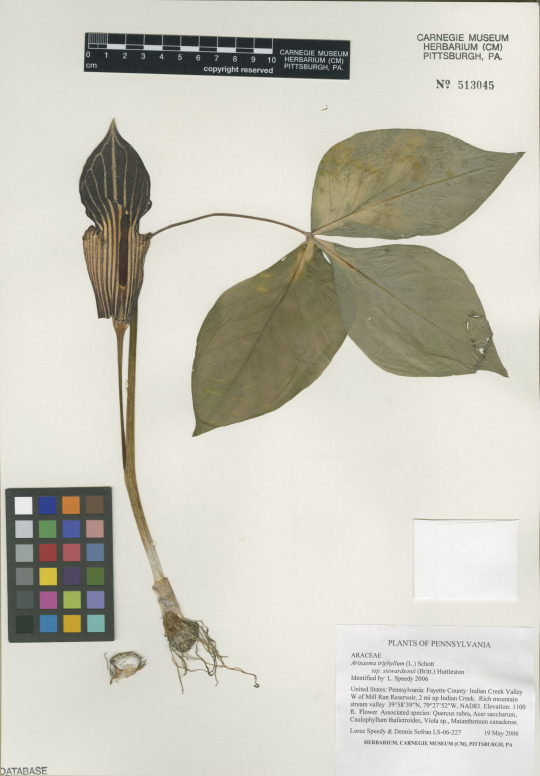
Herbarium specimen of jack-in-the-pulpit

Collected on May 19, 2006, this specimen was found by Loree Speedy in a stream valley near the Mill Run Reservoir in Fayette County, Pennsylvania. This charismatic species (Arisaema triphyllum) is known as jack-in-the-pulpit and is native to forests of the eastern United States.

Its common name comes from its flowering structure—a distinctive hooded structure (spathe) that looks like a pulpit and the flowers (spadix) that resemble “Jack,” the minister standing within. This flower structure is shared among members of the arum family (Araceae; members often called aroids), which includes the popular houseplants known as peace lilies.

The natural history of jack-in-the-pulpits is fascinating. For starters, individual plants can be male or female, and the gender can switch from year to year! This species has intrigued botanists for decades and has been used as a study system to understand the ecology and evolution of plant sex expression. Larger plants tend to have female flowers, but the exact size is dependent on environmental conditions and genetics of a given population. Jack-in-the-pulpit has calcium oxalate in its leaves that can irritate skin and is poisonous to ingest.

It is generally avoided by deer. However, recent research from the lab of Susan Kalisz—a research associate at the museum—has shown that deer overabundance negatively affects the growth of this species. While it is rarely eaten by deer, they affect other environmental conditions, such as light levels and soil conditions.
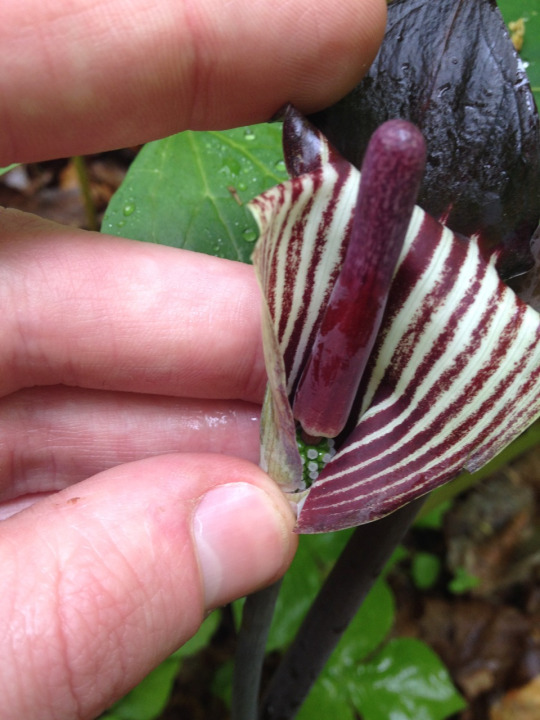
jack-in-the-pulpit in bloom
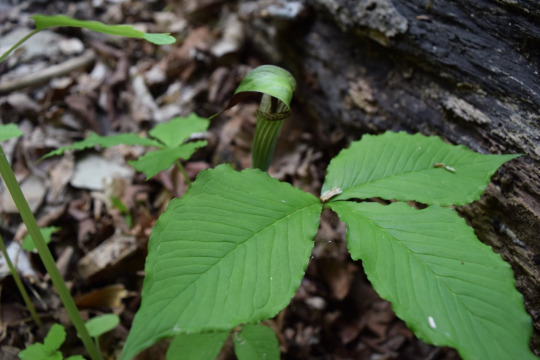
leaves from jack-in-the-pulpit plant

Botanists at Carnegie Museum of Natural History share pieces of the herbarium’s historical hidden collection on the dates they were discovered or collected. Check back for more!

sidebar

About

  • Mission & Commitments
  • Directors Team
  • Museum History

Get Involved

  • Volunteer
  • Membership
  • Carnegie Discoverers
  • Donate
  • Employment
  • Events

Bring a Group

  • Groups of 10 or More
  • Birthday Parties at the Museum
  • Field Trips

Powdermill

  • Powdermill Nature Reserve
  • Powdermill Field Trips
  • Powdermill Staff
  • Research at Powdermill

More Information

  • Image Permission Requests
  • Science Stories
  • Accessibility
  • Shopping Cart
  • Contact
  • Visitor Policies
One of the Four Carnegie Museums | © Carnegie Institute | Privacy Policy | Terms of Use | Accessibility
Rad works here logo