Spring at Powdermill.
An early bloomer.
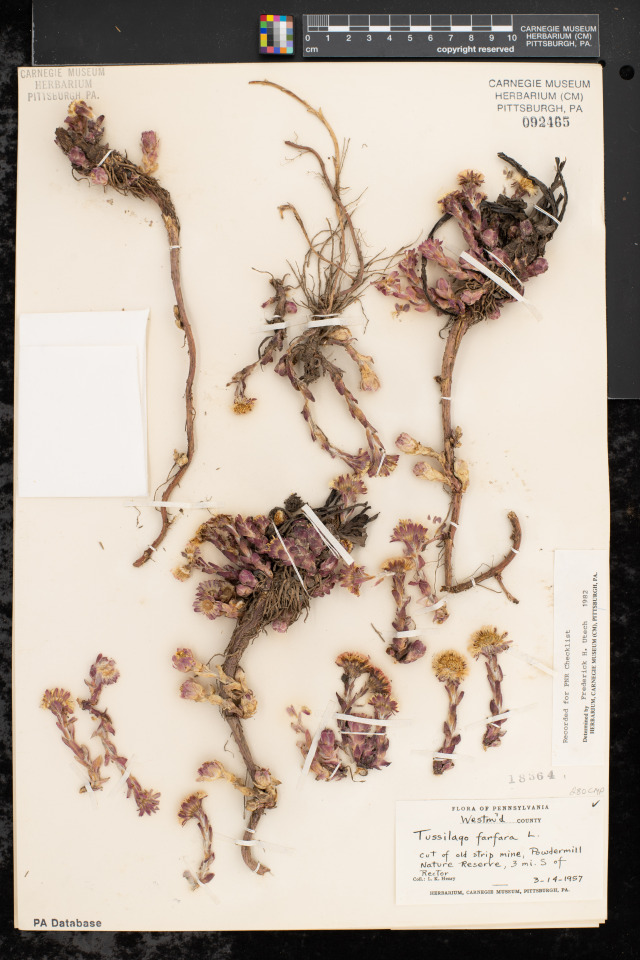
This specimen of coltsfoot (Tussilago farfara) was collected at Powdermill Nature Reserve, the field station of Carnegie Museum of Natural History in 1957, just one year after the facility was established. It was collected by Leroy Henry, a Curator of Botany at the museum from 1937 until 1972 (though he was also affiliated with the museum before and after this period). Henry is an important collector for our region, with >36,000 specimens in the Carnegie Museum herbarium.
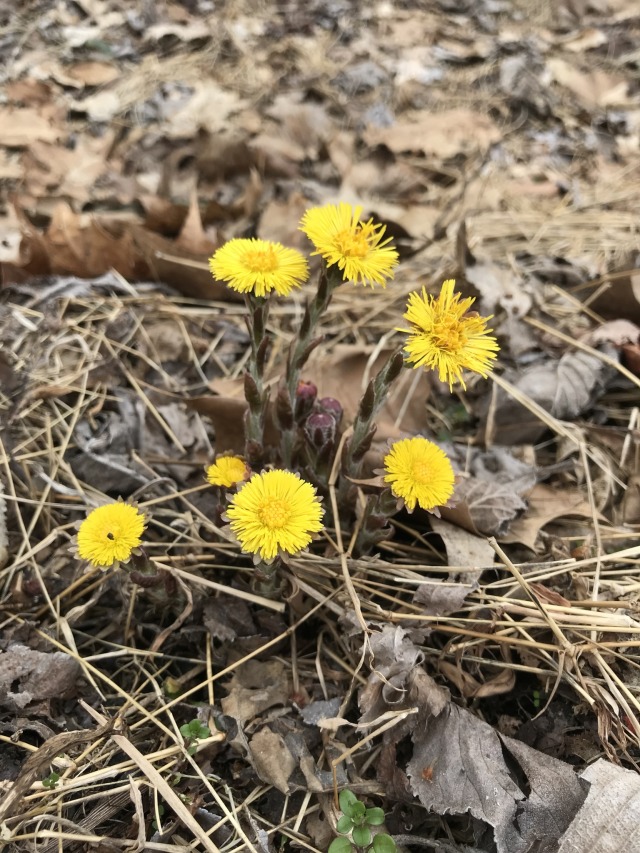
At first look, the plant may be confused with your common dandelion. It has definite similarities, as it is in the same plant family, Asteraceae, and bears yellow flowers. But, as you’ll notice from the specimen – flowering coltsfoot doesn’t have leaves!
Coltsfoot, which is native to Europe, was introduced to Pennsylvania, and is quite unique in our state’s flora. The plant blooms very early in the spring, with dandelion-like flowers frequently poking through the soil of otherwise barren slopes. The leaves soon follow, and they are shaped like – well – a colt’s foot! Quite different than the familiar serrated edge shape of dandelion leaves.
Coltsfoot’s early appearance also makes it a great species to track changes in bloom time using herbarium specimens. The species was among the first to be used in a pioneering study published in 2006 using herbarium specimens by Claud Lavoie and Daniel Lachance. In Southern Quebec, they found coltsfoot bloomed 15-31 days earlier in recent decades, compared to pre-1950. Earlier blooming was strongly linked to climate change in the region. The plants also showed a clear signal of flowering earlier in the city (due to a phenomenon known as urban heat island effect).
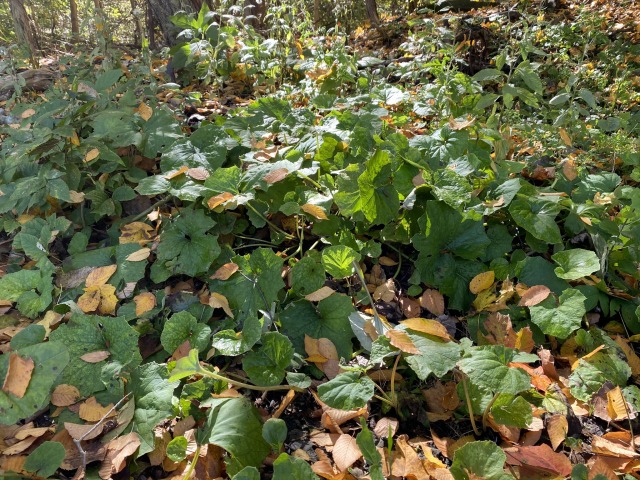
We have plenty of spring ephemerals that bloom early, but unlike these plants, coltsfoot doesn’t die off by summer. The plant keeps its leaves well after it blooms, into late fall.
This strategy is interesting, and I can’t think of many plants in our flora with similar growth patterns. Is the plant on to something?
Keep an eye out for coltsfoot, especially along wooded roadsides. Once you see a big bloom, check the same site later in the year. The leaves can grow to a surprisingly large size.
Find this specimen and more here.
Check back for more! Botanists at the Carnegie Museum of Natural History share digital specimens from the herbarium on dates they were collected. They are in the midst of a three-year project to digitize nearly 190,000 plant specimens collected in the region, making images and other data publicly available online. This effort is part of the Mid-Atlantic Megalopolis Project (mamdigitization.org), a network of thirteen herbaria spanning the densely populated urban corridor from Washington, D.C. to New York City to achieve a greater understanding of our urban areas, including the unique industrial and environmental history of the greater Pittsburgh region. This project is made possible by the National Science Foundation under grant no. 1801022.
Mason Heberling is Assistant Curator of Botany at Carnegie Museum of Natural History. Museum employees are encouraged to blog about their unique experiences and knowledge gained from working at the museum.
Related Content
Collected on this Day in 1998: Common chickweed
Spring is in the Air, Botanists are in the Field
Ask a Scientist: What is biogeochemistry?
Carnegie Museum of Natural History Blog Citation Information
Blog author: Heberling, MasonPublication date: March 14, 2021
