• Skip to primary navigation
  • Skip to main content
  • Skip to primary sidebar

Carnegie Museum of Natural History

One of the Four Carnegie Museums of Pittsburgh

  • Visit
    • Buy Tickets
    • Visitor Information
    • Exhibitions
    • Events
    • Dining at the Museum
    • Celebrate at the Museum
    • Powdermill Nature Reserve
    • Event Venue Rental
  • Learn
    • Field Trips
    • Educator Information
    • Programs at the Museum
    • Bring the Museum to You
    • Guided Programs FAQ
    • Programs Online
    • Climate and Rural Systems Partnership
  • Research
    • Scientific Sections
    • Science Stories
    • Science Videos
    • Senior Science & Research Staff
    • Museum Library
    • Science Seminars
    • Scientific Publications
    • Specimen and Artifact Identification
  • About
    • Mission & Commitments
    • Directors Team
    • Museum History
  • Tickets
  • Give
  • Shop

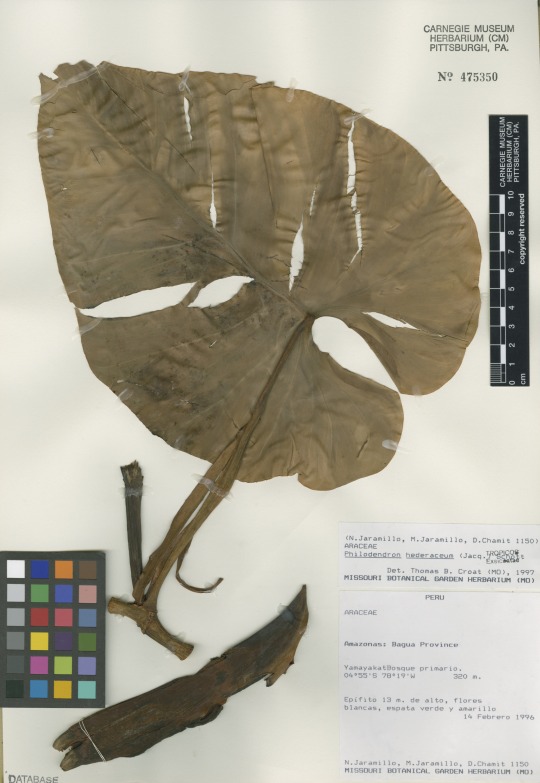
Collected on Valentine’s Day, 1996

heartleaf philodendron (Philodendron hederaceum) collected on Valentine’s Day in Peru

Does this heart-shaped leaf look familiar?  22 years ago, this specimen of heartleaf philodendron (Philodendron hederaceum) was collected on Valentine’s Day in Peru. Almost certainly you have seen this species, but probably not in the wild.  Heart leaf philodendron is a very popular houseplant. This huge leaf on this specimen may look a bit different than those in your home, as the species rarely reaches maturity as a
houseplant.  Philodendrons have both juvenile and adult forms of their leaves, changing their form and size as they climb up a tree.

There are also many different species and varieties of philodendrons.
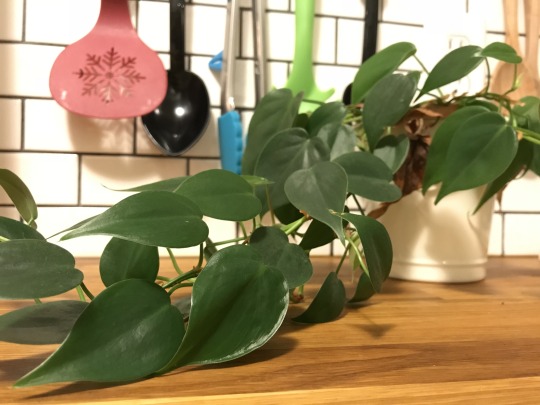
healthy green philodendron growing on a kitchen counter

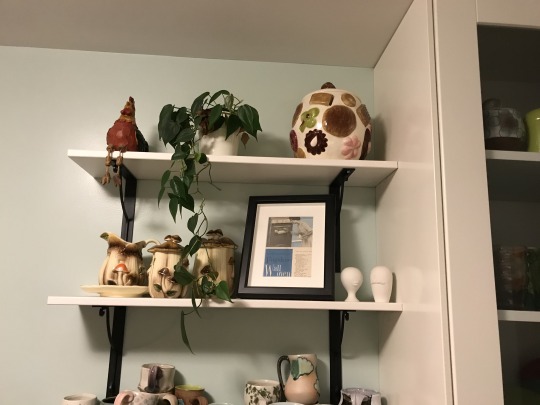
Philodendron growing on a bookshelf
Philodendron in its newly found habitat in the Anthropocene. Philodendrons are incredibly popular as indoor plants, being easy to take care of and incredibly tolerant of low light conditions in your house. Philodendrons are toxic to pets. However, the NASA Clean Air Study has found philodendrons to filter out harmful chemicals and improve indoor air quality.

The name Philodendron comes from the Greek philo meaning “love” and dendron meaning “tree.”  The name doesn’t refer to the heart shaped leaves, but rather to its growth habit as a vine that climbs trees.  It is native to tropical Mexico, the Caribbean, and regions in South America.
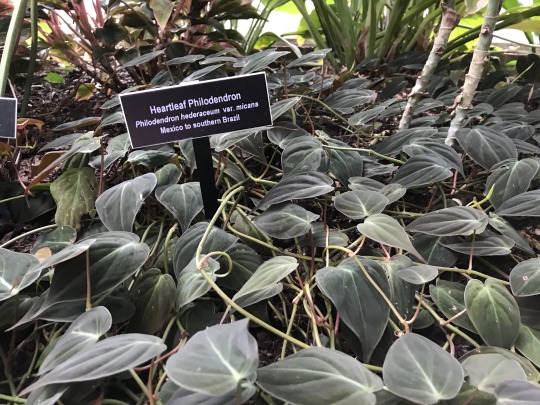
Philodendron growing outside

Happy Valentine’s Day from this loving plant!

sidebar

About

  • Mission & Commitments
  • Directors Team
  • Museum History

Get Involved

  • Volunteer
  • Membership
  • Carnegie Discoverers
  • Donate
  • Employment
  • Events

Bring a Group

  • Groups of 10 or More
  • Birthday Parties at the Museum
  • Field Trips

Powdermill

  • Powdermill Nature Reserve
  • Powdermill Field Trips
  • Powdermill Staff
  • Research at Powdermill

More Information

  • Image Permission Requests
  • Science Stories
  • Accessibility
  • Shopping Cart
  • Contact
  • Visitor Policies
One of the Four Carnegie Museums | © Carnegie Institute | Privacy Policy | Terms of Use | Accessibility
Rad works here logo