by Erin Peters
As Assistant Curator who works with the ancient Egyptian collections at CMNH, I care for and research our own collections, and also strive to be aware of connecting threads with other museums, their collections, and staff. In the wake of the devastating fire at Brazil’s National Museum that destroyed an incalculable amount of irreplaceable natural and cultural heritage (which included what is reported to be the entire Egyptian collection consisting of approximately 700 objects), it is especially important to celebrate these connections, and continue to build them.
In researching how we might update the display in our Walton Hall of Ancient Egypt, Jaron Keener (CMNH Exhibit Designer and Production Manager) and I recently went to the St Louis Art Museum. Jaron and I were excited to see the museum’s newly reinstalled permanent Egyptian collection, and to view the blockbuster travelling show, Sunken Cities: Egypt’s Lost Worlds.
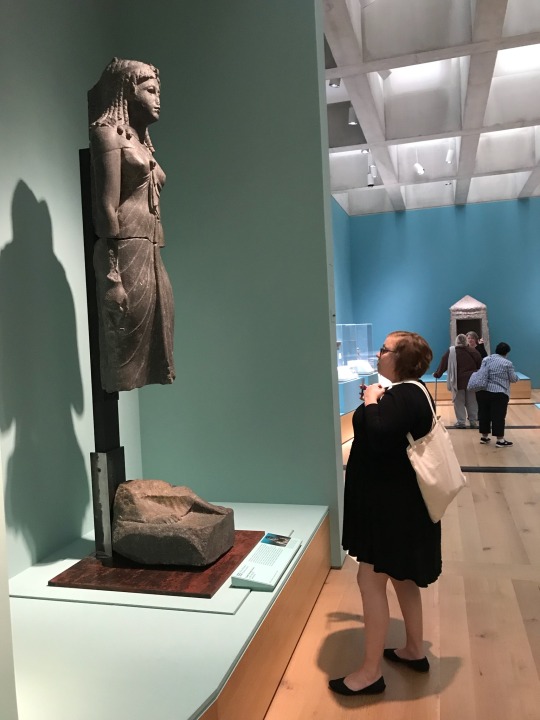
We looked at amazing objects (some of them rarely on view outside of Egypt), like this monumental statue of a queen in the guise of Isis.
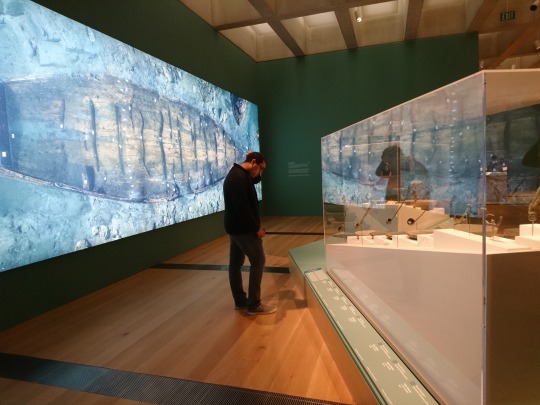
And we were interested in how objects were displayed, like this group of processional vessels and equipment installed in front of a life-size image of a boat that would have been used in processions. The boat is similar in size to our 30-foot funerary boat from Dashur.
We were also delighted to find other objects that are similar to ours in the Walton Hall of Ancient Egypt.
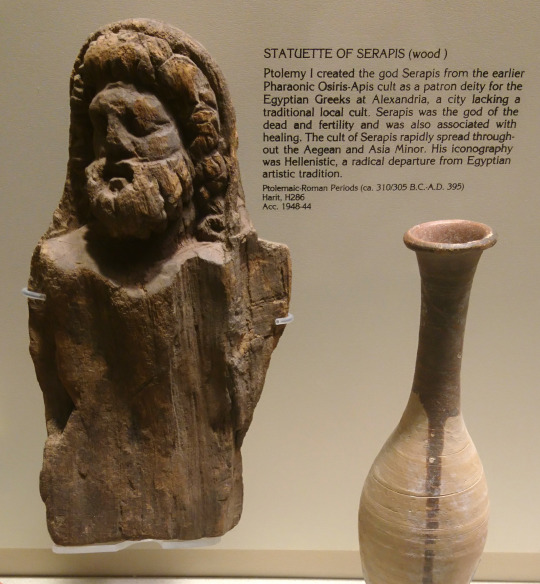
Our small wooden statuette of the god Serapis was found at Kasr el Harit, a small town near the Fayum in Egypt. The Fayum is a region located west of the Nile River and south of modern-day Cairo. Kasr el Harit was known as Theadelphia by the early Roman period in Egypt, and is the same site that an exquisite over-life-size wooden statue of Serapis on display in Sunken Cities was found.
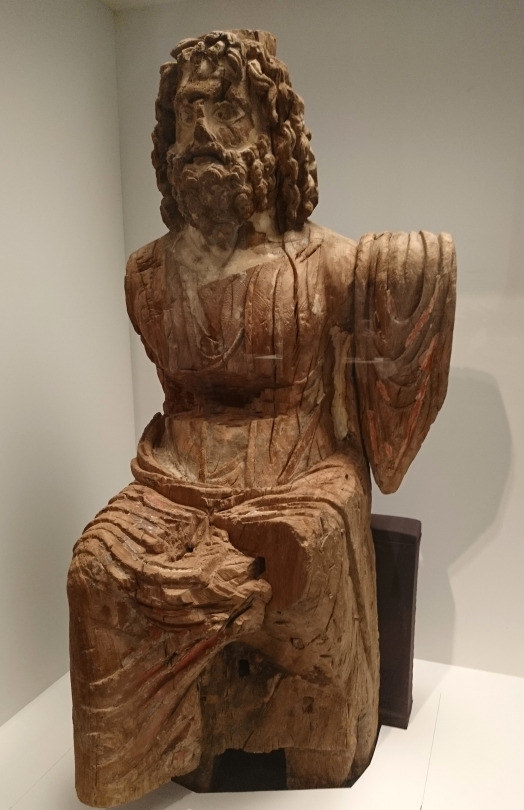
While images of Serapis are common from many areas of the ancient Mediterranean, these two wooden statues are relatively rare, and show how Egypt’s desert climate has preserved an exceptional amount of material. In connecting that material across museums, cities, and countries, we can expand our knowledge and continue to discover new things about Egypt and the rest of the ancient world.
Erin Peters is assistant curator of science and research at Carnegie Museum of Natural History. Museum employees are encouraged to blog about their unique experiences working at the museum.
