by Pat McShea
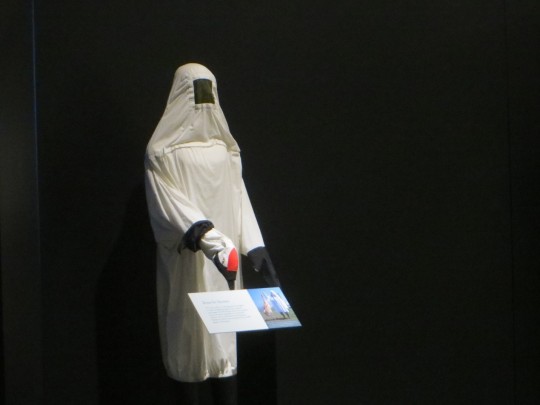
A ghostly looking outfit in the exhibition We Are Nature: Living in the Anthropocene is a symbol of hope. The costume is an authentic conservation tool, a care-giver disguise critical to the success of captive rearing programs for North America’s most elegant endangered bird, the Whooping Crane.
The costume is on loan from the International Crane Foundation, the Baraboo, Wisconsin-based
organization devoted to the conservation of our planet’s 15 crane species and the ecosystems, watersheds, and flyways on which they depend.
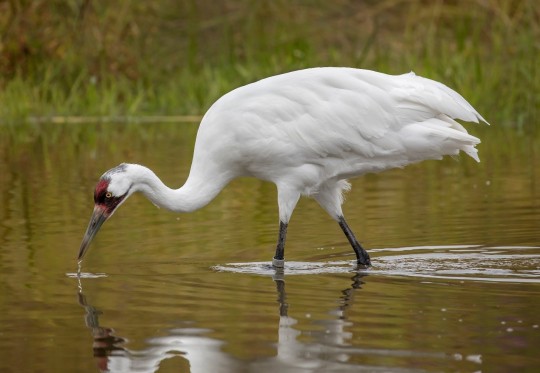
According to author Peter Matthiessen, whose book, The Birds of Heaven (North Point Press, 2001) documents the status all 15 crane species at the dawn of the 21st Century, Whooping Cranes were never
abundant. From an estimated population of 15,000 at the time on European contact, crane numbers plummeted due to over-hunting, egg collecting, and dramatic landscape changes associated with expanding agriculture and industry. Some 1,400 scattered birds remained in the latter half of the 19th
Century, and by the middle of the 20th Century the number of the big birds dipped as low as 21.
Today, thanks to far-sighted legislation and tireless work by US and Canadian wildlife agencies and organizations such as the National Audubon Society and International Crane Foundation, there are more than 600 Whooping Cranes. This figure includes a captive population of 161 birds, and four separate free-living flocks numbering between 10 and 300 birds.
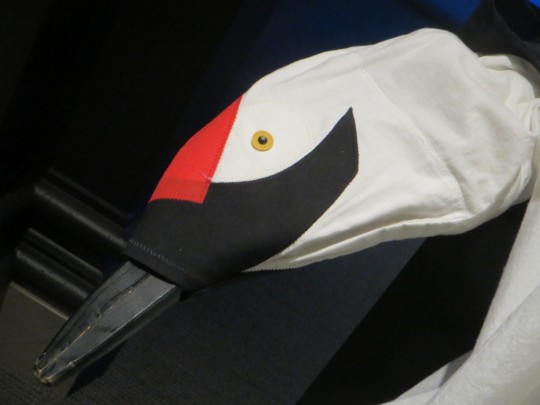
The captive breeding and captive rearing efforts that helped bolster Whooping Crane numbers rely heavily upon a working understanding of the biological phenomenon called imprinting. In ground-nesting birds, the term refers to the establishment of behavior patterns that lead young to follow and direct their interests to adults of their species. Because Whooping Crane chicks bond with the first big object they see after hatching, the skilled and devoted humans who take on rearing responsibilities utilize the deception provided by the bright white costume, its hand puppet head, and a carefully-concealed Mp3 player loaded with recorded crane calls. If the disguise works, captive-reared birds will know they are Whooping Cranes when released into the wild.
Patrick McShea works in the Education and Visitor Experience department of Carnegie Museum of Natural History. Museum employees are encouraged to blog about their unique experiences and knowledge gained from working at the museum.
