Here, in the section of Invertebrate Zoology, we have a large collection of moths (order Lepidoptera: particularly in the families Sphingidae and Noctuidae), beetles (order Coleoptera: particularly in the family Carabidae), and fleas (order Siphonaptera: from all over the world). However, one of the most interesting groups we have in our collection is the order Odonata (pronounced oh-DOE-naw-ta), also known as dragonflies and damselflies (Figure 1). Aquatic in their juvenile stages, these masters of air and water are stunningly beautiful in overall design and coloration, and are phenomenal hunters. Truly, these delicate predators are impactful and under-appreciated among insect taxa.
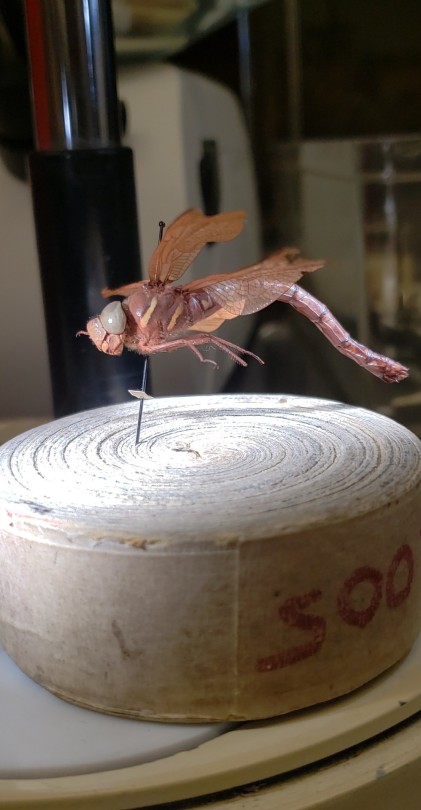
Odonates are insects that undergo incomplete metamorphosis, and have three primary life stages: egg, nymph, and adult (or imago). Incomplete metamorphosis (also called hemimetaboly) is a process where juveniles look like miniature versions of the adults, but get larger over time. Organisms undergoing complete metamorphosis (also called holometaboly) have a pupal stage, and juvenile and adult stages appear very different. For example, a caterpillar turns into a pupa, before emerging as an adult moth or butterfly. Odonates can spend months or years in their nymphal stages, depending on the taxon. Most people (myself included!) are more familiar with the adult phase of an odonate’s life cycle, and see them darting around freshwater ponds and rivers, hunting to satiate their carnivorous diet.
Recently, I transferred our pinned and papered odonate material from one kind of drawer (USNM) into other drawers (Old Holland and Ortmann) due to space limitations in our collection. (For a refresher on drawer types found around the section, see the “Ants in our Pants and Bugs in Our Drawers” blog post!) Among much of our pinned material were numerous nymphal exuviae, or skins cast off by young, immature, juvenile odonates as they grew towards adulthood.
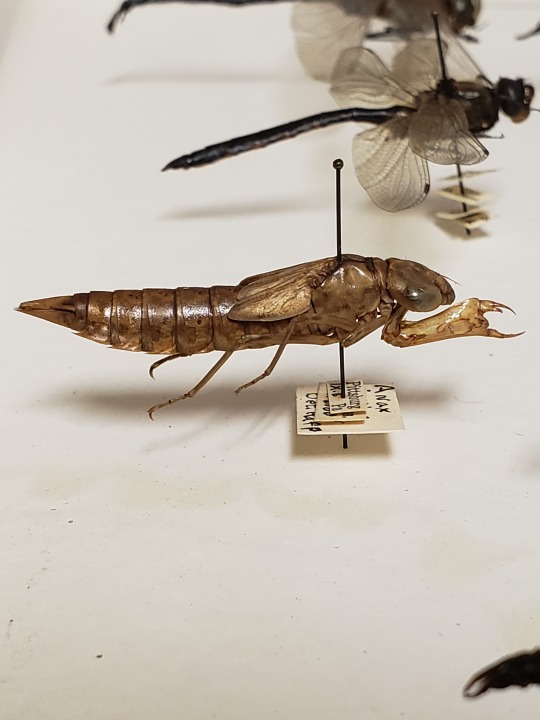
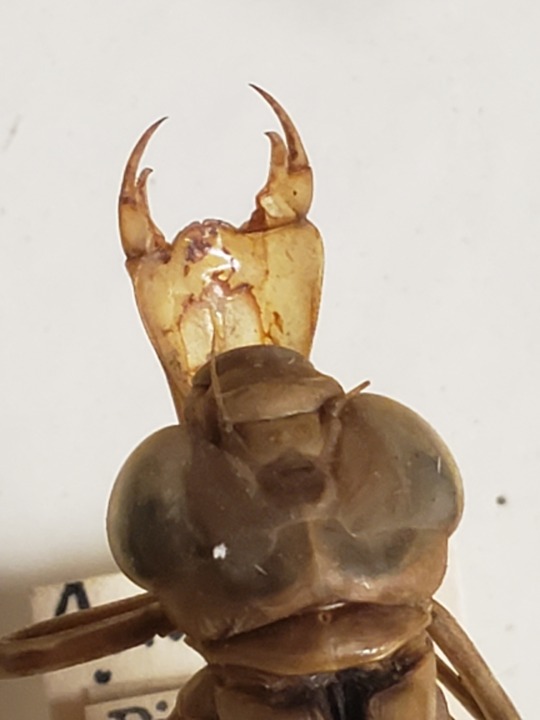
Pictured below is not a Hollywood monster, but rather a dragonfly nymph, Anax junius, in the family Aeshnidae, with the labium extended (Figure 2). While this image could be considered the stuff of nightmares, for an entomologist like me, it makes me excited! Nymphs use the labium to grab for prey in the water, and on the end of this particular specimen’s labium, you can clearly see additional pincers, used to grasp prey more securely. Pictured below is a close-up view of these pincers (Figure 3). Even as juveniles, dragonflies are top predators, making them masters of both water and air.
At last count, we had approximately 40,000 pinned and papered odonate specimens in our collection. Having nymphal exuviae, like the ones pictured here, only enrich and enhance the diversity and magnificence of our insect collection here at the Carnegie.
Catherine Giles is the Curatorial Assistant of Invertebrate Zoology at the Carnegie Museum of Natural History. Museum employees are encouraged to blog about their unique experiences working at the museum.
