“If we do not mass produce products, we vie with one another
in the difficult, exquisite and useless art of dressing fleas”
Octavio Paz [diplomat, poet, writer, winner of 1990 Nobel Prize in Literature]
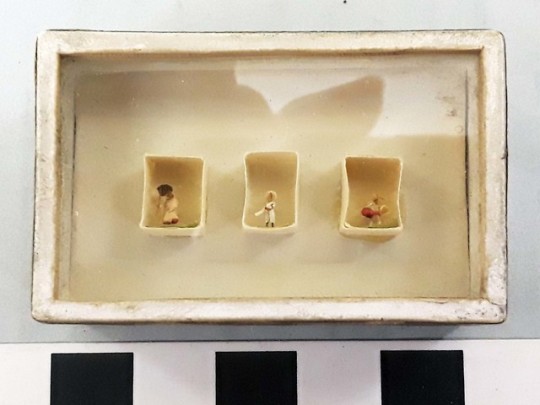
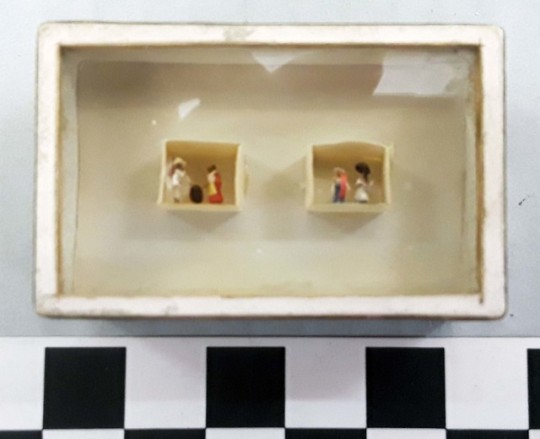
The art of dressing fleas in costumes and creating tiny tableaus began in Mexico in the 19th century, centered around the state of Guanjuato. Some people believe that Pulgas Vestidas (dressed fleas) began being made in convents; they went on to become a craft done by ordinary people. Eventually they became something to sell to tourists. Dressed fleas were still being created well into the 1930s, the most popular forms being bride and groom or farmer and wife sets. Some were as elaborate as an entire mariachi band, complete with instruments.
In the 1920s Octavio Paz called it a “difficult art, exquisite and useless,” and added, “I shall never be one to disparage this amazing skill, since where spiritual health is concerned, building a skyscraper and adorning a flea are each as monstrous as the other.” A British entomologist, Tim Cockerill, has taught himself how to make them, and includes a modern bride and groom set on his website.
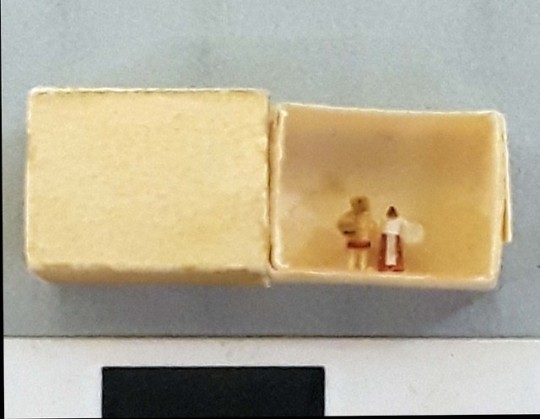
The museum’s three sets of dressed fleas were acquired in the 1930s, and donated by different people in the late 20th century. They are part of an extensive collection of ethnographic and historic dolls. They are a must-see for anyone having a behind-the-scenes tour of the Anthropology storage areas. Dressed fleas are a prime example of human ingenuity and skill, even if a reason for being is not immediately obvious.
Deborah Harding is the collection manager of the Section of Anthropology at Carnegie Museum of Natural History. Museum employees are encouraged to blog about their unique experiences and knowledge gained from working at the museum.
