By Amy Henrici
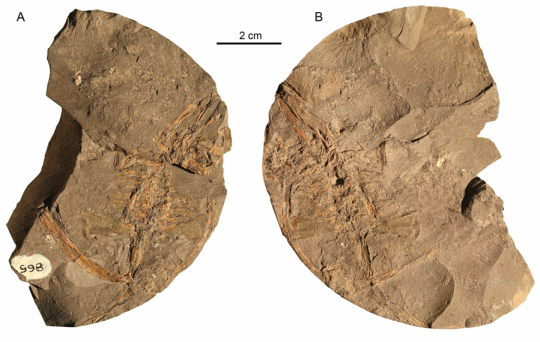
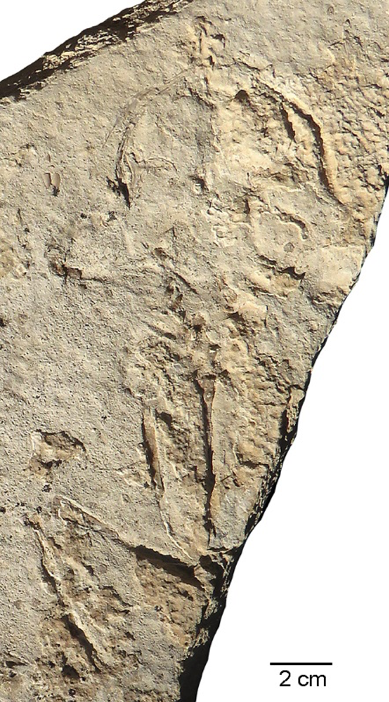
I recently completed a project on fossil frogs from east central Nevada that my collaborators and I identified as the enigmatic Eorubeta nevadensis Hecht, a species that was originally based on a single, poorly preserved specimen that had been discovered in a well core.
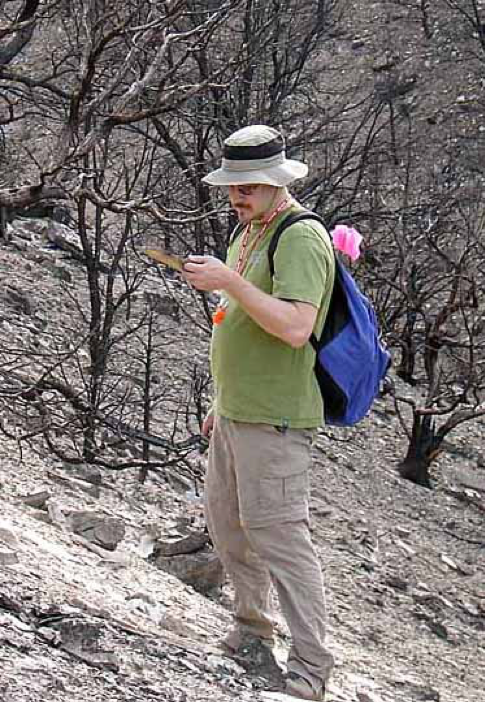
The new collection of Eorubeta came from the Sheep Pass Canyon area about 12.5 miles northeast of the well core site. Peter Druschke discovered fossil frogs here in 2005 while working on his PhD dissertation on a rock unit known as the Sheep Pass Formation. Peter and fellow University of Nevada Las Vegas graduate students Josh Bonde and Aubrey Shirk and colleagues Dick Hilton and Tina Campbell (of Sierra College in Rocklin, California) collected additional fossil frogs in subsequent years. I was very fortunate to be invited to join the team, and we collected over 60 specimens for Carnegie Museum of Natural History in 2012, 2013, and 2016.
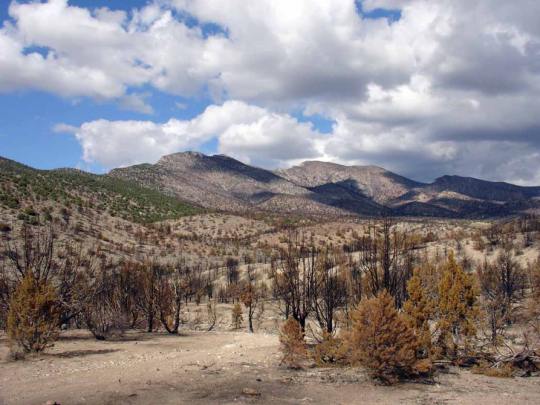
The field site lies in the South Egan Range Wilderness Area of east central Nevada. Being a wilderness area, we could only drive on existing roads, and had to hike nearly a mile to the fossil-producing slopes. The climate in Nevada is challenging to work and camp in, with temperatures reaching over 100 degrees Fahrenheit during the July 2013 field season and nighttime temperatures dipping into the high 20s during the November 2016 season.
When Eorubeta was originally named, the rock unit from which this frog came (Member B of the Sheep Pass Formation) was thought to date to a time interval known as the Early Eocene (56–47.8 million years ago). More recently, however, Peter has determined that this unit was probably latest Cretaceous–Paleocene (72.1–56 million years ago) in age instead. It is thus possible that Eorubeta spanned the Cretaceous–Paleogene boundary (66 million years ago) and survived the infamous asteroid impact that caused the extinction of non-avian dinosaurs and many other animal and plant species.
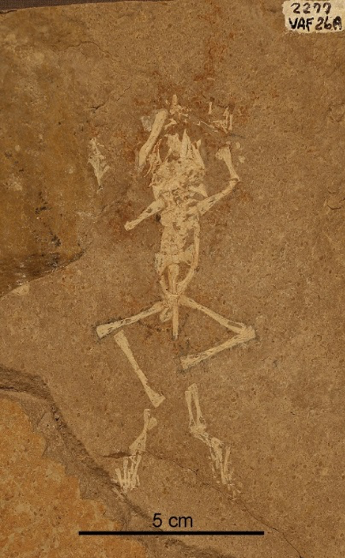
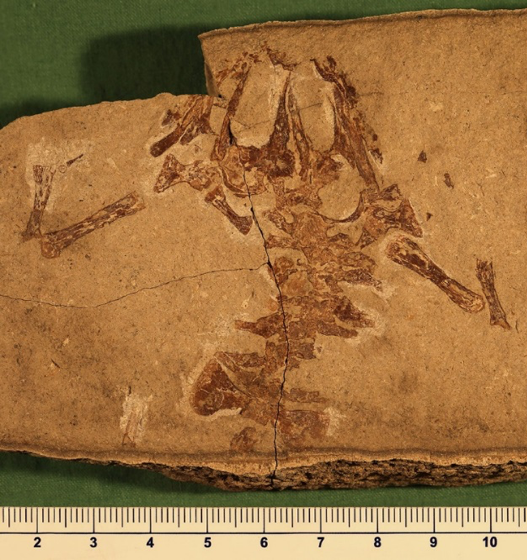
Peter determined that the beds in which the fossil frogs were preserved were part of a very high-elevation lake system (1.4–2.2 miles in elevation), similar in this way to today’s Lake Titicaca located in the Andes Mountains on the border of Bolivia and Peru. To date, Eorubeta is the only fossil frog known to have inhabited such a high-elevation environment. Most fossil frogs from this time come from prehistoric river and lake systems situated on coastal plains. The discovery of Eorubeta suggests that ancient frogs probably inhabited a greater variety of environments than the current fossil frog record indicates.
The first specimen discovered by Peter in 2005 indicates that Eorubeta may have reached a considerable size, though the fossil’s extremely weathered condition makes its identification uncertain. An analysis of the relationships of Eorubeta to other frogs reveals that it is more archaic than spadefoot toads, Neobatrachia (a group known as modern frogs), and their relatives.
To learn more about Eorubeta, please follow this link to our paper recently published online in the Journal of Vertebrate Paleontology: https://www.tandfonline.com/doi/full/10.1080/02724634.2018.1510413.
Amy Henrici is the collection manager for the Section of Vertebrate Paleontology at Carnegie Museum of Natural History. Museum employees are encouraged to blog about their unique experiences and knowledge gained from working at the museum.
