• Skip to primary navigation
  • Skip to main content
  • Skip to primary sidebar

Carnegie Museum of Natural History

One of the Four Carnegie Museums of Pittsburgh

  • Visit
    • Buy Tickets
    • Visitor Information
    • Exhibitions
    • Events
    • Dining at the Museum
    • Celebrate at the Museum
    • Powdermill Nature Reserve
    • Event Venue Rental
  • Learn
    • Field Trips
    • Educator Information
    • Programs at the Museum
    • Bring the Museum to You
    • Guided Programs FAQ
    • Programs Online
    • Climate and Rural Systems Partnership
  • Research
    • Scientific Sections
    • Science Stories
    • Science Videos
    • Senior Science & Research Staff
    • Museum Library
    • Science Seminars
    • Scientific Publications
    • Specimen and Artifact Identification
  • About
    • Mission & Commitments
    • Directors Team
    • Museum History
  • Tickets
  • Give
  • Shop
Loading Events

« All Events

3.5 Billion Years of Microbial Community Interactions

September 23, 2019, 12:00 pm - 1:00 pm

Event Navigation
  • « Nature Lab
  • Stream Ecology in a Changing World: a Multi-Scale Approach to Evaluating Threats to Water Quality »

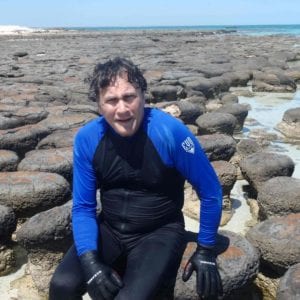
stoltzSpeaker: John Stoltz, Center for Environmental Research and Education at Duquesne University

Life has existed on Earth for over 3.5 billion years. We know this through the preserved remains of microorganisms, as microfossils and microbialites such as microbially induced sedimentary structures (MISS) and stromatolites. Over half of the elements in the periodic table have some biological role, many with complex biogeochemical cycles that are microbially mediated. The global microbiome encompasses a wide range of environments including deep in the Earth’s crust, with an estimated population of ~1030 cells and more than a trillion species. Deep sequencing projects have revealed hitherto unknown phyla and “microbial dark matter.” The discoveries of conductive pili and cable bacteria have shown that microbes can transfer electrons to and from external sources (a process known as electrotrophy), sometimes over significant distances. This talk focuses on John Stolz’s research on metal munching microbes and the microbial communities of living stromatolites from the Bahamas and Shark Bay, Australia. Stolz will discuss how the intimate interactions of microbes with their environment that started way back in the Archean has helped forge the world we know today.

  • Google Calendar
  • iCalendar
  • Outlook 365
  • Outlook Live

Details

Date:
September 23, 2019
Time:
12:00 pm - 1:00 pm

Event Navigation

  • « Nature Lab
  • Stream Ecology in a Changing World: a Multi-Scale Approach to Evaluating Threats to Water Quality »

sidebar

About

  • Mission & Commitments
  • Directors Team
  • Museum History

Get Involved

  • Volunteer
  • Membership
  • Carnegie Discoverers
  • Donate
  • Employment
  • Events

Bring a Group

  • Groups of 10 or More
  • Birthday Parties at the Museum
  • Field Trips

Powdermill

  • Powdermill Nature Reserve
  • Powdermill Field Trips
  • Powdermill Staff
  • Research at Powdermill

More Information

  • Image Permission Requests
  • Science Stories
  • Accessibility
  • Shopping Cart
  • Contact
  • Visitor Policies
One of the Four Carnegie Museums | © Carnegie Institute | Privacy Policy | Terms of Use | Accessibility
Rad works here logo