• Skip to primary navigation
  • Skip to main content
  • Skip to primary sidebar

Carnegie Museum of Natural History

One of the Four Carnegie Museums of Pittsburgh

  • Visit
    • Buy Tickets
    • Visitor Information
    • Exhibitions
    • Events
    • Dining at the Museum
    • Celebrate at the Museum
    • Powdermill Nature Reserve
    • Event Venue Rental
  • Learn
    • Field Trips
    • Educator Information
    • Programs at the Museum
    • Bring the Museum to You
    • Guided Programs FAQ
    • Programs Online
    • Climate and Rural Systems Partnership
  • Research
    • Scientific Sections
    • Science Stories
    • Science Videos
    • Senior Science & Research Staff
    • Museum Library
    • Science Seminars
    • Scientific Publications
    • Specimen and Artifact Identification
  • About
    • Mission & Commitments
    • Directors Team
    • Museum History
  • Tickets
  • Give
  • Shop
Loading Events

« All Events

Moriarty Science Seminar: Dead shells speak: detecting unsuspected ecosystem change without being there

April 4, 2022, 12:00 pm - 1:00 pm

Online

Event Navigation
  • « Family Nature Walk at Powdermill
  • Friday Night at the Museum »
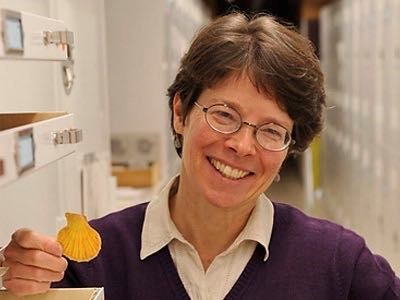
Susan Kidwell

R.W. Moriarty Science Seminar Presents: Dead shells speak: detecting unsuspected ecosystem change without being there

Speaker: Susan Kidwell, University of Chicago

Abstract:One of the major challenges for environmental management and conservation biology is simply discovering ‘what was natural’ before human impacts. This problem is especially pressing in marine systems, where biological monitoring and other records are brief or lacking. This question can be tackled locally in a geologically common-sensical way. First, we compare local dead-shell assemblages — sieved from the surface mixed layer — to a census of the local living community, identifying which species occur only as dead individuals (suggesting their populations have waned) and those that occur only alive, despite having mineralized tissues that should leave a trace, suggesting they are new arrivals to the habitat or region. We can then “age un-mix” the dead-shell assemblage using radiocarbon or other methods, which permits us to establish when taxa declined (or increased) relative to local timelines of natural and cultural stressors. This simple approach, strongly supported by meta-analysis and mechanistic modeling, provides a powerful tool for recognizing ecological change retrospectively. Importantly, it has the power to exonerate as well as to incriminate human activities. The method will be illustrated with some case studies from around the world.
.

Register Now

  • Google Calendar
  • iCalendar
  • Outlook 365
  • Outlook Live

Details

Date:
April 4, 2022
Time:
12:00 pm - 1:00 pm
Event Tags:
RW Moriarty Science Seminars

Venue

Online

Event Navigation

  • « Family Nature Walk at Powdermill
  • Friday Night at the Museum »

Tagged With: RW Moriarty Science Seminars

sidebar

About

  • Mission & Commitments
  • Directors Team
  • Museum History

Get Involved

  • Volunteer
  • Membership
  • Carnegie Discoverers
  • Donate
  • Employment
  • Events

Bring a Group

  • Groups of 10 or More
  • Birthday Parties at the Museum
  • Field Trips

Powdermill

  • Powdermill Nature Reserve
  • Powdermill Field Trips
  • Powdermill Staff
  • Research at Powdermill

More Information

  • Image Permission Requests
  • Science Stories
  • Accessibility
  • Shopping Cart
  • Contact
  • Visitor Policies
One of the Four Carnegie Museums | © Carnegie Institute | Privacy Policy | Terms of Use | Accessibility
Rad works here logo