
Moriarty Science Seminar: Making the Past Available in the Virtual Realm
December 7, 2020, 12:00 pm - 1:00 pm
Online
Event Navigation
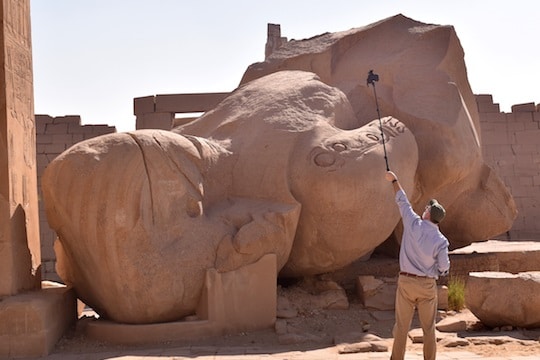
R.W. Moriarty Science Seminar Presents: Making the Past Available in the Virtual Realm: Using 3D Photogrammetry to Document Archaeological Research and Museum Collections
Speaker: David Anderson
The three-dimensional documentation of archaeological sites can be traced back to the earliest days of archaeological exploration in the Middle East with the use of stereographic photography for the production of stereo views. Methods to digitally scan and document objects and spaces in three dimensions have been available to archaeologists since the late 1990s. However, until recently scanning objects, buildings, and excavations required specialized equipment and was complex and costly in terms of both money and time. With an increase in computer processing power, resolution of digital cameras, ready availability of powerful mobile phone hardware, and improved algorithms, the process of capturing and documenting archaeological materials and cultural monuments is now an accessible and inexpensive process available to anyone with a digital camera and a laptop computer.
This lecture will explore the use of 3D digital photogrammetry in documenting archaeological remains. Using a series of case studies, the 3D documentation process will be reviewed from the taking of digital photographs, to processing images, reconstructing the three-dimensional data, and producing a detailed, accurate 3D model. Case studies will include rapid and accurate recording of objects, excavations, and monuments, the production of detailed two-dimensional maps and drawings for publication; creating 3D models of artifacts and skeletal remains for later analyses and publication; documenting existing conditions prior to conservation; virtual tours of monuments and museums, and the use of 3D models and reproductions for remote and face-to-face teaching across all age levels of the educational system.
