• Skip to primary navigation
  • Skip to main content
  • Skip to primary sidebar

Carnegie Museum of Natural History

One of the Four Carnegie Museums of Pittsburgh

  • Visit
    • Buy Tickets
    • Visitor Information
    • Exhibitions
    • Events
    • Dining at the Museum
    • Celebrate at the Museum
    • Powdermill Nature Reserve
    • Event Venue Rental
  • Learn
    • Field Trips
    • Educator Information
    • Programs at the Museum
    • Bring the Museum to You
    • Guided Programs FAQ
    • Programs Online
    • Climate and Rural Systems Partnership
  • Research
    • Scientific Sections
    • Science Stories
    • Science Videos
    • Senior Science & Research Staff
    • Museum Library
    • Science Seminars
    • Scientific Publications
    • Specimen and Artifact Identification
  • About
    • Mission & Commitments
    • Directors Team
    • Museum History
  • Tickets
  • Give
  • Shop
Loading Events

« All Events

Moriarty Science Seminar: “Follow Your Nose: How birds use scent to find mates, assess rivals, and recognize relatives”

February 13, 2023, 12:00 pm - 1:00 pm

Online

Event Navigation
  • « Super Science Saturday: Women and Girls in Science
  • Science and Nature Lecture: Bluebird »
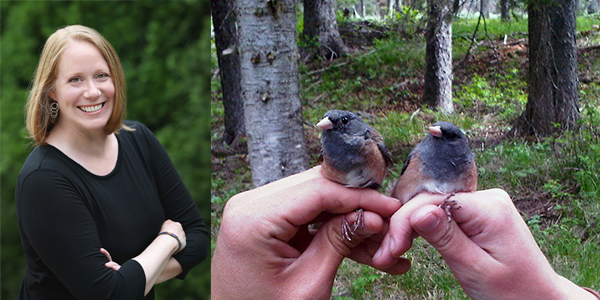
Danielle Whittaker and two pink sided junco birds

R.W. Moriarty Science Seminar Presents: “Follow Your Nose: How birds use scent to find mates, assess rivals, and recognize relatives”

Speaker: Danielle Whittaker, Oregon State University.

This event will take place online Monday, February 13 at Noon.

Abstract: Smell has been called the most ancient sense, and songbirds are no exception in their use of it. Behavioral, genomic, and neurobiological work has demonstrated that birds can use smell to navigate, find food, avoid predators, and even communicate with each other. The primary source of odors in most birds is preen oil, secreted by the uropygial gland and used by birds in grooming and maintaining their feathers. The compounds that make up these odors provide important information about a bird’s identity, health, breeding status, aggressiveness, and more. Interestingly, these compounds appear to be produced by symbiotic microbes that inhabit the uropygial gland. In this talk, Dr. Whittaker will share over a decade of her research on dark-eyed juncos (Junco hyemalis), a widespread North American sparrow, investigating how these odors are produced, what they communicate, and how they relate to behavior.

.

Register Now

  • Google Calendar
  • iCalendar
  • Outlook 365
  • Outlook Live

Details

Date:
February 13, 2023
Time:
12:00 pm - 1:00 pm
Event Tags:
RW Moriarty Science Seminars

Organizer

Carnegie Museum of Natural History

Venue

Online

Event Navigation

  • « Super Science Saturday: Women and Girls in Science
  • Science and Nature Lecture: Bluebird »

Tagged With: RW Moriarty Science Seminars

sidebar

About

  • Mission & Commitments
  • Directors Team
  • Museum History

Get Involved

  • Volunteer
  • Membership
  • Carnegie Discoverers
  • Donate
  • Employment
  • Events

Bring a Group

  • Groups of 10 or More
  • Birthday Parties at the Museum
  • Field Trips

Powdermill

  • Powdermill Nature Reserve
  • Powdermill Field Trips
  • Powdermill Staff
  • Research at Powdermill

More Information

  • Image Permission Requests
  • Science Stories
  • Accessibility
  • Shopping Cart
  • Contact
  • Visitor Policies
One of the Four Carnegie Museums | © Carnegie Institute | Privacy Policy | Terms of Use | Accessibility
Rad works here logo