• Skip to primary navigation
  • Skip to main content
  • Skip to primary sidebar

Carnegie Museum of Natural History

One of the Four Carnegie Museums of Pittsburgh

  • Visit
    • Buy Tickets
    • Visitor Information
    • Exhibitions
    • Events
    • Dining at the Museum
    • Celebrate at the Museum
    • Powdermill Nature Reserve
    • Event Venue Rental
  • Learn
    • Field Trips
    • Educator Information
    • Programs at the Museum
    • Bring the Museum to You
    • Guided Programs FAQ
    • Programs Online
    • Climate and Rural Systems Partnership
  • Research
    • Scientific Sections
    • Science Stories
    • Science Videos
    • Senior Science & Research Staff
    • Museum Library
    • Science Seminars
    • Scientific Publications
    • Specimen and Artifact Identification
  • About
    • Mission & Commitments
    • Directors Team
    • Museum History
  • Tickets
  • Give
  • Shop
Loading Events

« All Events

Moriarty Science Seminar: “Stories from the dead: What museum specimens tell us about the living world”

October 24, 2022, 12:00 pm - 1:00 pm

Hybrid: Online and At the Museum

Event Navigation
  • « HAUNTED MUSEUM AFTER DARK
  • Nestling’s Nook and Storybook »
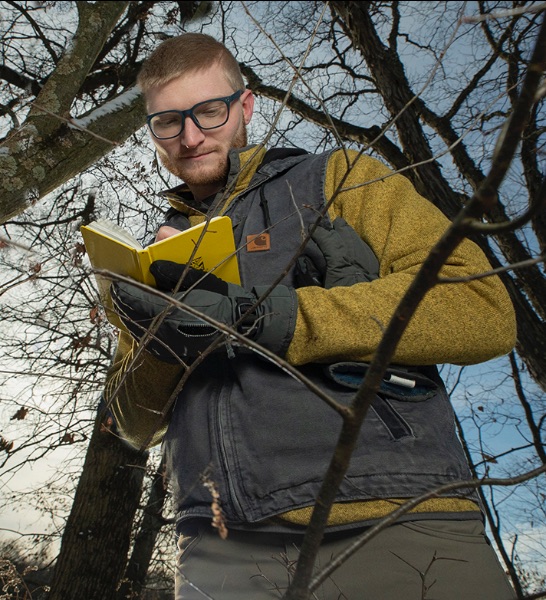
Mason Heberling writing in a nature notebook

R.W. Moriarty Science Seminar Presents: “Stories from the dead: What museum specimens tell us about the living world”

Speaker: Mason Heberling, Carnegie Museum of Natural History
Assistant Curator, Section of Botany

This event will take place Monday, October 24 at Noon both online and at Earth Theater.

Abstract: Why does Carnegie Museum of Natural History have 22 million specimens and objects? Though impressive, it is not always obvious what purposes these collections serve. Is the practice a thing of the past? In this talk, Heberling will share his journey from a plant ecologist with little experience with collections to his research today that deeply relies upon herbarium specimens. With over 390 million plant specimens collected by thousands of botanists over nearly five centuries in museums worldwide, herbaria (collections of preserved dead plants) comprise an enormous resource for understanding the world around us. Historically, these collections were used to understand, describe, and organize the tree of life (taxonomy and systematics). While these longstanding uses remain relevant in modern research, the use of museum collections has deepened and expanded in unanticipated ways. Heberling will highlight his research using collections to understand plant responses in a time of rapid environmental changes. As novel uses of specimens are increasing, new curatorial needs and perspectives need to be considered, including an open re-evaluation of the very collection event itself. As we enter the Anthropocene, herbaria have likewise entered a new era with enhanced scientific, educational, and societal relevance.

.

Register Now

  • Google Calendar
  • iCalendar
  • Outlook 365
  • Outlook Live

Details

Date:
October 24, 2022
Time:
12:00 pm - 1:00 pm
Event Tags:
RW Moriarty Science Seminars

Organizer

Carnegie Museum of Natural History

Venue

Hybrid: Online and At the Museum

Event Navigation

  • « HAUNTED MUSEUM AFTER DARK
  • Nestling’s Nook and Storybook »

Tagged With: RW Moriarty Science Seminars

sidebar

About

  • Mission & Commitments
  • Directors Team
  • Museum History

Get Involved

  • Volunteer
  • Membership
  • Carnegie Discoverers
  • Donate
  • Employment
  • Events

Bring a Group

  • Groups of 10 or More
  • Birthday Parties at the Museum
  • Field Trips

Powdermill

  • Powdermill Nature Reserve
  • Powdermill Field Trips
  • Powdermill Staff
  • Research at Powdermill

More Information

  • Image Permission Requests
  • Science Stories
  • Accessibility
  • Shopping Cart
  • Contact
  • Visitor Policies
One of the Four Carnegie Museums | © Carnegie Institute | Privacy Policy | Terms of Use | Accessibility
Rad works here logo