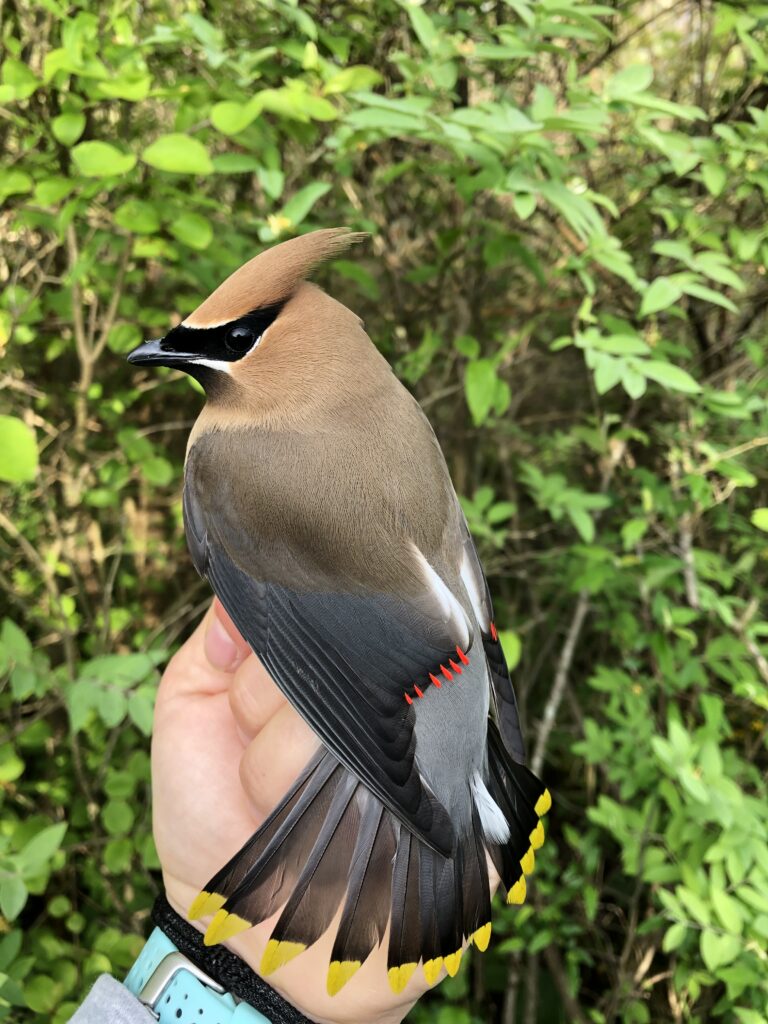
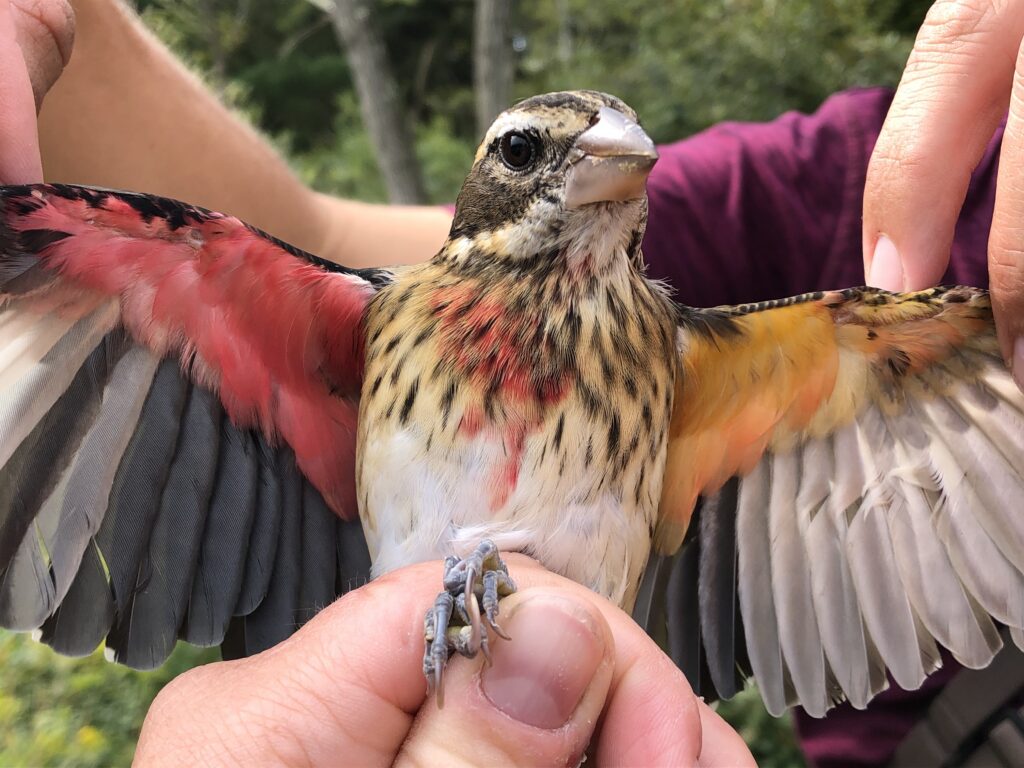
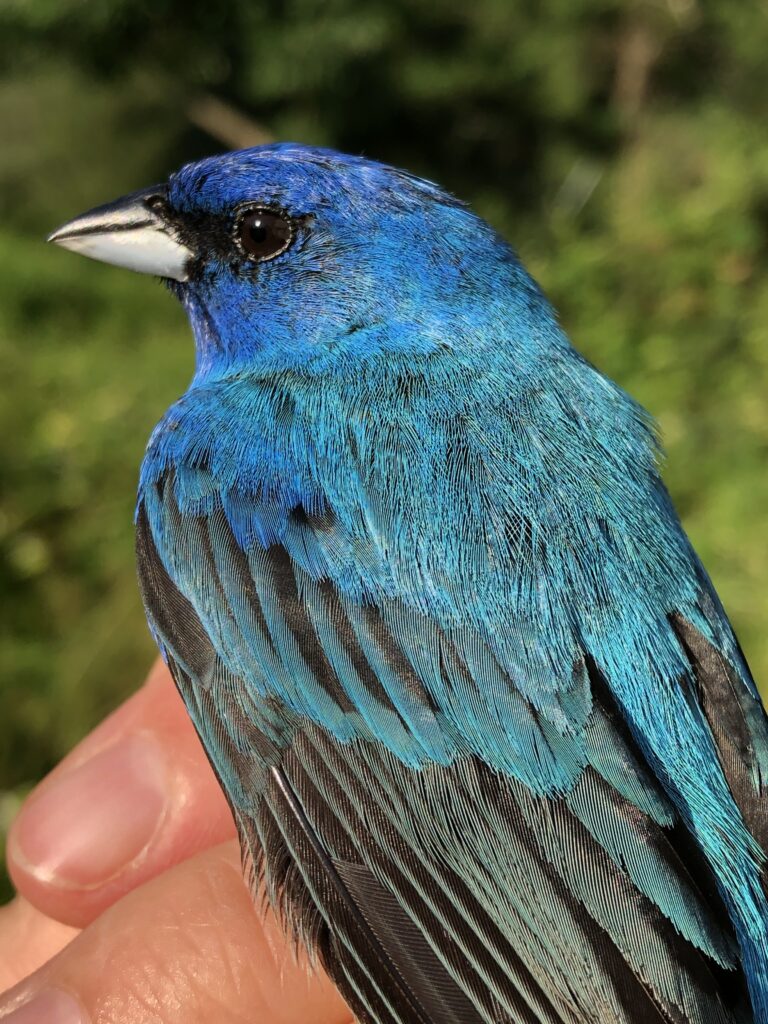
Help support the birds, researchers, and staff at the Richard P. Mellon Avian Research Center by adopting an avian mist net today!
The Richard P. Mellon Avian Research Center (PARC) at Powdermill is part of Carnegie Museum of Natural History’s biological research station, Powdermill Nature Reserve, located in the Laurel Highlands of Southwestern Pennsylvania. PARC operates a bird banding station, conducts research using the Motus telemetry network to track birds, and evaluates avian perception of glass in an experimental flight tunnel to help reduce bird window collisions. Above all else, the well-being of every bird is always our top priority!
New for 2026, friends and donors can now “adopt-a-net” to help support the important work happening at PARC in all seasons. Available at four levels from $150-$2500+, all donors will receive e-updates about the birds that show up in the specific net they’ve adopted. Additional tiered benefits are listed below and include virtual programming, event invitations, and the opportunity to get a close-up look at the banding process alongside our scientists.
There’s also a chance to win big! Donors who adopt a net — at any level — that receive the most birds in the calendar year will be awarded a PARC hoodie!
After reviewing the donation levels and available nets below, click the button below to make your donation and select your net.
If you are interested in adopting a net as a gift for someone else, please contact us at Development@CarnegieMNH.Org or 412.578.2538.
Adopt-a-Net Levels
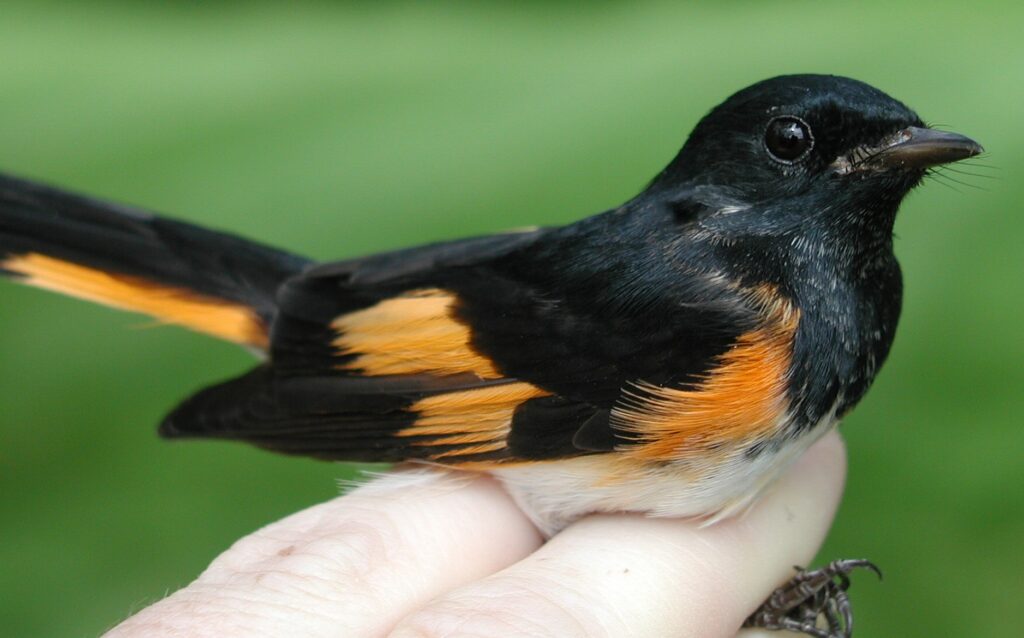
$150 – American Redstart Level
Donors receive: The opportunity to choose a net to sponsor and an annual report describing what was caught that year in the net.
Available Nets at this level: 8C, 9A, 18A, 18B, 26A, 26B, 27A, 27B
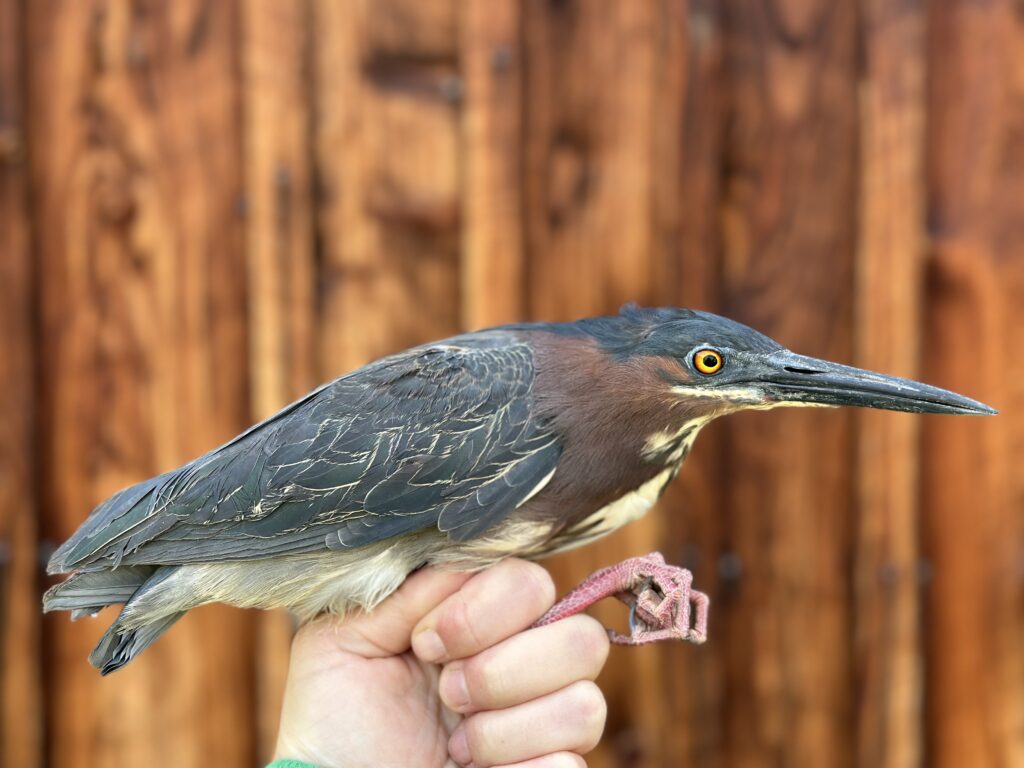
$500 – Green Heron Level
Donors receive: The opportunity to choose a higher-use net to sponsor and a twice-annual report describing what was caught that year in the net.
Available Nets at this level include any from the $150 Level, plus: 14A, 14B, 15A, 15B, 15C, 16A, 16B, 16C, 17A, 17B, 17C, 19A, 19B, 20A, 20B, 20C, 20D, 21A, 21B, 22A, 22B, 22C, 23A, 23B, 23C, 24

$1,500 – White-breasted Nuthatch Level
Donors receive: All the benefits listed at the $500 level, but for the most frequently used mist nets, plus the opportunity to attend a seasonal virtual bird banding demonstration, and an invitation to a special pre-party hour with the scientists before the next TrailMixer Event (May 2027).
Available Nets at this level include any from the $150 – $500 Levels, plus: 2A, 2B, 2C, 3A, 3B, 4A, 4B, 4C, 4D, 5A, 5B, 5C, 5D, 6A, 6B, 7, 11A, 11B, 11C, 12A, 12B, 13A, 13B, 13C, 13D
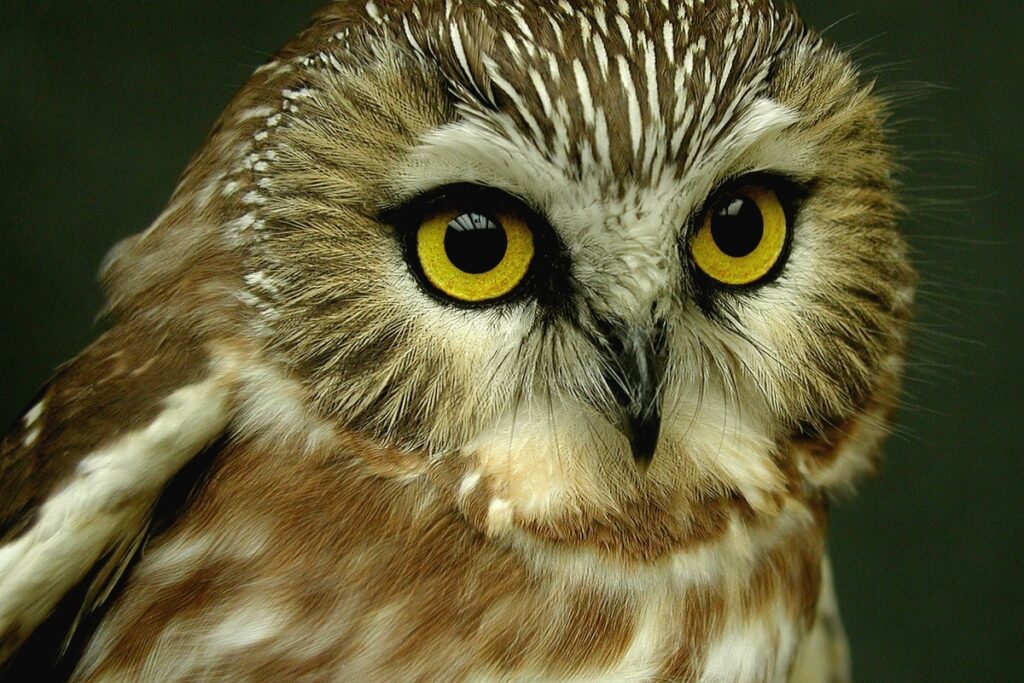
$2,500 – Northern Saw-whet Owl Level
Donors receive: All the benefits listed at the $1500 level, plus the opportunity to attend an in-person, sponsor-only, nighttime owl banding demonstration with the scientist of PARC.
Available Nets at this level include any from the $150 – $1500 Levels, plus: 1A, 1B, 8A, 8B, 10A, 10B, 25A, 25B, 25C, 25D

More about the PARC Mist Nets:
PARC operates a year-round banding station and effort varies seasonally. All of the mist nets are opened five days per week during spring and fall migration, up to half the mist nets are opened three days per week during the summer breeding season, and 6-8 mist nets are opened two days per week in the winter if weather permits. From the first deployment of the mist nets, about a half hour before sunrise, to the close of the banding day, nets are checked every 30 to 40 minutes. The nets themselves are designed for the safe capture of birds, large and small, and each bird is placed in a small drawstring bag for its trip to the banding station.
Once in the lab, birds are identified to species, banded (or reprocessed if they had been banded previously), and information about their age, sex, wing length, fat deposits, and body mass are recorded.
The band itself is a small numbered bracelet issued through the US Geological Survey. It causes no physical harm to the bird, nor does it impair flight, feeding, or any bird behavior.
The whole process of collecting data for each captured bird takes less than a minute, after which the bird is promptly released through a small sliding door in the window next to the banding desk.