
• Skip to primary navigation
  • Skip to main content
  • Skip to primary sidebar

Carnegie Museum of Natural History

One of the Four Carnegie Museums of Pittsburgh

  • Visit
    • Buy Tickets
    • Visitor Information
    • Exhibitions
    • Events
    • Dining at the Museum
    • Celebrate at the Museum
    • Powdermill Nature Reserve
    • Event Venue Rental
    • Gift Cards
  • Learn
    • Field Trips
    • Educator Information
    • Programs at the Museum
    • Bring the Museum to You
    • Guided Programs FAQ
    • Programs Online
    • Climate and Rural Systems Partnership
  • Research
    • Scientific Sections
    • Science Stories
    • Science Videos
    • Senior Science & Research Staff
    • Museum Library
    • Science Seminars
    • Scientific Publications
    • Specimen and Artifact Identification
  • About
    • Mission & Commitments
    • Directors Team
    • Museum History
  • Tickets
  • Give
  • Shop

Egypt on the Nile

Egypt on the Nile logo
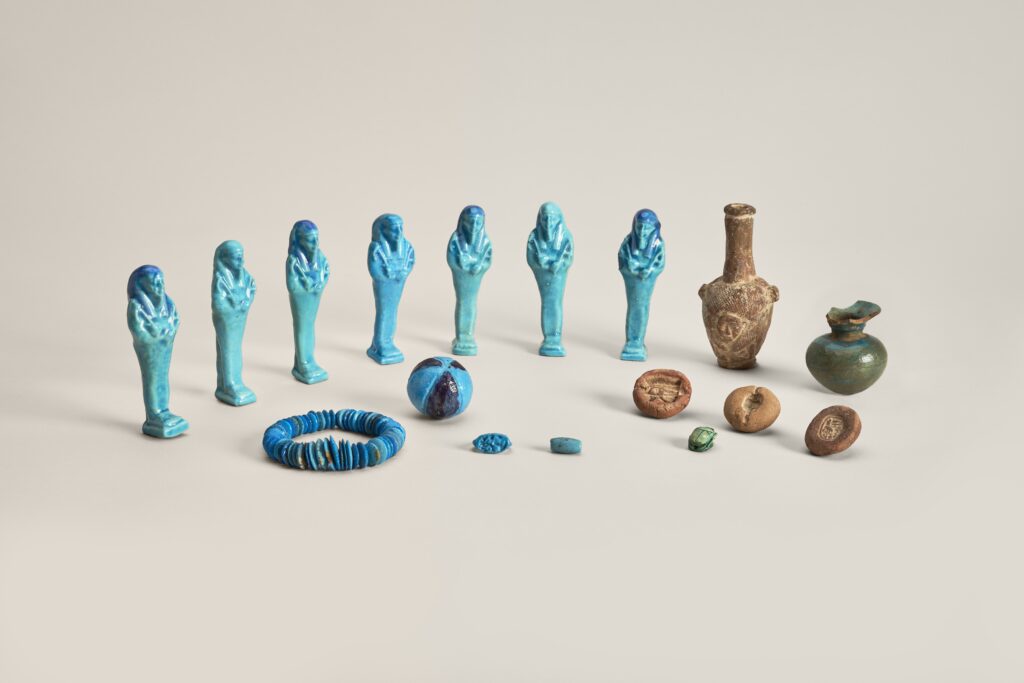
group of faience figures
The characteristic features of Egyptian faience are its bright blue-green color and glossy shine. These objects represent a range of types, techniques, and stages of faience production. Courtesy of Carnegie Museum of Natural History. Photo: Bob Martin & Mike Herbay, Cwenar Studios
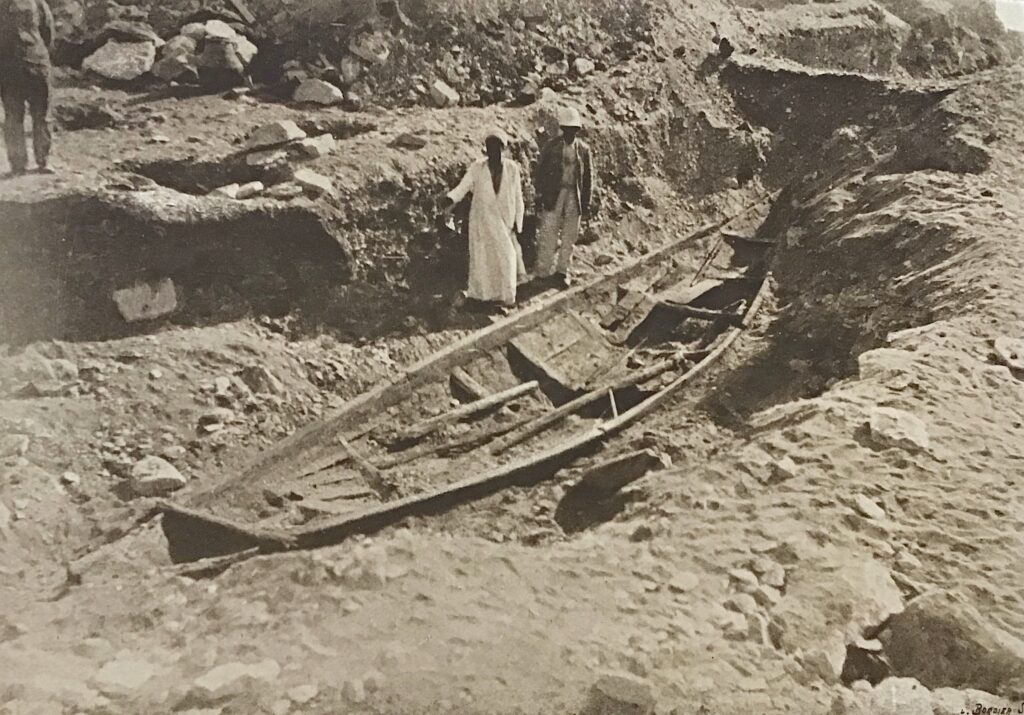
historic photo of the Dahshur boat excavation
View of the May-June 1894 excavation of the Dahshur boats. Credit: De Morgan, Fouilles à Dâhchour, pl. XXIX.
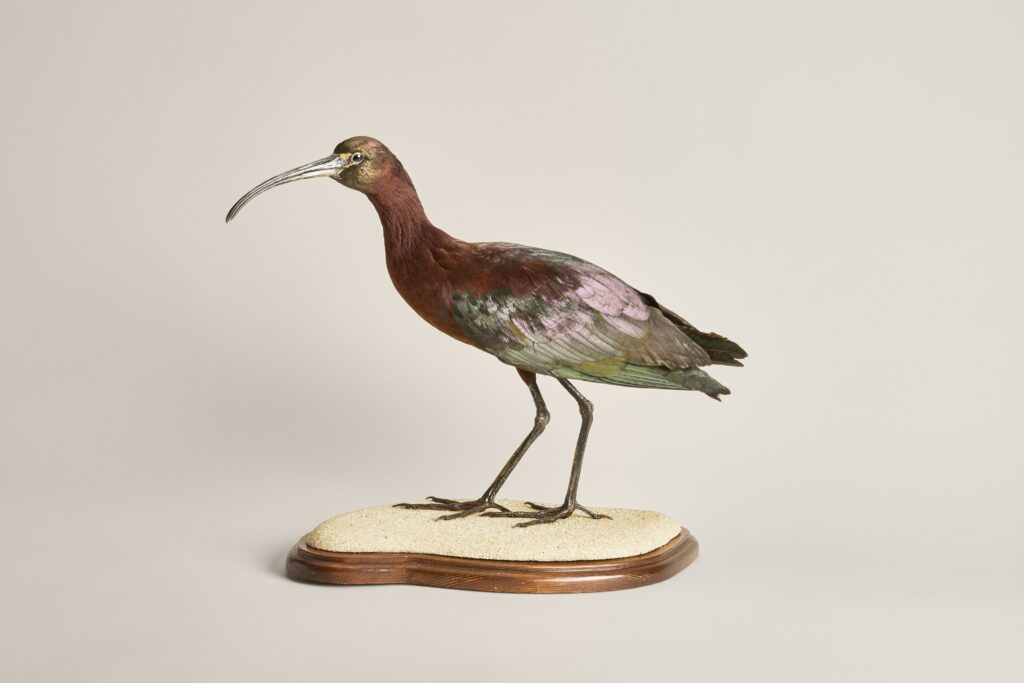
glossy ibis taxidermy mount
The Glossy Ibis (Plegadis falcinellus) is found year-round in Egypt and other parts of Africa, in inland wetland habitats, and sometimes in coastal lagoons and estuaries. Courtesy of Carnegie Museum of Natural History. Photo: Bob Martin & Mike Herbay, Cwenar Studios
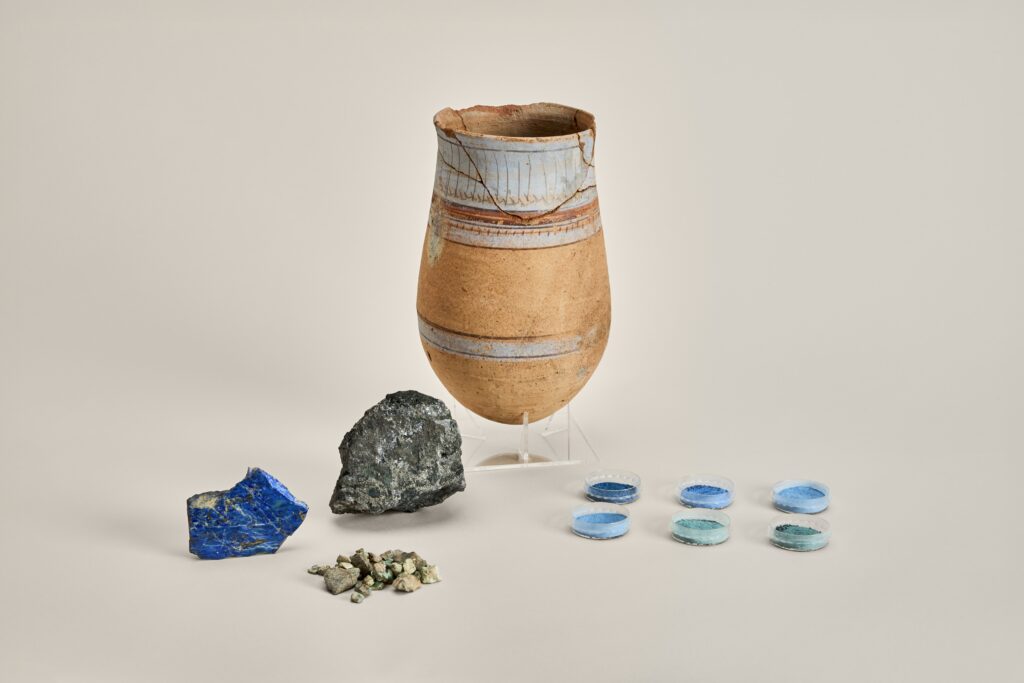
objects colored with Egyptian blue
Egyptian blue provided craftspeople with an alternative to cost-prohibitive blue stones like lapis and turquoise, enabling the use of blue in a much wider range of situations. Courtesy of Carnegie Museum of Natural History. Photo: Bob Martin & Mike Herbay, Cwenar Studios
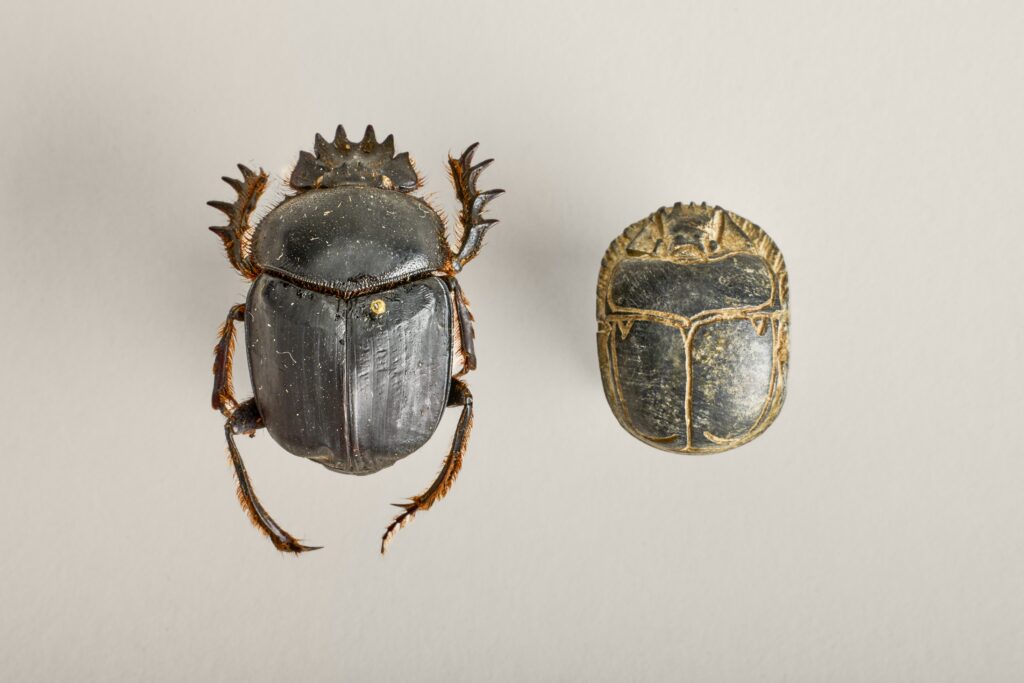
scarab beetle specimen and scarab beetle Egyptian artifact side by side
The Scarab Beetle (Scarabaeus sacer) more commonly known as the dung beetle was a manifestation of the god Khepri. Just like the dung beetle pushes its ball of dung across the scorching desert sand, Khepri pushes the sun up in the east and across the sky. Courtesy of Carnegie Museum of Natural History. Photo: Bob Martin & Mike Herbay, Cwenar Studios
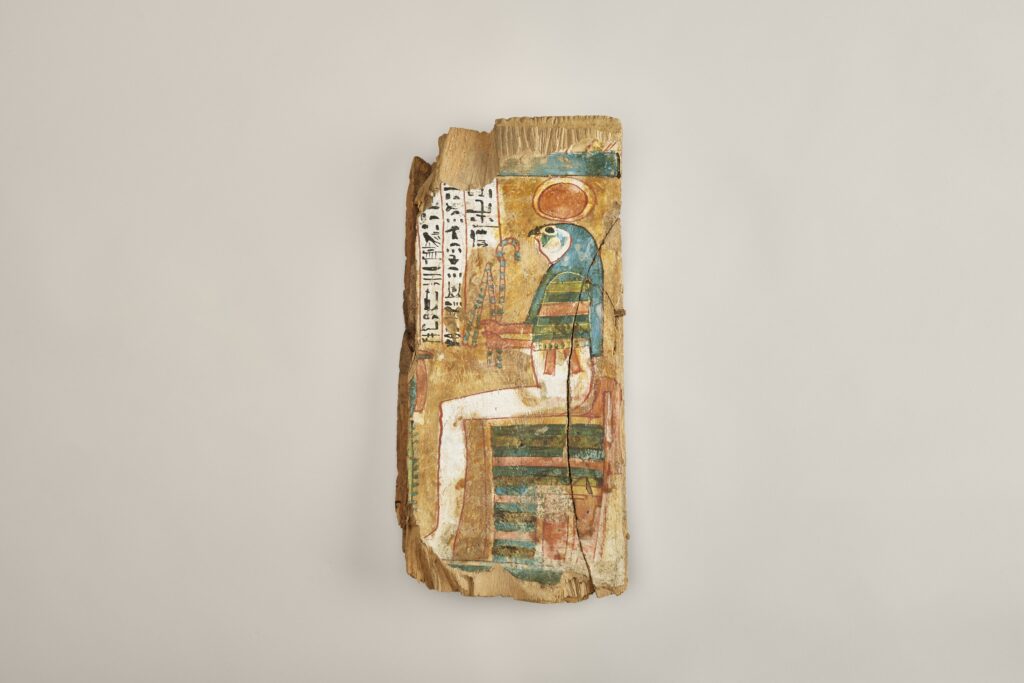
Horus coffin fragment
Fragment from a woman’s coffin depicting the falcon god Re-Horakhty-Atum, a god who was associated with the sun and the creation of the universe. Courtesy of Carnegie Museum of Natural History. Photo: Bob Martin & Mike Herbay, Cwenar Studios

Opens May 1, 2027

Egypt on the Nile returns a fan-favorite topic to Carnegie Museum of Natural History galleries, inviting you to explore ancient Egypt from a new perspective by examining ancient Egyptian relationships with the Nile River and the surrounding landscapes. As you move through this immersive exhibition, you’ll discover how climate, landscape, and the natural world shaped ancient Egypt. By focusing on the connections between nature and culture, Egypt on the Nile offers new insight into daily life, religion, and funerary traditions in ancient Egypt informed by more than 5,000 objects in the museum’s care.

You’ll encounter beautifully handcrafted belongings spanning more than 5,000 years of Egyptian history—from the Paleolithic (around 3,000,000-7,000 BCE) through the Byzantine Period (around 330-700 CE)—alongside plants, birds, insects, and mammals and other specimens that surrounded and inspired the ancient Egyptians. With the Dahshur boat at its center, you’ll see familiar items alongside objects and specimens that have never before been on display. 

Exhibition highlights include:

The Dahshur Boat of Senwosret III. For the first time since the 1950s, you’ll be able to view this 4,000-year-old funerary boat from all angles, inviting a new perspective. It is one of only four boats of its kind preserved today.

The Tomb of Menna. Step into a recreation of part of the tomb chapel of Menna, an Overseer of Fields and Plowlands and a Scribe who lived over 3,000 years ago. Paintings of Menna and his family adorn the walls, and reach out and touch the beautiful paintings to animate stories about their cultural and religious significance. 

Egyptian Blue. The world’s oldest human-made pigment, Egyptian blue, was recreated by researchers from Carnegie Museum of Natural History and Washington State University to better understand ancient techniques. Learn the science behind the pigment and see a varied selection of Egyptian blue objects.

Interactive Stations. Touch, smell, and hear the world of the ancient Egyptians. Compare soil from Egypt and Pittsburgh to understand how climate impacts the preservation of objects, hear the sounds of Egyptian animals, smell the scents of mummification, and work like a scientist to examine mortuary materials using a microscope.

Animated Object Stories. Ancient Egyptians were some of the world’s earliest ecologists. By pressing a touchable object replica, you will reveal animated stories that explore the sacred status of the dung beetle, the creative power of the lotus, and the persistence of the fly.

Fossils, Insects, and More. Natural science specimens representing all the museum’s scientific sections bring to life the natural world of Egypt. You will encounter everything from herbarium specimens collected especially for the exhibition to Egyptian dinosaurs and fossils.


Creating Egypt on the Nile

Meet Dr. Lisa Haney, Curator of Egypt on the Nile, and journey behind-the-scenes as we prepare to open the exhibition on May 1, 2027.


Egypt on the Nile has been made possible in part by a major grant from the National Endowment for the Humanities: Democracy demands wisdom. Generous support for this exhibition has been provided by Paul G. Benedum, Jr. Foundation, Allegheny Regional Asset District, and Joe and Kathy Guyaux.

sidebar

About

  • Mission & Commitments
  • Directors Team
  • Museum History

Get Involved

  • Volunteer
  • Membership
  • Carnegie Discoverers
  • Donate
  • Employment
  • Events

Bring a Group

  • Groups of 10 or More
  • Birthday Parties at the Museum
  • Field Trips

Powdermill

  • Powdermill Nature Reserve
  • Powdermill Field Trips
  • Powdermill Staff
  • Research at Powdermill

More Information

  • Image Permission Requests
  • Science Stories
  • Accessibility
  • Shopping Cart
  • Contact
  • Visitor Policies
Stay in the loop! Sign up for our newsletter(s).
One of the Four Carnegie Museums | © Carnegie Institute | Privacy Policy | Terms of Use | Accessibility
Rad works here logo