• Skip to primary navigation
  • Skip to main content
  • Skip to primary sidebar

Carnegie Museum of Natural History

One of the Four Carnegie Museums of Pittsburgh

  • Visit
    • Buy Tickets
    • Visitor Information
    • Exhibitions
    • Events
    • Dining at the Museum
    • Celebrate at the Museum
    • Powdermill Nature Reserve
    • Event Venue Rental
  • Learn
    • Field Trips
    • Educator Information
    • Programs at the Museum
    • Bring the Museum to You
    • Guided Programs FAQ
    • Programs Online
    • Climate and Rural Systems Partnership
  • Research
    • Scientific Sections
    • Science Stories
    • Science Videos
    • Senior Science & Research Staff
    • Museum Library
    • Science Seminars
    • Scientific Publications
    • Specimen and Artifact Identification
  • About
    • Mission & Commitments
    • Directors Team
    • Museum History
  • Tickets
  • Give
  • Shop

Fast Cat and Invisible Insects

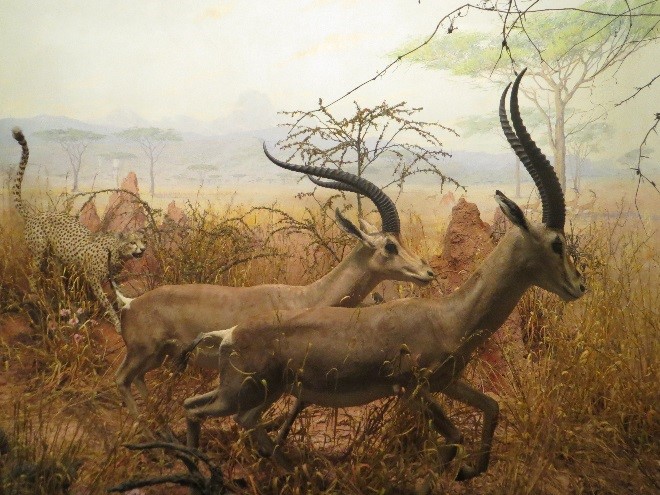
cheetah chasing gazelles in a diorama
by Patrick McShea

An argument can be made that one of the more interesting features within this diorama are the reddish earthen mounds framing the scene.

These irregular soil towers are termite mounds, the product of coordinated efforts by thousands of tiny social insects to create safe and stable living conditions. Mound-building termites are the master architects of the animal world. If they and their shelters were magically changed to our size and scale, their mounds would stretch upward as high as a 180 story building!

Within the thick walls of a termite mound air circulates through a network of channels to both cool the structure on hot days and warm it on cool days.

From hidden positions below ground and within their distinctive towers, termites exert tremendous influence over the landscape. By physically mixing various soils and their own wastes during the mound’s construction and as part of structure’s maintenance, the colony’s thousands of tiny insects improve the fertility of the savannah.

Herbivores such as the Grant’s gazelles featured in this diorama are attracted to the richer plant growth on the resulting islands of fertility. Cheetahs and other carnivores follow the plant eaters.

Patrick McShea works in the Education and Visitor Experience department of Carnegie Museum of Natural History. Museum employees are encouraged to blog about their unique experiences and knowledge gained from working at the museum.

sidebar

About

  • Mission & Commitments
  • Directors Team
  • Museum History

Get Involved

  • Volunteer
  • Membership
  • Carnegie Discoverers
  • Donate
  • Employment
  • Events

Bring a Group

  • Groups of 10 or More
  • Birthday Parties at the Museum
  • Field Trips

Powdermill

  • Powdermill Nature Reserve
  • Powdermill Field Trips
  • Powdermill Staff
  • Research at Powdermill

More Information

  • Image Permission Requests
  • Science Stories
  • Accessibility
  • Shopping Cart
  • Contact
  • Visitor Policies
One of the Four Carnegie Museums | © Carnegie Institute | Privacy Policy | Terms of Use | Accessibility
Rad works here logo