by Patrick McShea
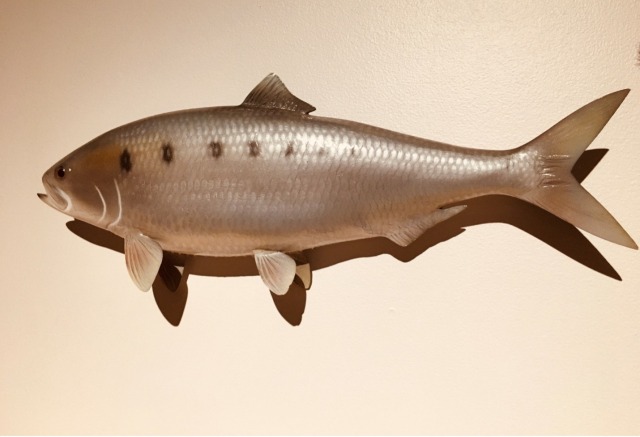
During the cold early months of 1778, did the outcome of the American colonies’ armed struggle for independence hinge upon a spawning run of fish up a Pennsylvania river? A 22-inch-long American shad displayed on a wall in Discovery Basecamp can serve as a focal point for consideration of this question, but many viewers will be aided by some framing background information.
In the chronology of the American Revolution, the harsh winter of 1777-1778 was notable for the British Army’s control of Philadelphia, and the encampment, some 23 miles northwest, of the opposing Continental Army, led by George Washington, at a site along the Schuylkill River known as Valley Forge.
In the more than two centuries since the United States achieved independence from Great Britain, an often repeated anecdote about the desperate conditions endured by the poorly clothed, poorly fed, and poorly sheltered soldiers at Valley Forge contends that starvation conditions were ended late in the winter by an unusually early spawning run of thousands of American shad up the Schuylkill.
American shad are an anadromous species, a term for fish that hatch in freshwater, migrate to the ocean where they spend most of their lives, and then migrate back to their natal waters to reproduce. The historic range for the species, whose Latin name, Alosa sapidissima, references its delectable flavor, encompasses western Atlantic Ocean waters bordering the east coast of Canada and the United States.
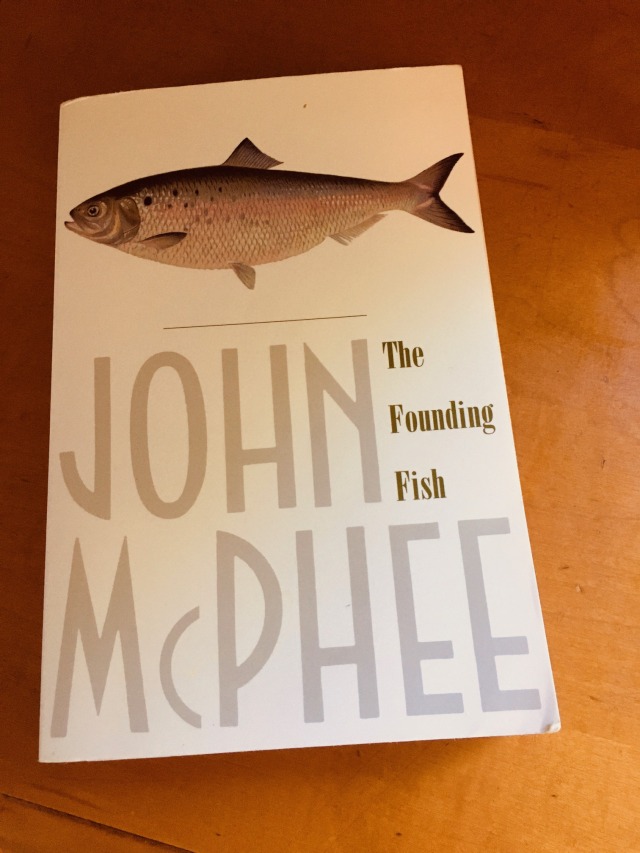
In 2002, renowned author and Princeton University professor John McPhee brought American shad to the attention of the book-reading public with the publication of The Founding Fish, a 358-page encyclopedic compilation of personal experience, firsthand reporting, historical accounts, and scientific research. (Farrar, Straus, and Giroux) The book’s title is a nod to the Valley Forge account, and in a central chapter of the same name McPhee addresses the story’s veracity by citing the research of a now retired professor of American History from Indiana University of Pennsylvania, Wayne Bodle. “When I first got in touch with Bodle, in 1998, he said that fresh shad in all likelihood were consumed by soldiers at Valley Forge in the weeks before they broke camp in June, but that the large and providently early run is a legend not supported by a single document.”
Bodle’s analysis of his research into all aspects of the Continental Army’s storied winter encampment in eastern Pennsylvania is presented in his book, The Valley Forge Winter: Civilians and Soldiers in War (The Pennsylvania University Press, 2002). Like The Founding Fish, it’s available for borrowing from Carnegie Library of Pittsburgh. If your summer reading schedule isn’t yet set, you might consider checking out either book.
Patrick McShea works in the Education and Visitor Experience department of Carnegie Museum of Natural History. Museum employees are encouraged to blog about their unique experiences and knowledge gained from working at the museum.
Related Content
Educator Spotlight: Christian Shane
Expanding the Scope of Environmental Education
Carnegie Museum of Natural History Blog Citation Information
Blog author: McShea, PatrickPublication date: June 25, 2021
