• Skip to primary navigation
  • Skip to main content
  • Skip to primary sidebar

Carnegie Museum of Natural History

One of the Four Carnegie Museums of Pittsburgh

  • Visit
    • Buy Tickets
    • Visitor Information
    • Exhibitions
    • Events
    • Dining at the Museum
    • Celebrate at the Museum
    • Powdermill Nature Reserve
    • Event Venue Rental
  • Learn
    • Field Trips
    • Educator Information
    • Programs at the Museum
    • Bring the Museum to You
    • Guided Programs FAQ
    • Programs Online
    • Climate and Rural Systems Partnership
  • Research
    • Scientific Sections
    • Science Stories
    • Science Videos
    • Senior Science & Research Staff
    • Museum Library
    • Science Seminars
    • Scientific Publications
    • Specimen and Artifact Identification
  • About
    • Mission & Commitments
    • Directors Team
    • Museum History
  • Tickets
  • Give
  • Shop

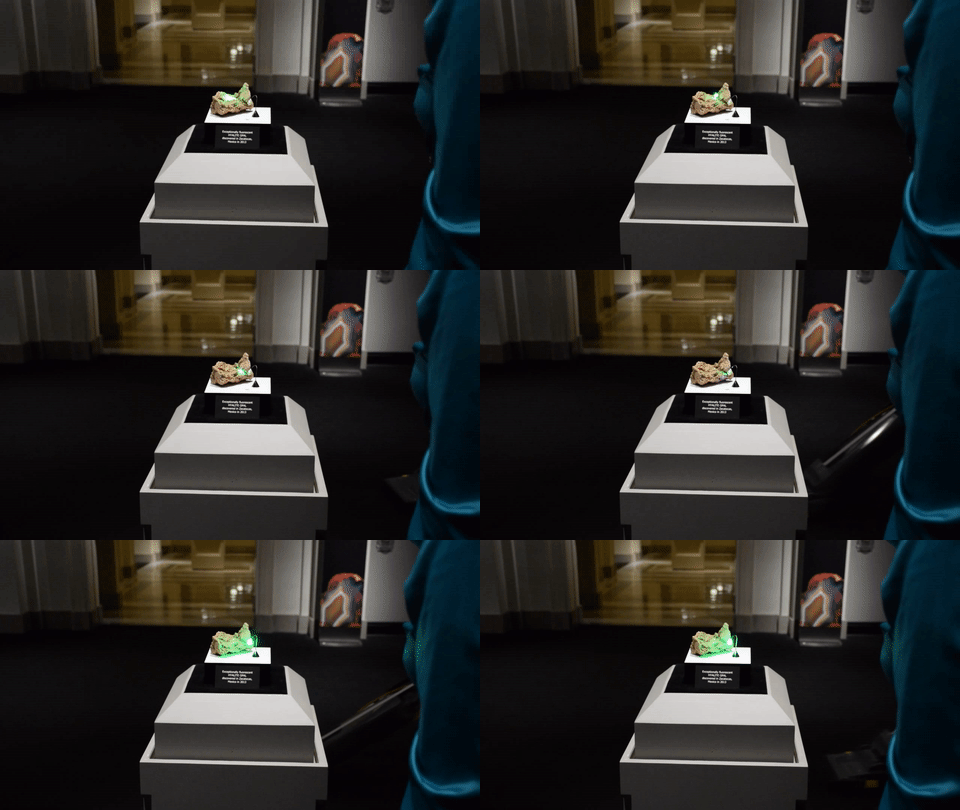
Fluorescent Hyalite in Hillman Hall

mineral hyalite in a display case
By Marc Wilson

Pictured above, the mineral hyalite is a type of non-precious opal that is usually formed in hot springs environments, like
Yellowstone National Park.

Hyalite often contains traces of uranium as impurities. When there is just the right amount of uranium in the hyalite, it causes it to fluoresce brilliant yellow-green under ultraviolet radiation, more commonly called “black light.”

Most fluorescent hyalite reacts best to the shorter wavelengths of ultraviolet but this specimen has an intense reaction to long wave ultraviolet. This is good for us because short wave ultraviolet is completely filtered out by glass or plastic, but long wave can penetrate through both allowing us to cause it to fluoresce with a UV laser pointer.

This remarkably fluorescent hyalite opal was discovered in Zacatecas, Mexico in 2013. It came from a very small deposit that is now completely worked out. We are very fortunate to have such stunning examples
from this unusual occurrence.

Marc Wilson is the head of the Minerals Section at Carnegie Museum of Natural History. Museum employees are encouraged to blog about their unique experiences and knowledge gained from working at the museum.

sidebar

About

  • Mission & Commitments
  • Directors Team
  • Museum History

Get Involved

  • Volunteer
  • Membership
  • Carnegie Discoverers
  • Donate
  • Employment
  • Events

Bring a Group

  • Groups of 10 or More
  • Birthday Parties at the Museum
  • Field Trips

Powdermill

  • Powdermill Nature Reserve
  • Powdermill Field Trips
  • Powdermill Staff
  • Research at Powdermill

More Information

  • Image Permission Requests
  • Science Stories
  • Accessibility
  • Shopping Cart
  • Contact
  • Visitor Policies
One of the Four Carnegie Museums | © Carnegie Institute | Privacy Policy | Terms of Use | Accessibility
Rad works here logo