• Skip to primary navigation
  • Skip to main content
  • Skip to primary sidebar

Carnegie Museum of Natural History

One of the Four Carnegie Museums of Pittsburgh

  • Visit
    • Buy Tickets
    • Visitor Information
    • Exhibitions
    • Events
    • Dining at the Museum
    • Celebrate at the Museum
    • Powdermill Nature Reserve
    • Event Venue Rental
  • Learn
    • Field Trips
    • Educator Information
    • Programs at the Museum
    • Bring the Museum to You
    • Guided Programs FAQ
    • Programs Online
    • Climate and Rural Systems Partnership
  • Research
    • Scientific Sections
    • Science Stories
    • Science Videos
    • Senior Science & Research Staff
    • Museum Library
    • Science Seminars
    • Scientific Publications
    • Specimen and Artifact Identification
  • About
    • Mission & Commitments
    • Directors Team
    • Museum History
  • Tickets
  • Give
  • Shop

Front Door Owls

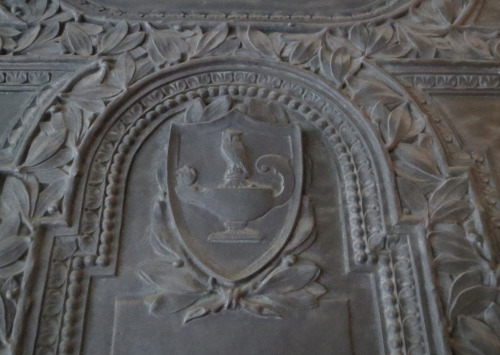
Owl engraved on a metal door

by Patrick McShea

You have to know where to look to spot the owls on the front door of Carnegie Museum of Natural History’s Carriage Drive entrance.

Amid the bronze relief art work on each of two massive doors, a tiny owl perches atop a flaming oil lamp, symbolically marking the building as a place of wisdom and illumination.

The association of owls with wisdom dates at least to ancient Greece, where Athena, goddess of wisdom, favored the owl among all feathered creatures. Physical features might well have influenced Athena’s judgment, for an owl’s large round head and huge forward-facing eyes endow the creature with a human-like face.
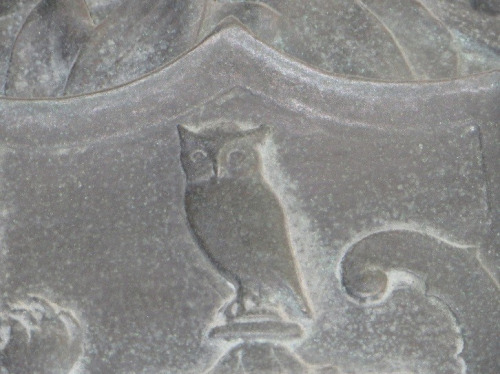
Owl engraving on a metal door

These physical features, which are adaptations for nocturnal hunting, are available for close inspection at Discovery Basecamp, where an array of owl taxidermy mounts greets visitors.

Although the eyes of the taxidermy mounts are made of glass, their size, color, and placement accurately mimics the remarkable light-gathering structures of the living birds. The feathers of each mount are real, and those creating the flat facial disc of each owl are visually different than the surrounding plumage. The shape, stiffness, and placement of these feathers makes each owls face a satellite dish for gathering sound and transmitting it to the creature’s ears.
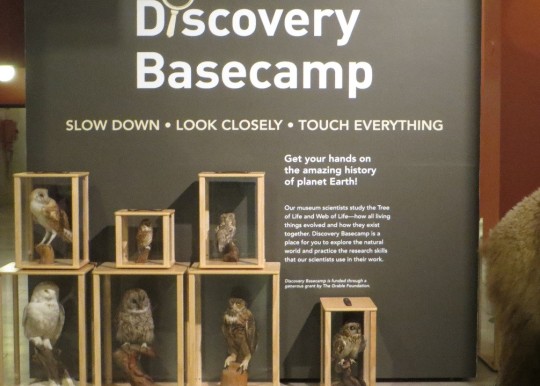
Display of taxidermy owls in Discovery Basecamp

Patrick McShea works in the Education and Visitor Experience department of Carnegie Museum of Natural History. Museum employees are encouraged to blog about their unique experiences and knowledge gained from working at the museum.

sidebar

About

  • Mission & Commitments
  • Directors Team
  • Museum History

Get Involved

  • Volunteer
  • Membership
  • Carnegie Discoverers
  • Donate
  • Employment
  • Events

Bring a Group

  • Groups of 10 or More
  • Birthday Parties at the Museum
  • Field Trips

Powdermill

  • Powdermill Nature Reserve
  • Powdermill Field Trips
  • Powdermill Staff
  • Research at Powdermill

More Information

  • Image Permission Requests
  • Science Stories
  • Accessibility
  • Shopping Cart
  • Contact
  • Visitor Policies
One of the Four Carnegie Museums | © Carnegie Institute | Privacy Policy | Terms of Use | Accessibility
Rad works here logo