If you’re a fan of Harry Potter and other fantasy stories, you probably have read about many wondrous and otherworldly creatures that only exist in your imagination. You may have come across dragons that spit fire and rule the skies, sea creatures that live in the depths of dark waters, or trolls that live under bridges with vicious teeth and claws. But did you know that some of the fantastical creatures you’ve heard of in stories have counterparts in our world? Here are some creatures from the Harry Potter universe that are based on real life critters.
1. Acromantula
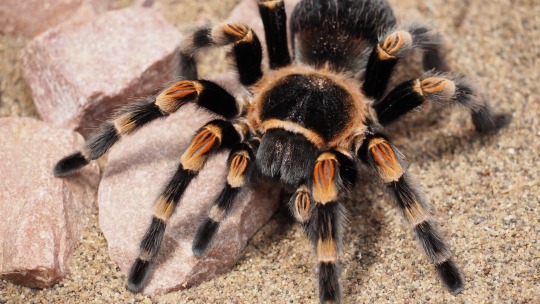
As you might imagine, these giant spiders are based on big, hairy spiders you can find in your backyard or in other places around the world. Specifically, the acromantula that you see in Harry Potter films were inspired by the wolf spider, which you can find in right here in western Pennsylvania! Other spiders that resemble acromantula include the huntsman spider often found in Australia and, of course, the tarantula – the hairiest and most famous of the three spiders. In fact, the world’s largest spider is a type of tarantula, the goliath bird-eating tarantula, which can reach up to one foot in length – although luckily not as large as a fifteen-foot acromantula.
2. Salamanders
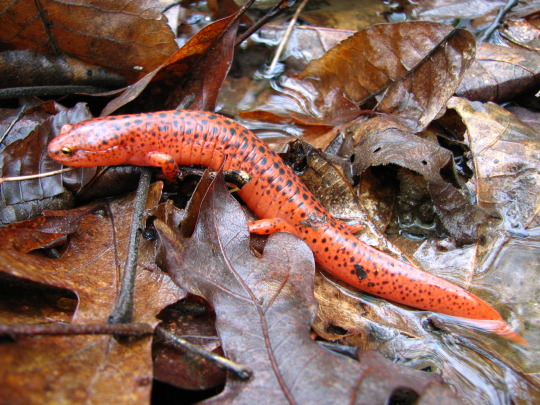
Wait – how can a real animal be a fantastical creature? Well, as it turns out, salamanders have been surrounded by myth and legend since the time of the Roman Empire, when Pliny the Elder declared that salamanders could put out fires with their bodies and spit poisonous fluids. In the Harry Potter universe, salamanders are born and live in fires and can only survive as long as their birth fire continues to burn. In Pittsburgh, salamanders live in moist areas, such as near streams or in damp forests, because they need to keep their skin wet to breathe. In fact, there are over 20 species of salamander in Pennsylvania including the brightly colored Red Salamander and the yellow-flecked Spotted Salamander, both of which you can find in the western half of the state. Some good places to look for salamanders are in parks around the city – there’s even one in Fox Chapel Borough named Salamander Park!
3. Bowtruckles
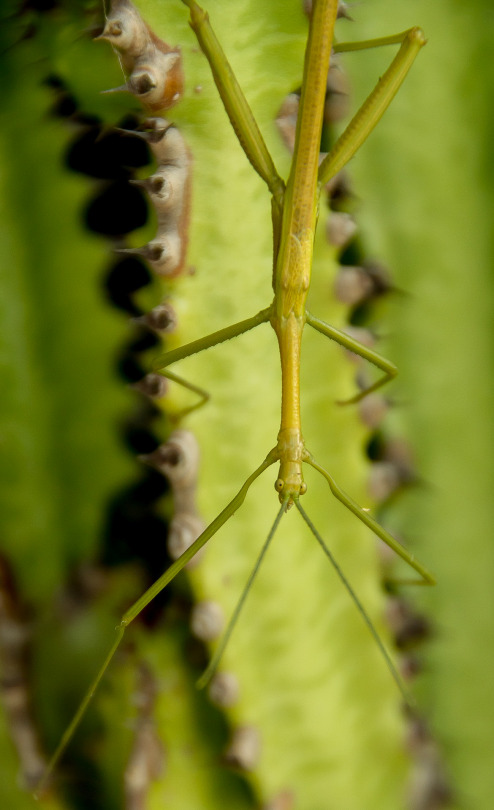
In the Harry Potter world, bowtruckles are creatures that look like bark or twigs and guard trees used to make wands. They have sharp claws and are very protective of their habitats. In our world, stick insects mimic bark or twigs to blend into foliage, and while bowtruckles eat tree lice, stick insects are actually herbivores, with each species preferring particular leaves. Stick insects belong to the order Phasmatodea, which also includes leaf-bugs – creatures that mimic leaves as a form of camouflage.
4. Dragons
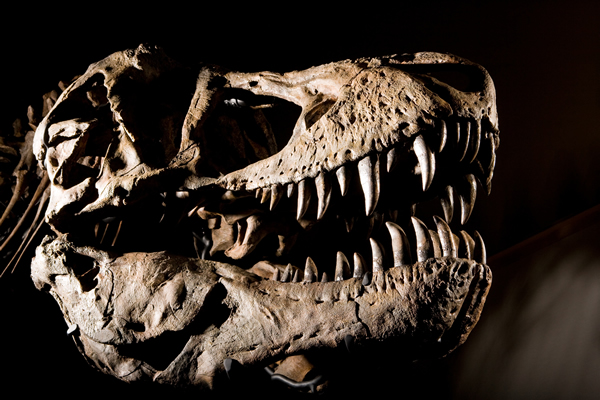
One of the most famous mythical creatures in our world, dragons are ferocious creatures in the Harry Potter universe with big claws, big teeth, and the ability to breathe fire. While there are no real animals that breathe fire (as far as we know 😉), there are groups of extinct creatures who resembled dragons with sharp teeth, hooked claws, and, sometimes, scaly, lizard-like bodies. Some of these creatures even had wings! You guessed it – dinosaurs and pterosaurs! At the Carnegie Museum of Natural History, there are multiple dinosaur and pterosaur skeletons on display. Some skeletons reminiscent of dragons include two ferocious looking Tyrannosaurus rex and a large pterosaur called Quetzalcoatlus northropi that had a wingspan of up to 37 feet.
5. Harry Otter
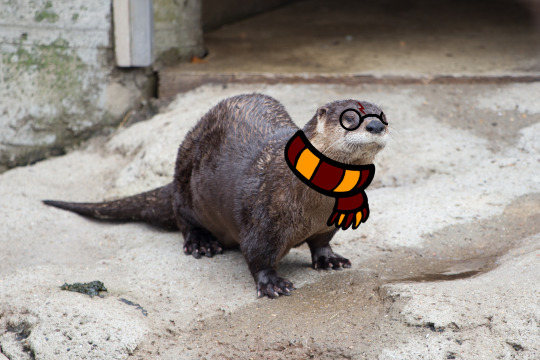
The Lutrinae who lived.
[gravityform id=”28″ title=”false” description=”false”]
Explore nature together. Visit Nature 360 for activities and information.
Blog post by Melissa Cagan.
