by Chase D. Mendenhall
The avian respiratory system is the most efficient in the animal kingdom, which explains how birds get enough oxygen to power flight, even at high altitudes where oxygen is scarce. A key feature that makes avian respiration special is the fact that they have static lungs and breath unidirectionally by breathing with air sacs throughout their body instead of diaphragms common in other land animals.
When a bird draws in a breath of air, it travels through the nares (or nostrils) down the trachea into a series of posterior air sacs located in the thorax and rump—in their butts. When a bird exhales that same breath, it does not leave the body as it does with mammals but rather moves into the lung where oxygen is absorbed and carbon dioxide expelled. When a bird inhales for the second time, that same breath of air moves from the lungs into the anterior air sacs. The second and last exhalation is when the stale air leaves the bird’s body through the nares.
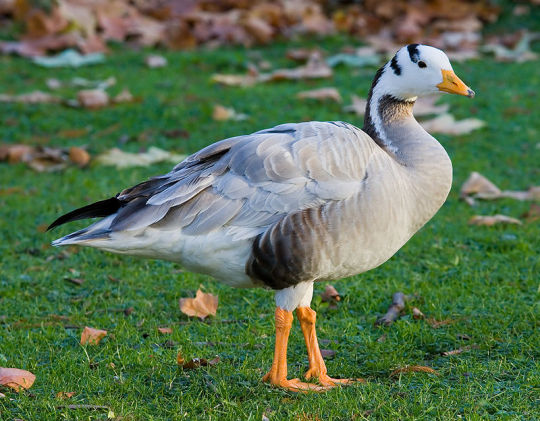
Every breath a bird takes requires two breathing cycles to complete a single breath, making the air passing through the lung unidirectional and always fresh and full of oxygen. Bird lungs are small and rigid, with the gas exchange region of their anatomy organized into a series of parallel tubes that bring deoxygenated blood into the lung at the opposite direction the air is flowing. This “counter-current” gas exchange is efficient and unique to bird lungs and partly enables species, such as the Bar-headed Goose (Anser indicus), to fly over the summit of Mt. Everest without issue. Human explorers, on the other hand, struggle for fresh air at 29,029 feet above sea level because mammalian lungs never expel all the stale air during exhalation, making mammalian explorers long for the ability to use their butts to breath continuous fresh air like the birds.
Chase Mendenhall is Assistant Curator of Birds, Ecology, and Conservation at Carnegie Museum of Natural History. Museum employees are encouraged to blog about their unique experiences and knowledge gained from working at the museum.
