• Skip to primary navigation
  • Skip to main content
  • Skip to primary sidebar

Carnegie Museum of Natural History

One of the Four Carnegie Museums of Pittsburgh

  • Visit
    • Buy Tickets
    • Visitor Information
    • Exhibitions
    • Events
    • Dining at the Museum
    • Celebrate at the Museum
    • Powdermill Nature Reserve
    • Event Venue Rental
  • Learn
    • Field Trips
    • Educator Information
    • Programs at the Museum
    • Bring the Museum to You
    • Guided Programs FAQ
    • Programs Online
    • Climate and Rural Systems Partnership
  • Research
    • Scientific Sections
    • Science Stories
    • Science Videos
    • Senior Science & Research Staff
    • Museum Library
    • Science Seminars
    • Scientific Publications
    • Specimen and Artifact Identification
  • About
    • Mission & Commitments
    • Directors Team
    • Museum History
  • Tickets
  • Give
  • Shop

Humans and Nature: Pangolins

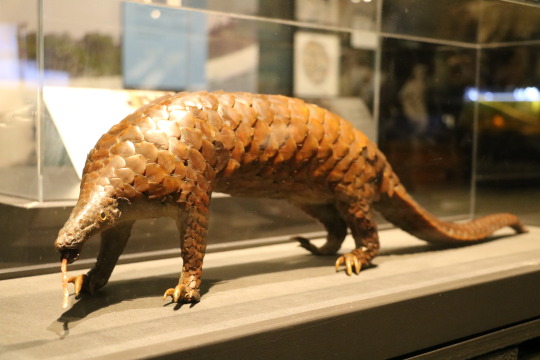
model of a pangolin

Have you ever heard of the pangolin? If not, it may surprise you to learn that they are the most illegally trafficked animal on the planet.

Sometimes called scaly anteaters, pangolins are unique in that they are mammals that are scaly, have no teeth, and eat social insects like termites or ants. There are eight species of pangolins worldwide: four in Africa and four in Asia.

Their scales are valued in some African and Asian medical practices, and though they may not look appetizing to Americans, their tender meat is a delicacy in some cultures. Just one kilogram of pangolin scales can be sold for thousands of dollars. As a result, pangolin populations have been nearly decimated by humans.

The third Saturday of February is World Pangolin Day, which was instituted by conservationists looking to draw attention to the terrible, impending crisis facing the future of pangolins.

Here at the museum, we raised awareness by including a taxidermy mount of a pangolin in We Are Nature: Living in the Anthropocene, an exhibition that explored the interconnectedness of humanity and nature in the Anthropocene.


The Anthropocene is the current geological era in which humans are making a profound impact on the geological strata. While the term itself is still being debated by geologists, the museum is embracing it as a social and cultural tool for exploring the broad sum effect humans are having on the planet. We Are Nature: Living in the Anthropocene was the first exhibition in the nation to focus on the Anthropocene as a concept and it was built entirely within Carnegie Museum of Natural History.

Related Content

We Are Nature: Repurposing Old Furniture

We Are Nature: Future Thinking

What is the Anthropocene and How Does it Relate to Earth Day?

Share this post!

  • Share on Twitter Share on Twitter
  • Share on Facebook Share on Facebook
  • Share on Pinterest Share on Pinterest
  • Share on LinkedIn Share on LinkedIn
  • Share on Reddit Share on Reddit
  • Share via Email Share via Email

sidebar

About

  • Mission & Commitments
  • Directors Team
  • Museum History

Get Involved

  • Volunteer
  • Membership
  • Carnegie Discoverers
  • Donate
  • Employment
  • Events

Bring a Group

  • Groups of 10 or More
  • Birthday Parties at the Museum
  • Field Trips

Powdermill

  • Powdermill Nature Reserve
  • Powdermill Field Trips
  • Powdermill Staff
  • Research at Powdermill

More Information

  • Image Permission Requests
  • Science Stories
  • Accessibility
  • Shopping Cart
  • Contact
  • Visitor Policies
One of the Four Carnegie Museums | © Carnegie Institute | Privacy Policy | Terms of Use | Accessibility
Rad works here logo