Collected on this Day in 1942
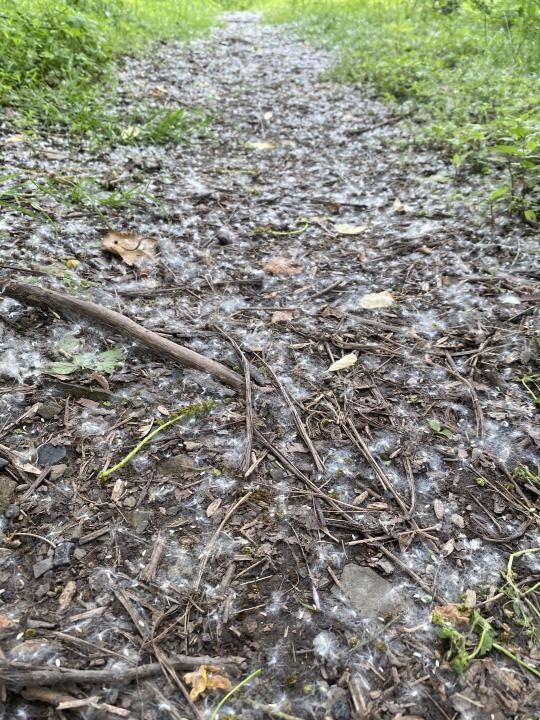
It can’t be snow, right? It’s summer! Maybe that is cotton falling from the sky? Well, kind of! It is cottonwood seeds!
Perhaps you’ve seen little cotton-like white particles falling from the sky in early summer, especially around Pennsylvania’s rivers or lakes. It is a common site along the dunes of Presque Isle, for example, and in areas along southwestern PA’s rivers. Aptly named, Eastern cottonwood (Populus deltoides) is a native tree found across the eastern United States that produces seeds that fall from high up in the canopy, attached to cotton-like strands. These fibers act like mini-parachutes and allow the wind to widely distribute the seeds.
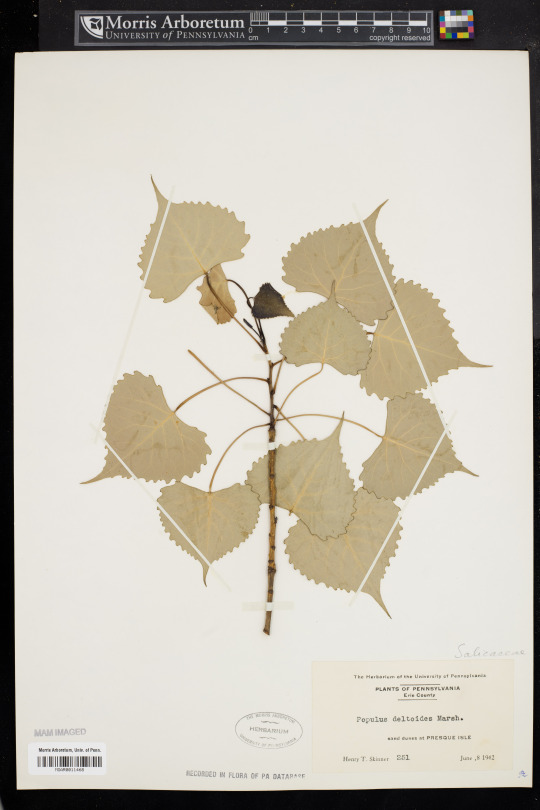
This specimen of Eastern cottonwood was collected by Henry T. Skinner on June 8, 1942 on the sand dunes of Presque Isle, Erie. You might notice this specimen is not from the Carnegie Museum herbarium like most of these posts. But instead, this specimen is held at the Morris Arboretum (part of the University of Pennsylvania). Now that museum collections are being digitized, we can search for species of interest, or plants collected from certain places or by certain people, or more…that’s the power of specimen digitization. The Mid-Atlantic Megalopolis Project, funded by the National Science Foundation, is digitizing nearly a million specimens across our region, including Carnegie Museum specimens. This makes our collections all the more powerful, combining all specimens collected in the region and making them accessible to scientists and the public alike.
Find this and more Eastern cottonwood specimens from Presque Isle here.
Check back for more! Botanists at the Carnegie Museum of Natural History share digital specimens from the herbarium on dates they were collected. They are in the midst of a three-year project to digitize nearly 190,000 plant specimens collected in the region, making images and other data publicly available online. This effort is part of the Mid-Atlantic Megalopolis Project (mamdigitization.org), a network of thirteen herbaria spanning the densely populated urban corridor from Washington, D.C. to New York City to achieve a greater understanding of our urban areas, including the unique industrial and environmental history of the greater Pittsburgh region. This project is made possible by the National Science Foundation under grant no. 1801022.
Mason Heberling is Assistant Curator of Botany at Carnegie Museum of Natural History. Museum employees are encouraged to blog about their unique experiences and knowledge gained from working at the museum.
