Dinosaurs became extinct 65 million years ago, but Pittsburgh is still a city of dinosaurs. The giants still roam the city’s hills even outside of the museum. In fact, you might see dinosaurs in your own neighborhood!
Carnegie Museum of Natural History released 100 dinosaur statues during DinoMite Days in the summer of 2003. Some of these dinosaurs have roamed far away, but others remain within the Pittsburgh area. These aren’t ordinary dinosaurs, they’re spectacularly colorful and creative! Designed by local artists and imaginative students, these dinosaurs are representative of the vibrant spirit of Pittsburgh and some of the ‘Burgh’s amazing local legends.
To commemorate the city’s dinosaurs this summer, consider visiting a few on a Dino Statue Driving Tour, or hunt for the elusive dinosaur statues not listed here. The tour takes roughly two hours—timed with a stop for a photo at each dinosaur, but I’d recommend adding a snack break—and includes 15 dinosaurs. The DinoMite Days dinosaurs released in 2003 came in three standard shapes—Tyrannosaurus, Stegosaurus, and Torosaurus. The dinosaurs were auctioned as part of a fundraiser for several local charities, including Carnegie Museum of Natural History’s Dinosaurs in Their Time exhibition. They are currently privately owned and may be publicly displayed or kept indoors. The dinosaurs have even ended up as part of other museums including the John Heinz History Center. Some dedicated dinosaur hunters are trying to locate all 100 dinosaurs!
Note: While many of these dinosaurs are displayed as public art, some are owned by private individuals and should be approached with respect. Please, be courteous when taking photographs and ask permission when necessary. You may be required to wear a mask or participate in a health screening at some of these stops for public health safety precautions.
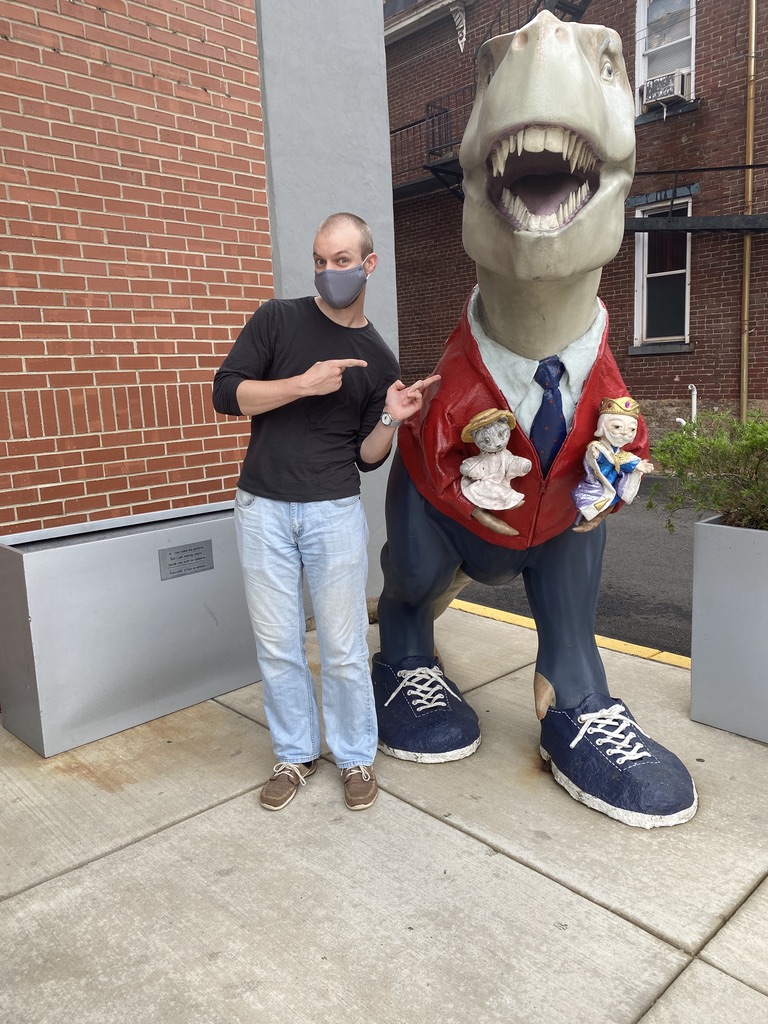
First Stop: Fredosaurus Rex Friday XIII
Coordinates: 40.429910, -79.975938
This king of the dinosaurs is dedicated to the friendliest neighbor, Mr. Rogers, and is conveniently located at the WQED headquarters on the South Side. Another Mr. Rogers’ Neighborhood dino lives at the Fred Rogers Center in Latrobe, PA.
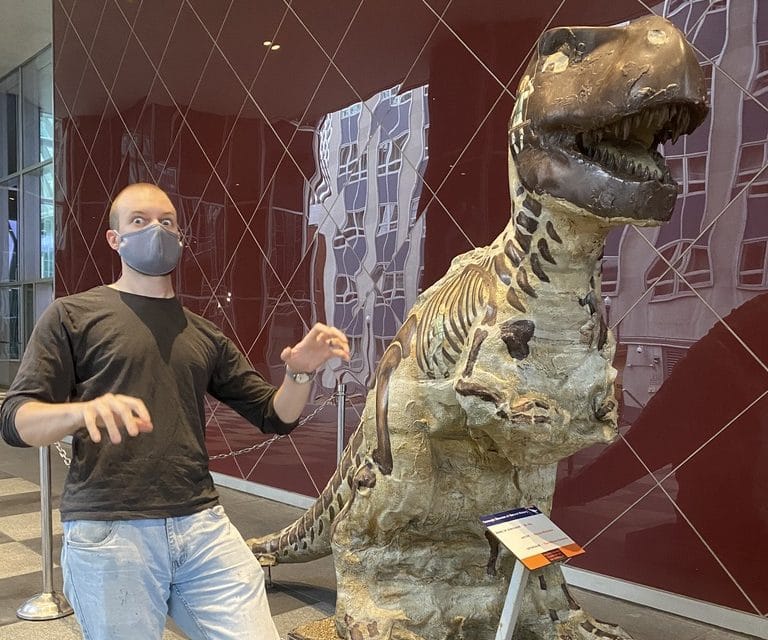
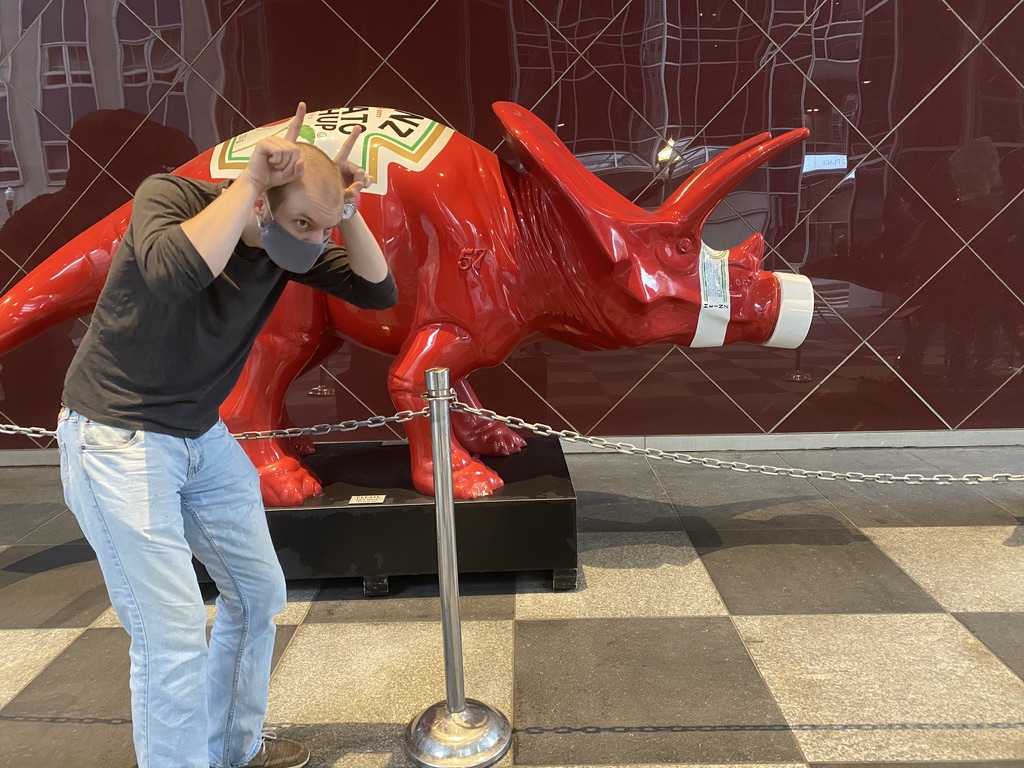
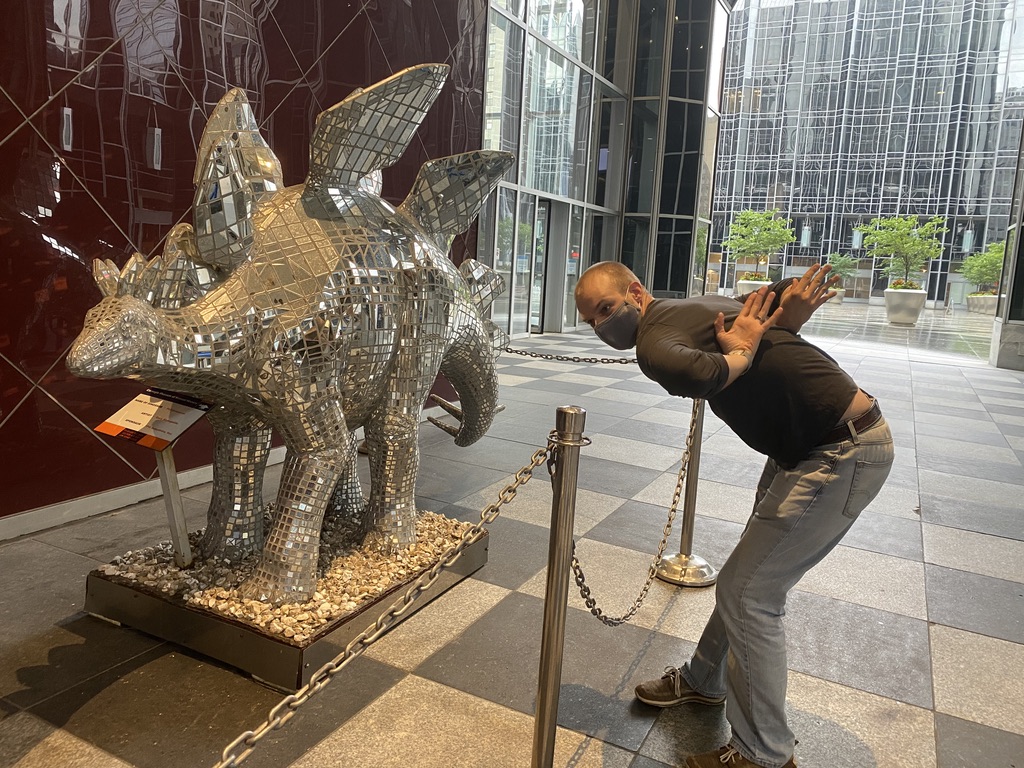
Second stop: PPG Plaza Dino Parade
Coordinates: 40.439766, -80.003858
The second stop has all three dinosaur models! This dino parade is in PPG Plaza and includes Mr. Dig (T. Rex), Ketchupsaurus (Torosaurus), and Philliposaurus (Stegosaurus). Philliposaurus is named for Phillip Johnson, one of the architects of the PPG Place building.
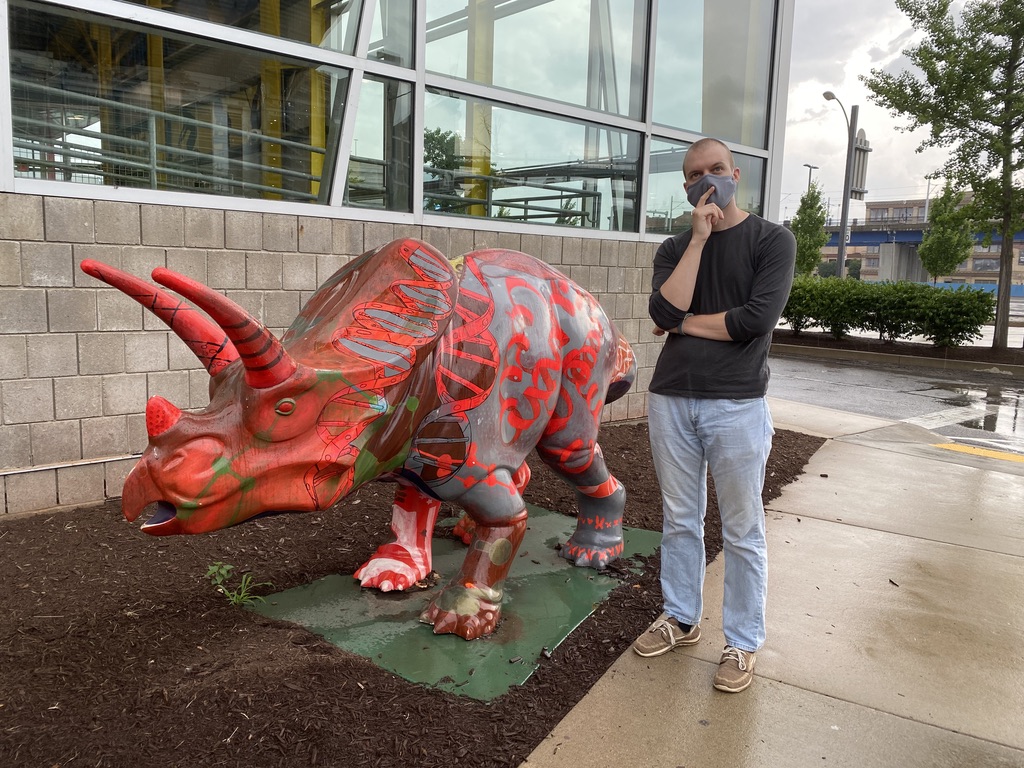
Third Stop: DNAsaurus
Coordinates: 40.446468, -80.018495
Our friends at the Carnegie Science Center host DNAsaurus, which is appropriately decorated with DNA strands and chromosomes. Bingo! Dino DNA!
Fourth Stop: Prehistoric Printasaurus
Coordinates: 40.460458, -79.980679
Located on Herrs Island, Printasaurus is a collage of patterns and geometric shapes that make one stylin’ dino. You can park at Herrs Island North Park and take the Three Rivers Heritage Trail to find this dinosaur placed in a garden at the opposite end of the island.
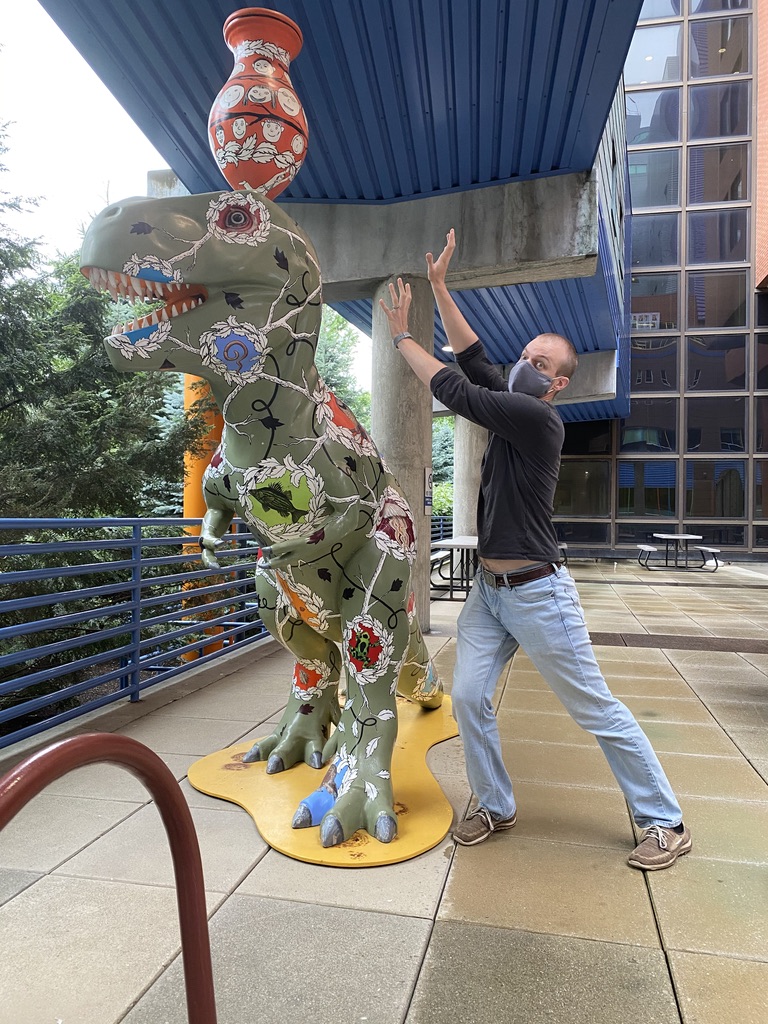
Fifth Stop: Connections
Coordinates: 40.466769, -79.952309
Children’s Hospital has a few dinosaurs, but Connections the T. Rex is visible from the outside. This dinosaur celebrates the interconnectedness of all life.
Sixth Stop: Formerly Cogitatio Aeterna
Coordinates: 40.458010, -79.930777
This remodeled skeletal dinosaur is appropriately located at the Greater Pittsburgh Orthopaedic Associates building on Centre Avenue.
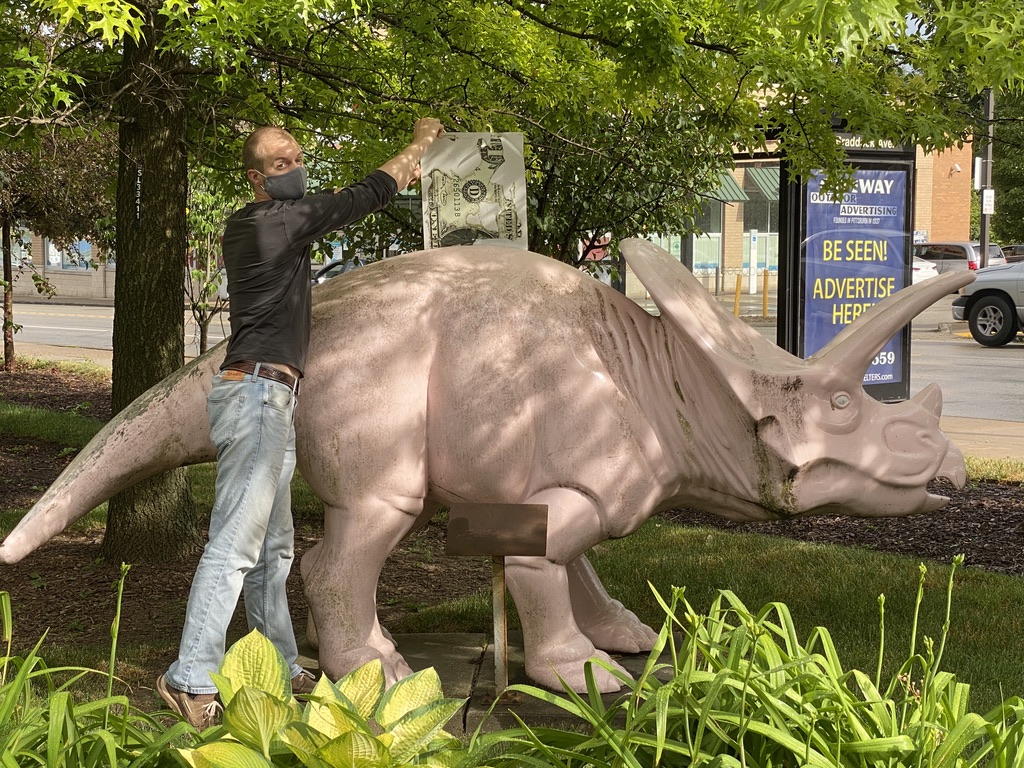
Seventh Stop: Bill Dollarsaurus
Coordinates: 40.447218, -79.894962
On the corner at the Shady Lane School you can find Bill Dollarsaurus. Bill has a sister named Dolly who lives somewhere in the city.
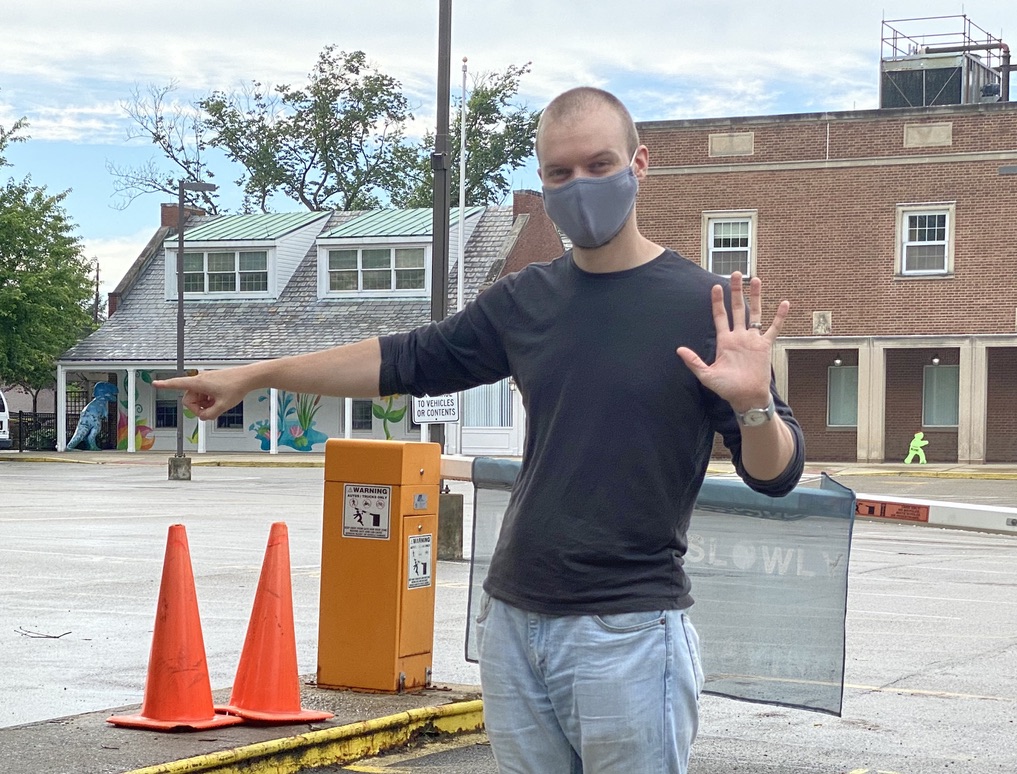
Eighth Stop: Amazing Hands
Coordinates: 40.442526, -79.919394
An awesome garden-inspired dinosaur created by children at the Children’s Institute lives at the Squirrel Hill location. Wave hello to this dinosaur from across the parking lot off of Northumberland Street.

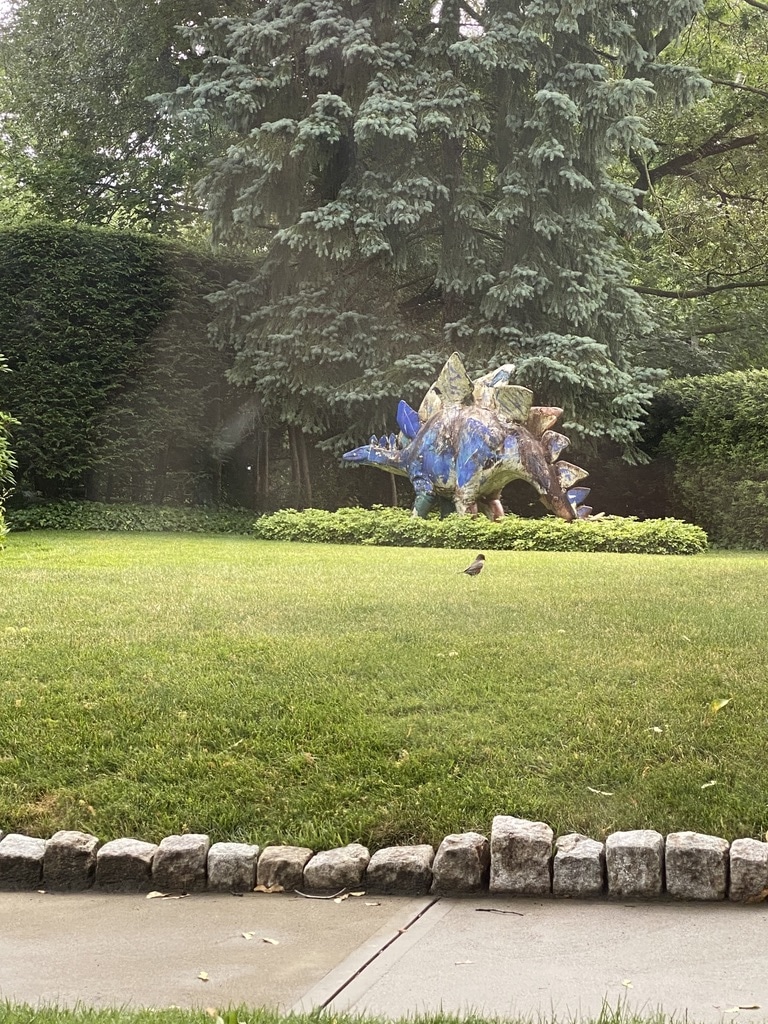
Ninth Stop: Spectrasaurus
Coordinates: 40.450149, -79.945179
This dinosaur is located on private property at the corner of Ellsworth and Devonshire in Squirrel Hill. Easily visible from the sidewalk, this colorful dinosaur was designed to mimic the bright warning colors of poisonous tree frogs.
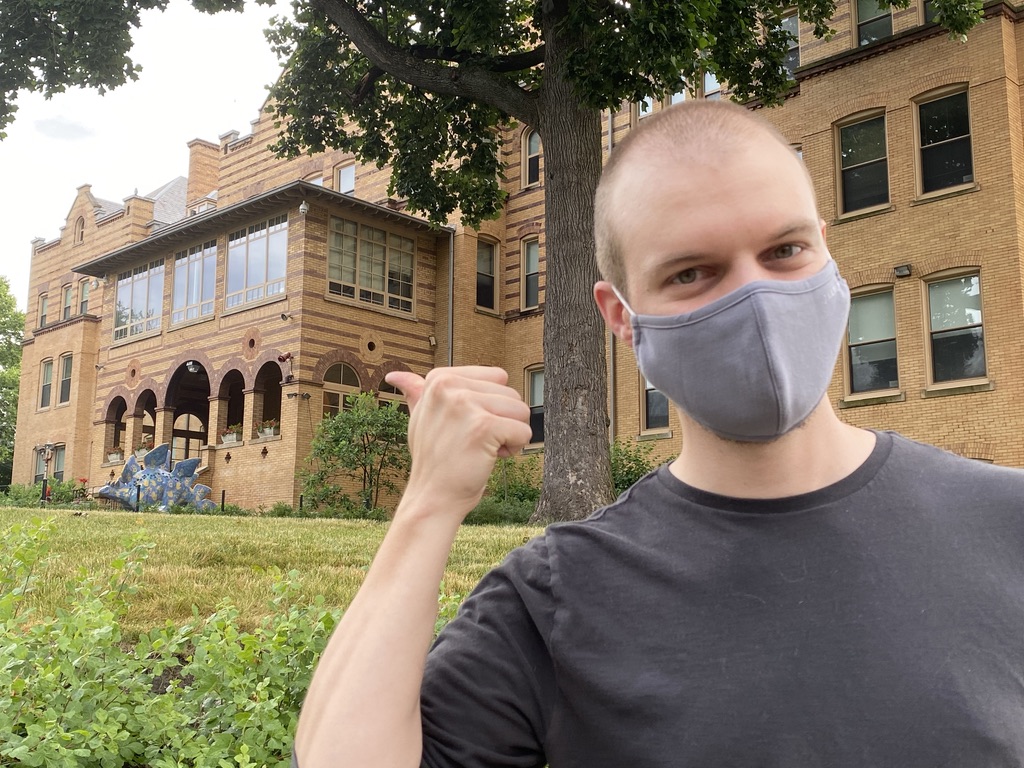
Tenth Stop: Seymour Sparklesaurus “Sparky”
Coordinates: 40.448522, -79.953038
Located at and designed by the Western Pennsylvania School for Blind Children, Sparky features handprints and an oversized braille message: “stegosaurus.”
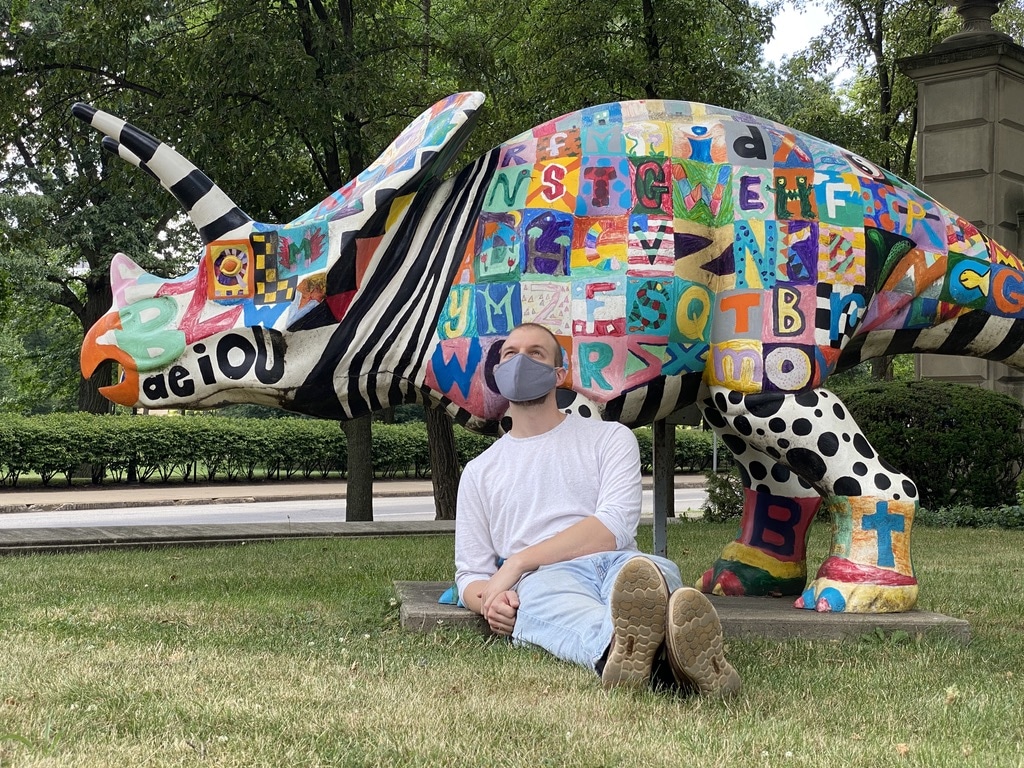
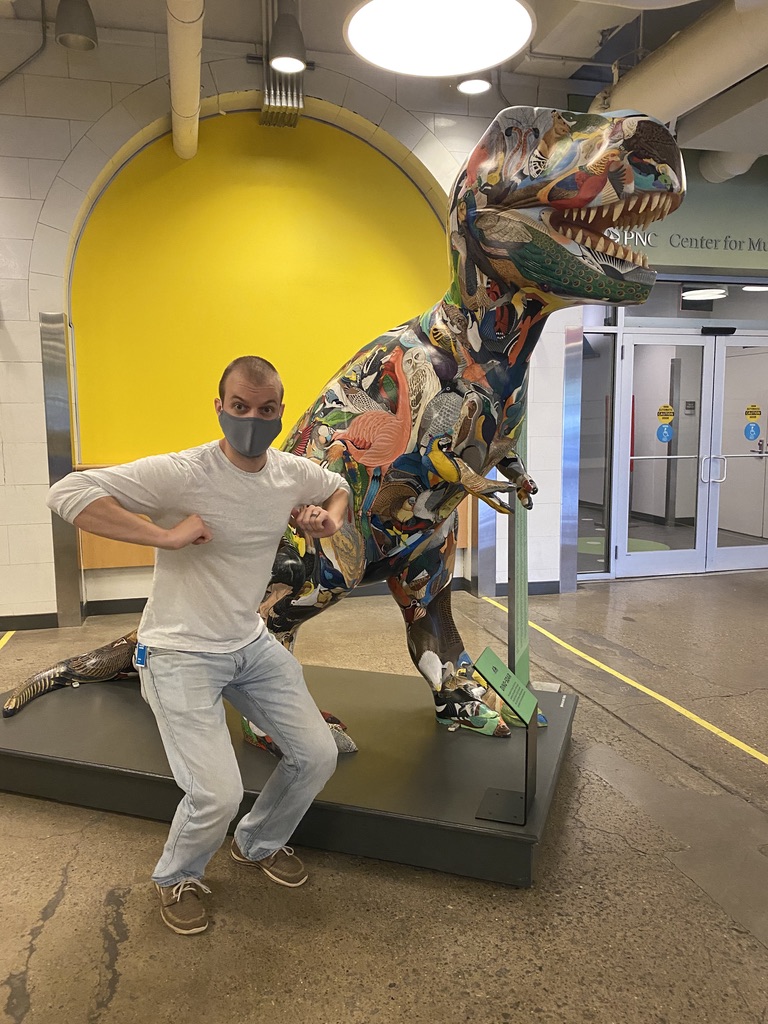
Last Stop!
Coordinates: 40.443159, -79.949601
The final three dinosaurs on our tour happen to reside near the Carnegie Museum of Natural History (where else would dinosaurs be?). Alphabetosaurus is across Forbes Avenue from the museum. Dino-soar is inside of the Portal Entry to the museum and features many beautiful birds including Archaeopteryx, one of the first birds.
And our very last stop is Dippy the Diplodocus. Though not a part of DinoMite Days, Dippy is a very special life-size model of a Diplodocus and is certainly an inspiring dinosaur statue. Although all black, Dippy occasionally wears scarves, ties, and hats to fit in with the changing attitude of Pittsburgh. Right now, Dippy is wearing a mask to help keep everyone safe.
Make sure to tag the Carnegie Museum of Natural History in photos you post to social media!
Written by: Aaron Young, Museum Educator
