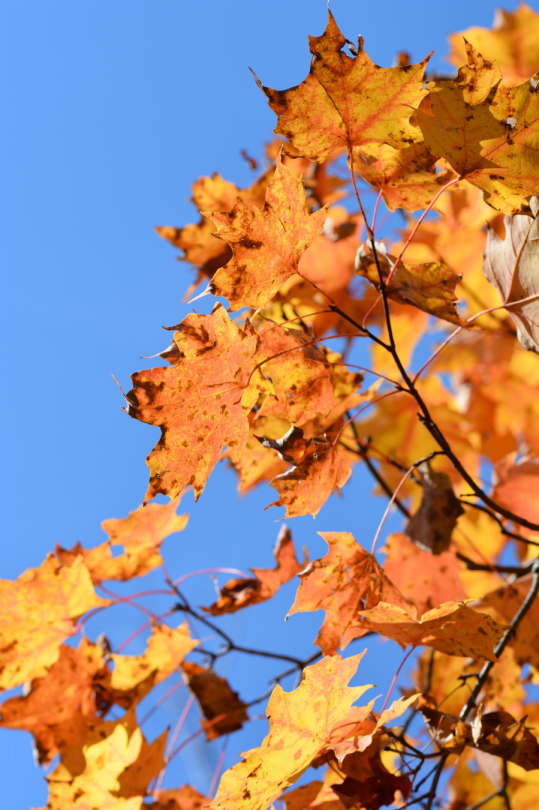
One of the most anticipated events of fall is the changing colors of tree leaves. As the evenings get cooler, the trees display spectacular warm red, orange and yellow hues. The East Coast’s fall colors are SO spectacular, in fact, that many people take special trips here just to see them. But what is it about fall that makes the leaves change, and why do their colors become warmer as the days grow cold?
Are these colors really just a fall thing?
You might think that the orange and yellow colors, or pigments, are only present in leaves in fall but they’re actually there all year long–we just can’t see them because they are covered up by the strong green pigment that is also in the leaves. This green pigment comes from chlorophyll, a substance that makes energy for trees using sunlight, carbon dioxide, and water. When the amount of sunlight starts to decrease in fall, trees respond by making less chlorophyll. When this happens the green starts to disappear and the yellow and orange pigment, called carotenoid, shows through.
Red is a seasonal special
While yellow and orange are present in leaves all year round, there is another pigment that is only produced in the fall. Anthocyanin is a pigment responsible for giving leaves dark red and purple colors. This pigment is created during times in the fall when the days are warm or cool, but don’t dip below freezing. Because fall temperatures can vary from year to year, some years will have more deep red leaves than others.
Did you know?
Evergreen trees like pines, spruces, and firs stay green year-round because they have needles instead of leaves. These needles have a waxy coating that protects them from losing moisture and don’t require as much sunlight to produce the chlorophyll.
Get Outside and Find Fall Color!
Peak color for fall foliage hits Southwestern Pennsylvania in mid-October. Track historic trends of color change to plan your outdoor excursion!
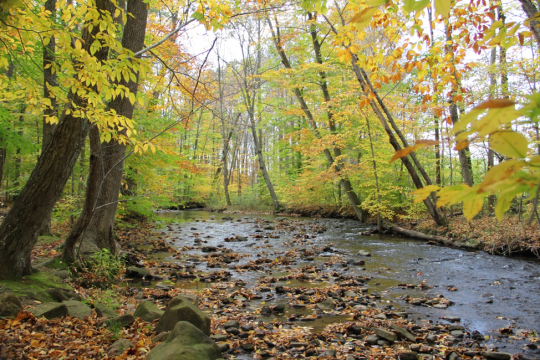
Powdermill Nature Reserve is a great place to look for fall color!
Explore nature together. Visit Nature 360 for more activities and information.
