• Skip to primary navigation
  • Skip to main content
  • Skip to primary sidebar

Carnegie Museum of Natural History

One of the Four Carnegie Museums of Pittsburgh

  • Visit
    • Buy Tickets
    • Visitor Information
    • Exhibitions
    • Events
    • Dining at the Museum
    • Celebrate at the Museum
    • Powdermill Nature Reserve
    • Event Venue Rental
  • Learn
    • Field Trips
    • Educator Information
    • Programs at the Museum
    • Bring the Museum to You
    • Guided Programs FAQ
    • Programs Online
    • Climate and Rural Systems Partnership
  • Research
    • Scientific Sections
    • Science Stories
    • Science Videos
    • Senior Science & Research Staff
    • Museum Library
    • Science Seminars
    • Scientific Publications
    • Specimen and Artifact Identification
  • About
    • Mission & Commitments
    • Directors Team
    • Museum History
  • Tickets
  • Give
  • Shop

Mollusk Collection

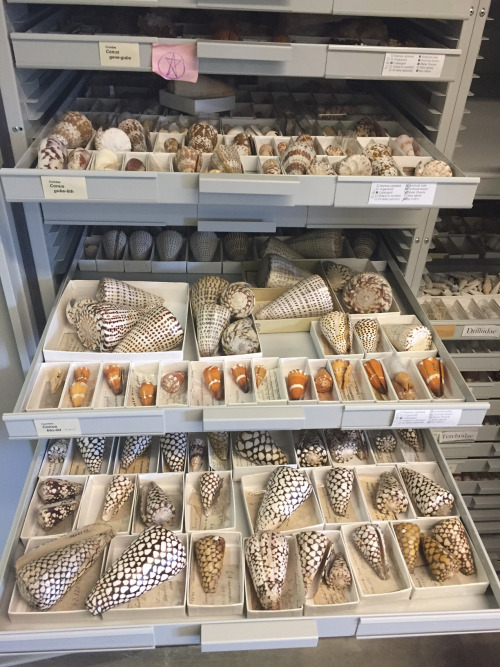
specimen drawers from the Mollusk Collectionby Hayley Pontia

Carnegie Museum of Natural History’s collection of mollusks is home to about 3 million specimens that include more land and freshwater snails from Pennsylvania and its adjacent states than all other U.S. museums combined.

What are mollusks you ask? They are one of the most diverse groups of animals on the planet. They have a soft body with a ‘head’ and ‘tail’ region. Their bodies are most commonly covered in a hard exoskeleton, but some can even have their shells on the inside.

You may know the most common mollusks without even knowing they are mollusks: snails, clams, octopuses, scallops, oysters, and even squids are all part of this phylum. Many people are around these animals, yet know very little about them.

As assistant curator and head of mollusks at Carnegie Museum of Natural History, Tim Pearce spends a lot of time researching and understanding these specimens.  Every second Saturday, Pearce gives tours of the collection found in the basement of the museum for those interested in learning more about these unique species.

Pearce collecting snails at Carrington Point on Santa Rosa Island, California. San Miguel Island is visible in the distance. (Photo by Charles Drost.)

Hayley Pontia is the marketing assistant at Carnegie Museum of Natural History and a student at the University of Pittsburgh. Museum employees are encouraged to blog about their unique experiences of working at the museum.

sidebar

About

  • Mission & Commitments
  • Directors Team
  • Museum History

Get Involved

  • Volunteer
  • Membership
  • Carnegie Discoverers
  • Donate
  • Employment
  • Events

Bring a Group

  • Groups of 10 or More
  • Birthday Parties at the Museum
  • Field Trips

Powdermill

  • Powdermill Nature Reserve
  • Powdermill Field Trips
  • Powdermill Staff
  • Research at Powdermill

More Information

  • Image Permission Requests
  • Science Stories
  • Accessibility
  • Shopping Cart
  • Contact
  • Visitor Policies
One of the Four Carnegie Museums | © Carnegie Institute | Privacy Policy | Terms of Use | Accessibility
Rad works here logo