• Skip to primary navigation
  • Skip to main content
  • Skip to primary sidebar

Carnegie Museum of Natural History

One of the Four Carnegie Museums of Pittsburgh

  • Visit
    • Buy Tickets
    • Visitor Information
    • Exhibitions
    • Events
    • Dining at the Museum
    • Celebrate at the Museum
    • Powdermill Nature Reserve
    • Event Venue Rental
  • Learn
    • Field Trips
    • Educator Information
    • Programs at the Museum
    • Bring the Museum to You
    • Guided Programs FAQ
    • Programs Online
    • Climate and Rural Systems Partnership
  • Research
    • Scientific Sections
    • Science Stories
    • Science Videos
    • Senior Science & Research Staff
    • Museum Library
    • Science Seminars
    • Scientific Publications
    • Specimen and Artifact Identification
  • About
    • Mission & Commitments
    • Directors Team
    • Museum History
  • Tickets
  • Give
  • Shop

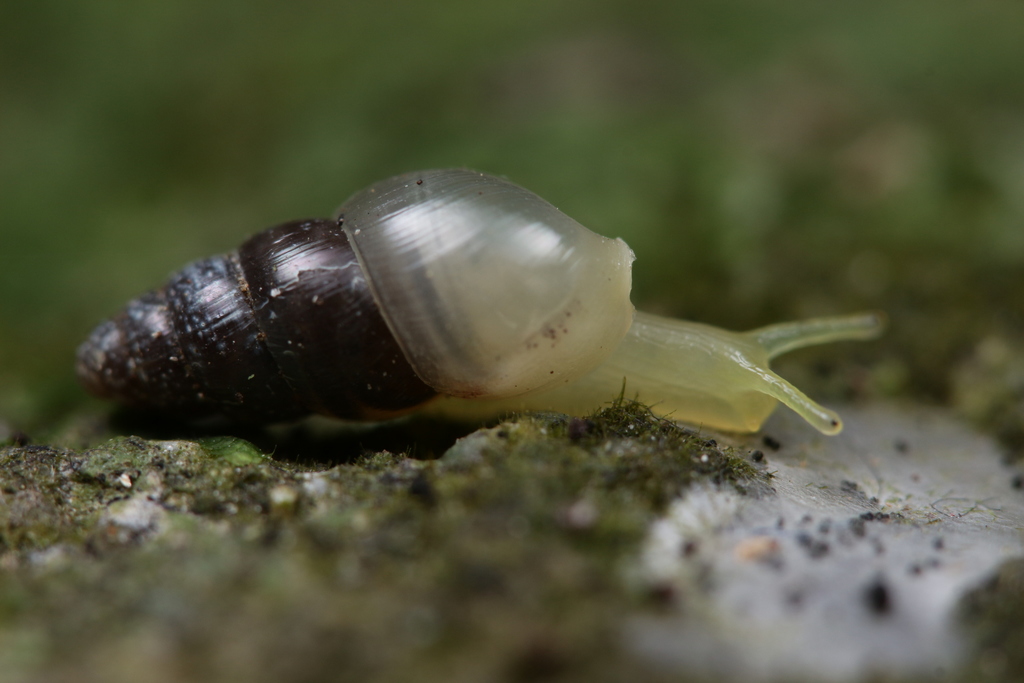
Allopeas clavulinum

profile of spiked awlsnail, translucent body with distinct eye stalks coming from oblong shell

Image Usage Information

  • 青李
  • CC BY-NC 4.0 DEED
  • Additional information about this specimen

Family: Achatinidae

Common name: Spike Awlsnail

Discovery: Potiez and Michaud, 1838

Non-native

Identification

Width: 2.5-4.5 mm
Height: 7.5-9.0 mm
Whorls: 7

This species has an elongate, nearly straight-sided shell that is glossy and translucent (Kerney and Cameron, 1979). The lip of the aperture is simple, the umbilicus is perforate. The live animal is pale yellow. The shell is smaller than the very-similar A. mauritianum and its spire is wider than A. gracile (Pilsbry, 1906 in Malay Peninsular Terrestrial Molluscs, 2017).

Ecology

In Malaysia, Allopeas clavulinum is a litter-dwelling species, living among stones, leaves, grass and soil, from 300 to 2000 m altitude (Benthem-Jutting, 1952 in Malay Peninsular Terrestrial Molluscs, 2017).

Taxonomy

Also known as Lamellaxis clavulinus. Some authors have synonymized this species within A. mauritianum.

Distribution

Probably from East Africa and Indonesia, spread into European greenhouses (Kerney and Cameron, 1979). In the Northeast it has been collected in Massachusetts and Pennsylvania.

Conservation

NatureServe Explorer rank: G5, Secure.

Author: Ken Hotopp
Publication date: 11/2017

sidebar

About

  • Mission & Commitments
  • Directors Team
  • Museum History

Get Involved

  • Volunteer
  • Membership
  • Carnegie Discoverers
  • Donate
  • Employment
  • Events

Bring a Group

  • Groups of 10 or More
  • Birthday Parties at the Museum
  • Field Trips

Powdermill

  • Powdermill Nature Reserve
  • Powdermill Field Trips
  • Powdermill Staff
  • Research at Powdermill

More Information

  • Image Permission Requests
  • Science Stories
  • Accessibility
  • Shopping Cart
  • Contact
  • Visitor Policies
One of the Four Carnegie Museums | © Carnegie Institute | Privacy Policy | Terms of Use | Accessibility
Rad works here logo
