• Skip to primary navigation
  • Skip to main content
  • Skip to primary sidebar

Carnegie Museum of Natural History

One of the Four Carnegie Museums of Pittsburgh

  • Visit
    • Buy Tickets
    • Visitor Information
    • Exhibitions
    • Events
    • Dining at the Museum
    • Celebrate at the Museum
    • Powdermill Nature Reserve
    • Event Venue Rental
  • Learn
    • Field Trips
    • Educator Information
    • Programs at the Museum
    • Bring the Museum to You
    • Guided Programs FAQ
    • Programs Online
    • Climate and Rural Systems Partnership
  • Research
    • Scientific Sections
    • Science Stories
    • Science Videos
    • Senior Science & Research Staff
    • Museum Library
    • Science Seminars
    • Scientific Publications
    • Specimen and Artifact Identification
  • About
    • Mission & Commitments
    • Directors Team
    • Museum History
  • Tickets
  • Give
  • Shop

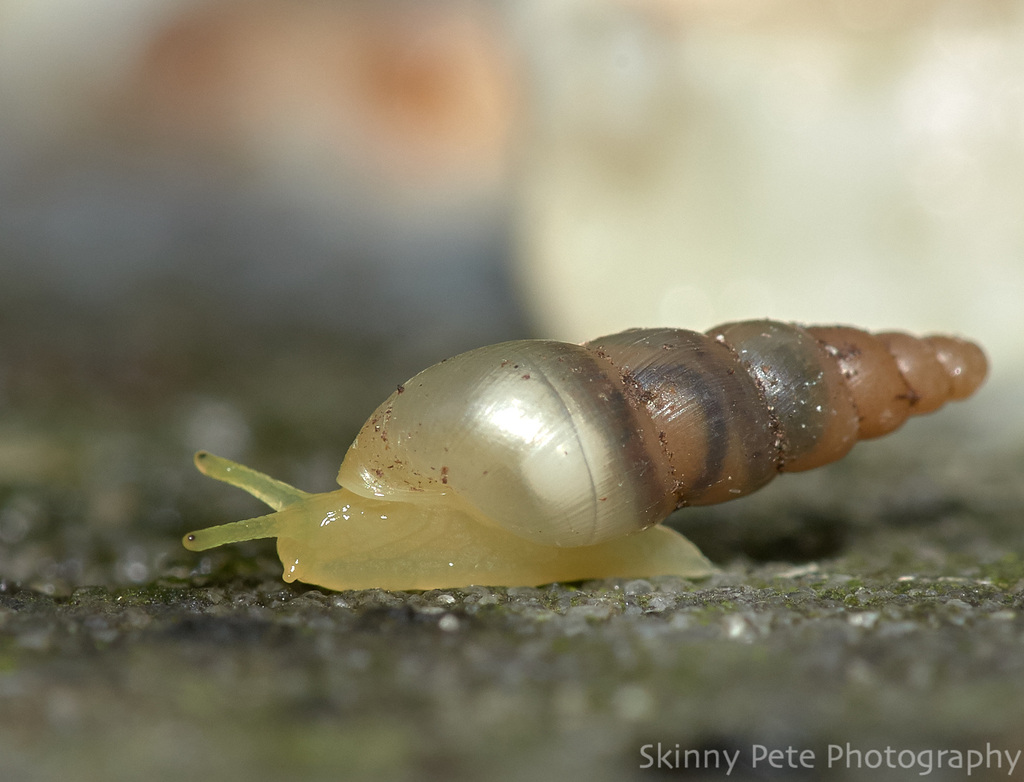
Allopeas gracile

profile of graceful awlsnail, translucent body with distinct eye stalks coming from a shiny, oblong shell

Image Usage Information

  • Peter May, Skinny Pete Photography
  • CC BY-NC 4.0 DEED
  • Additional information about this specimen

Family: Achatinidae

Common name: Graceful Awlsnail

Discovery: Hutton, 1834

Non-native

Identification

Width: ~3 mm
Height: ~7-12 mm
Whorls: 7-9

The shell of Allopeas gracile is elongate, glossy and translucent. The lip is simple. The live animal is yellowish. Compared with Subulina octona this species is smaller and does not have a truncated shell tip (White-Mclean, 2011).

Ecology

This tropical species is omnivorous, consuming fresh vegetation, fungi, and dead insects and worms in a laboratory experiment (Capinera, 2017). It may feed on various vegetable or flower crops (Romaine lettuce was a favorite), but is not usually a major agricultural pest.

This snail can reproduce sexually or asexually. Snails reached maturity at 50-60 days (Capinera, 2017). Adult snails laid eggs in groups of 3-5, up to 1 cm deep. Allopeas gracileaveraged 153 eggs in their lifetime. Eggs matured faster in warmer temperatures, varying from 19 days to 8 days.

Taxonomy

Allopeas gracile has also been called Bulimus gracilis, B. oparanus, B. junceus, and Stenogyra upolensis (White-McLean, 2011).

Distribution

Widespread in the subtropics globally, including Southeast Asia, Dominica, West Indies, Hawaiia, Central and South America (Robinson et al., 2009; White-McLean, 2011). In the Northeast there are scattered reports from New Jersey and Pennsylvania south.

Conservation

NatureServe Explorer rank: G5, Secure.

Author: Ken Hotopp
Publication date: 11/2017

sidebar

About

  • Mission & Commitments
  • Directors Team
  • Museum History

Get Involved

  • Volunteer
  • Membership
  • Carnegie Discoverers
  • Donate
  • Employment
  • Events

Bring a Group

  • Groups of 10 or More
  • Birthday Parties at the Museum
  • Field Trips

Powdermill

  • Powdermill Nature Reserve
  • Powdermill Field Trips
  • Powdermill Staff
  • Research at Powdermill

More Information

  • Image Permission Requests
  • Science Stories
  • Accessibility
  • Shopping Cart
  • Contact
  • Visitor Policies
One of the Four Carnegie Museums | © Carnegie Institute | Privacy Policy | Terms of Use | Accessibility
Rad works here logo
