• Skip to primary navigation
  • Skip to main content
  • Skip to primary sidebar

Carnegie Museum of Natural History

One of the Four Carnegie Museums of Pittsburgh

  • Visit
    • Buy Tickets
    • Visitor Information
    • Exhibitions
    • Events
    • Dining at the Museum
    • Celebrate at the Museum
    • Powdermill Nature Reserve
    • Event Venue Rental
  • Learn
    • Field Trips
    • Educator Information
    • Programs at the Museum
    • Bring the Museum to You
    • Guided Programs FAQ
    • Programs Online
    • Climate and Rural Systems Partnership
  • Research
    • Scientific Sections
    • Science Stories
    • Science Videos
    • Senior Science & Research Staff
    • Museum Library
    • Science Seminars
    • Scientific Publications
    • Specimen and Artifact Identification
  • About
    • Mission & Commitments
    • Directors Team
    • Museum History
  • Tickets
  • Give
  • Shop

Anguispira rugoderma

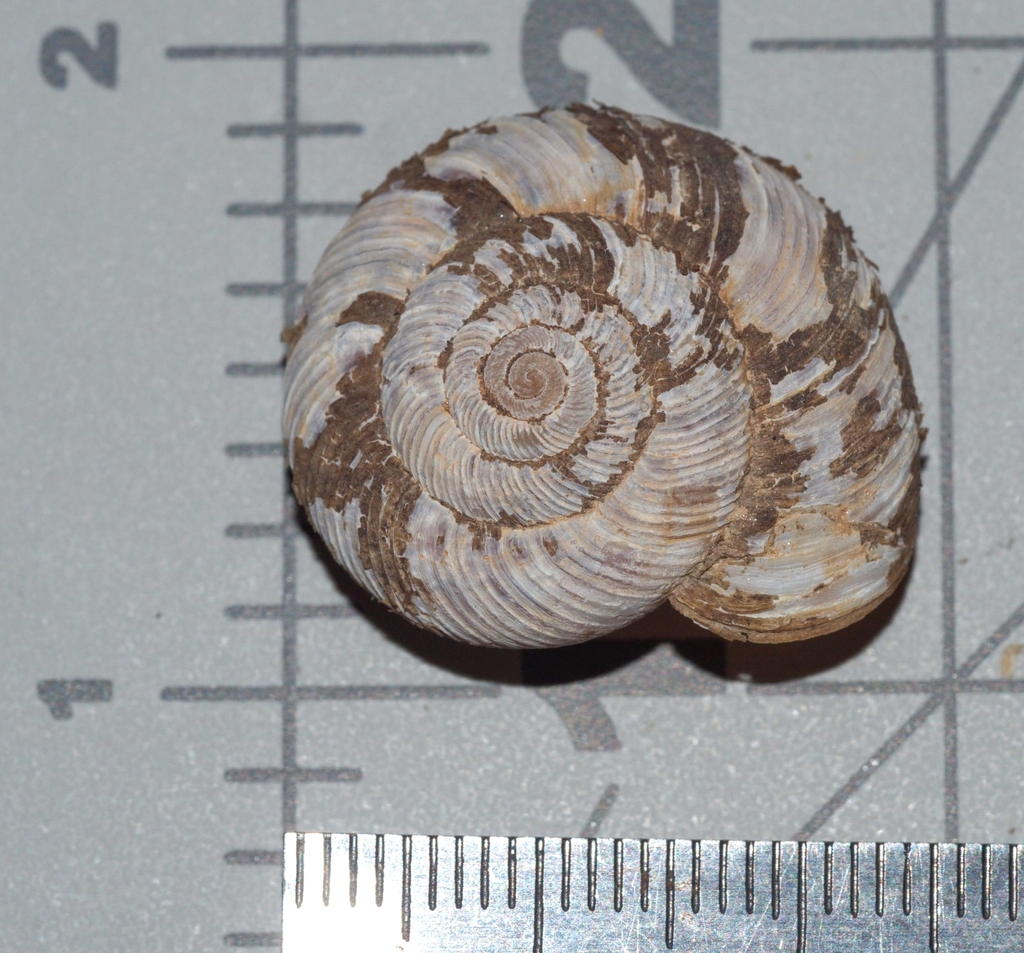
superior view of pine mountain tigersnail, measuring approximately one inch wide
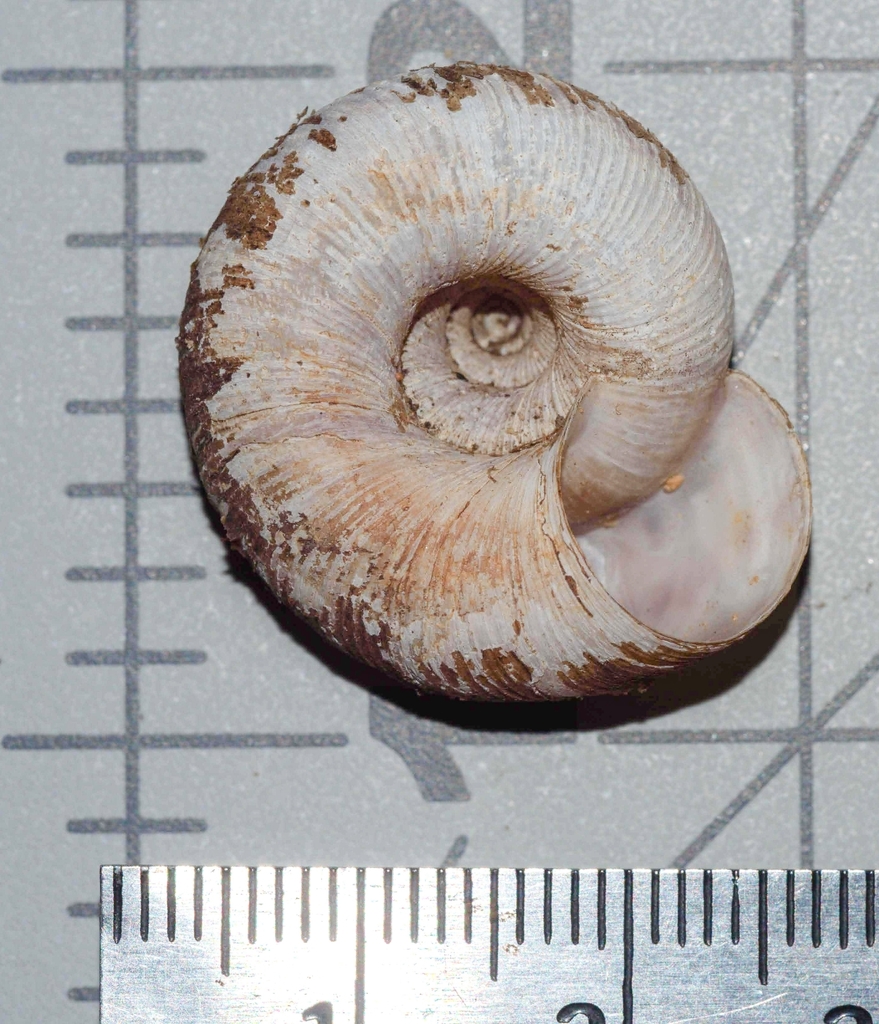
inferior view of shell where aperture measures approx. 1 cm wide
profile view of shell featuring aperture and distinct growth ridges in shell

Image Usage Information

  • Tina Marie Camp Scheff
  • CC BY-NC 4.0 DEED
  • Additional information about this specimen

Family: Discidae

Common name: Pine Mountain Tigersnail

Discovery: Hubricht, 1938

Identification

Width: 21-30 mm
Height: 12.5-16.4 mm
Whorls: 5.5-6.0

The shell of Anguispira rugoderma is a depressed heliciform, with an open umbilicus and a ridged sculpture. There are dark brownish irregular spots in a radial pattern. The shell is very much like A. alternata, but tends to be larger, has a wider umbilicus, and less-prominent markings. With magnification, strong growth wrinkles can be seen in addition to the ridge pattern.

Ecology

Anguispira rugoderma is found near rotten logs, in old growth or mature second growth tuliptree (Dourson, 2010).

Taxonomy

This animal was submerged within A. alternata knoxensis by Pilsbry (1948), but is now recognized as distinct (Hubricht, 1968).

Distribution

This animal is found only in four counties in southeastern Kentucky (Hubricht, 1985; Dourson, 2010), where it is listed as Endangered. Although it is not reported from Virginia, it may be found in the southwest bordering Kentucky. The type locality for A. rugoderma is on Pine Mountain, a part of which forms a segment of the Kentucky-Virginia line.

Conservation

NatureServe Global Rank: G2

Author: Ken Hotopp
Publication date: 11/2013

sidebar

About

  • Mission & Commitments
  • Directors Team
  • Museum History

Get Involved

  • Volunteer
  • Membership
  • Carnegie Discoverers
  • Donate
  • Employment
  • Events

Bring a Group

  • Groups of 10 or More
  • Birthday Parties at the Museum
  • Field Trips

Powdermill

  • Powdermill Nature Reserve
  • Powdermill Field Trips
  • Powdermill Staff
  • Research at Powdermill

More Information

  • Image Permission Requests
  • Science Stories
  • Accessibility
  • Shopping Cart
  • Contact
  • Visitor Policies
One of the Four Carnegie Museums | © Carnegie Institute | Privacy Policy | Terms of Use | Accessibility
Rad works here logo
