• Skip to primary navigation
  • Skip to main content
  • Skip to primary sidebar

Carnegie Museum of Natural History

One of the Four Carnegie Museums of Pittsburgh

  • Visit
    • Buy Tickets
    • Visitor Information
    • Exhibitions
    • Events
    • Dining at the Museum
    • Celebrate at the Museum
    • Powdermill Nature Reserve
    • Event Venue Rental
  • Learn
    • Field Trips
    • Educator Information
    • Programs at the Museum
    • Bring the Museum to You
    • Guided Programs FAQ
    • Programs Online
    • Climate and Rural Systems Partnership
  • Research
    • Scientific Sections
    • Science Stories
    • Science Videos
    • Senior Science & Research Staff
    • Museum Library
    • Science Seminars
    • Scientific Publications
    • Specimen and Artifact Identification
  • About
    • Mission & Commitments
    • Directors Team
    • Museum History
  • Tickets
  • Give
  • Shop

Anguispira strongylodes

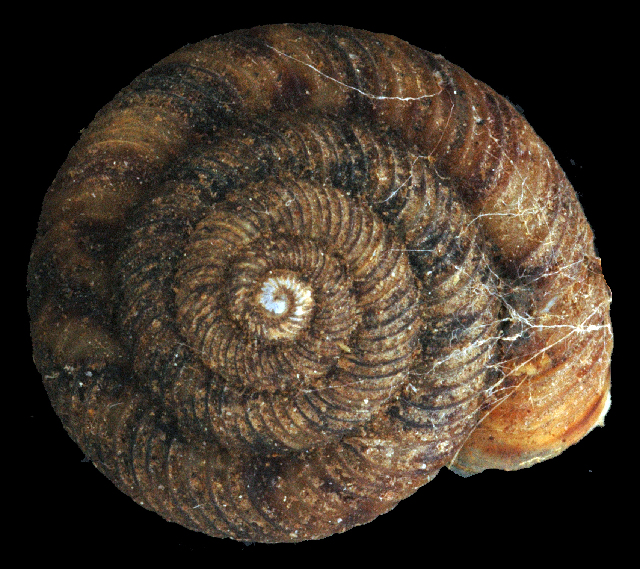
superior view of southeastern disk shell, showing strong radial ridges across all 5 whorls
profile view of snail showing the foot fringe
  • John Slapcinsky, Florida Museum of Natural History
  • CC BY-NC 3.0 DEED
  • Additional information about this specimen

Family: Discidae

Common name: Southeastern Disk

Discovery: Pfeiffer, 1854

Identification

Width: 18 mm
Height: 10 mm
Whorls: 5+  

The shell of Anguispira strongylodes has a low heliciform shape with a deep open umbilicus, a thin lip, and strong radial ridges. It is distinguished from A. alternata only by its reduced color pattern. Its chestnut-colored spots are smaller, and there are no radiating streaks.

Ecology

In Tennessee, Anguispira strongylodes has been found in close association with limestone and neutral soils, very steep slopes and high elevations, and late-successional forests, particularly oak-cedar forests (Coney et al, 1982).

Taxonomy

Recent work on the shells and genetics of Anguispira species shows a great deal of variation within the widespread A. alternata, A. jessica, and A. stronylodes, and color patterns may not be helpful in distinguising these species. There are also some unique individuals within A. alternata that suggest the possibility of a “hidden” cryptic species.

Synonyms for A. strongylodes are Anguispira alternata strongylodes, A. a. crassa, A. a. macneilli, A. crassa, A. macneilli, Helix strongyloides, and Pyramidula alternata rarinotata.

Distribution

This animal has been reported in 15 southeastern states, from east Texas to northern Florida, north to Illinois and Virginia.  The easternmost occurrence of this species in Virginia is a sub-fossil shell reported by Hubricht (1985) in Halifax County (not shown on range map).

Conservation

NatureServe Global Rank: G5

Author: Ken Hotopp, Meegan Winslow
Publication date: 8/2012, updated by Ken 2/2018

sidebar

About

  • Mission & Commitments
  • Directors Team
  • Museum History

Get Involved

  • Volunteer
  • Membership
  • Carnegie Discoverers
  • Donate
  • Employment
  • Events

Bring a Group

  • Groups of 10 or More
  • Birthday Parties at the Museum
  • Field Trips

Powdermill

  • Powdermill Nature Reserve
  • Powdermill Field Trips
  • Powdermill Staff
  • Research at Powdermill

More Information

  • Image Permission Requests
  • Science Stories
  • Accessibility
  • Shopping Cart
  • Contact
  • Visitor Policies
One of the Four Carnegie Museums | © Carnegie Institute | Privacy Policy | Terms of Use | Accessibility
Rad works here logo