Image Usage Information
Family: Ellobiidae
Common name: Ice Thorn
Discovery: I. Lea, 1842
Identification
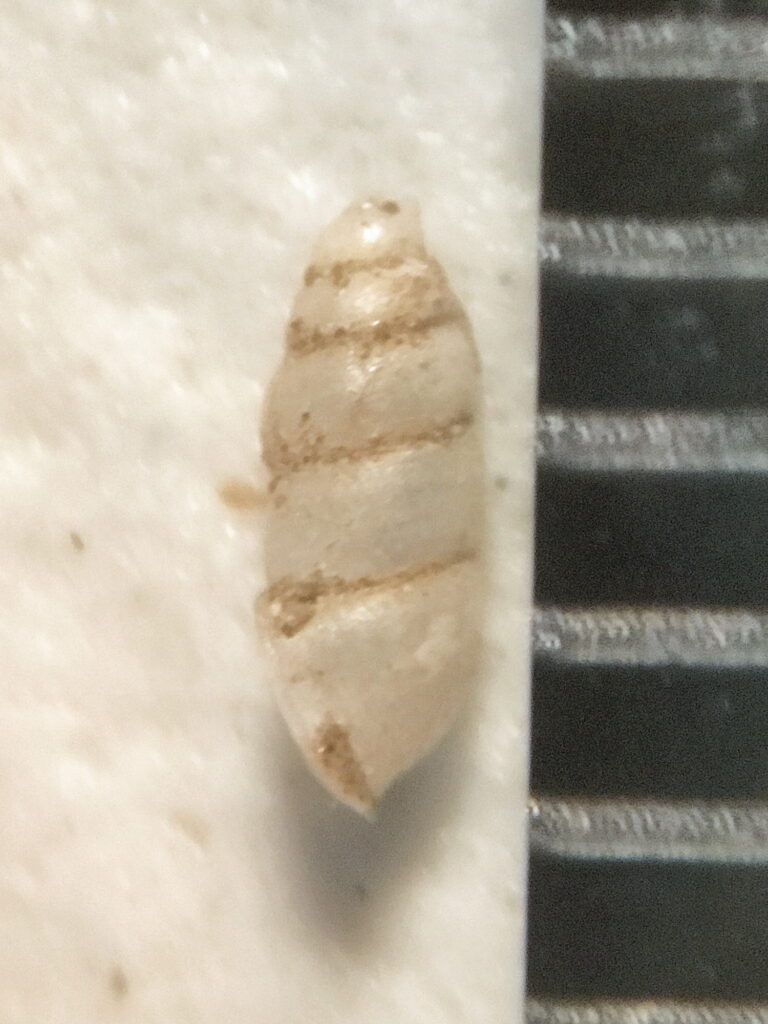
Width: 0.6-0.8 mm
Height: 1.7-2.2 mm
Whorls: 5+
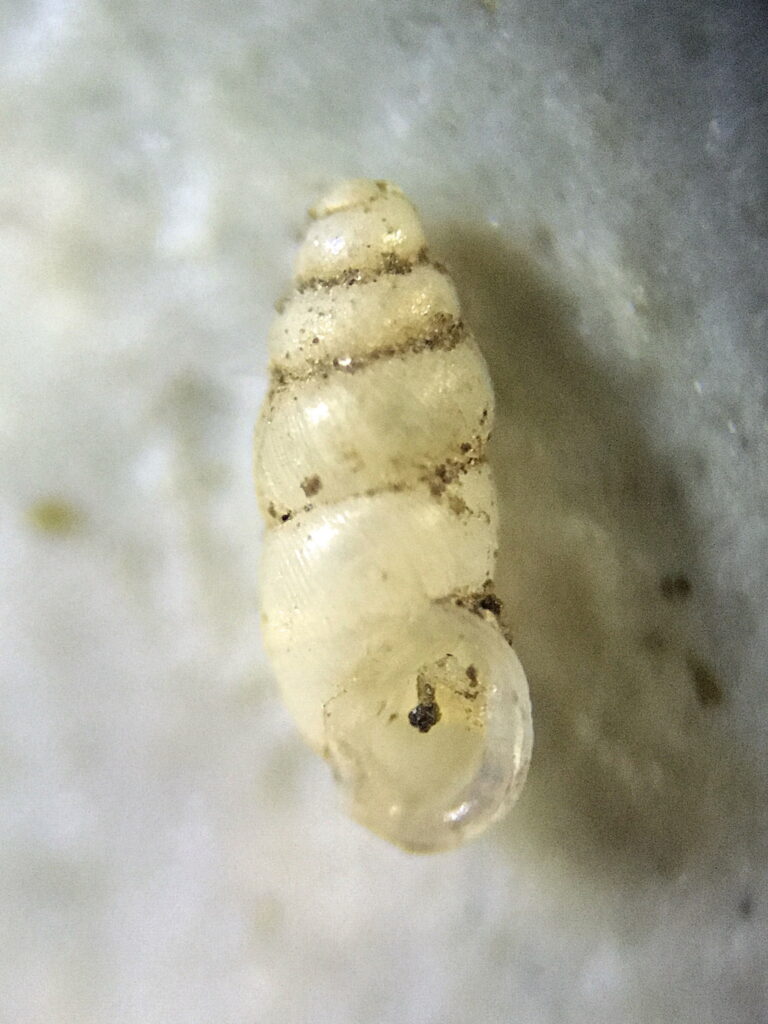
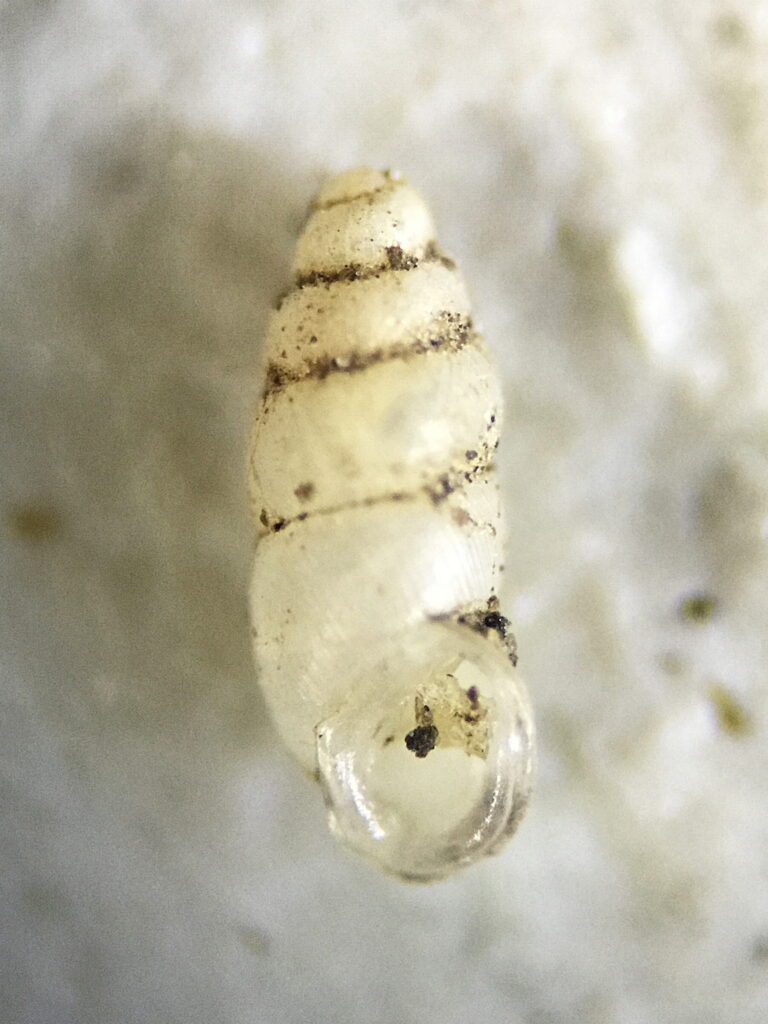
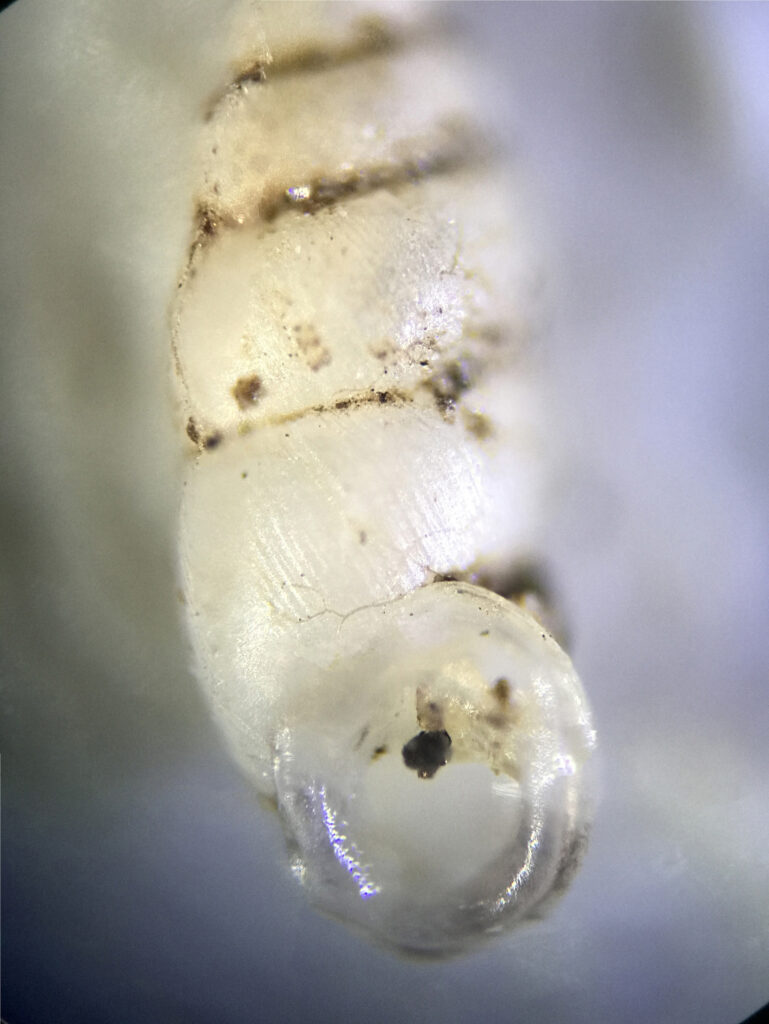
This shell is sculptured with close, regular, rounded radial ridges that are especially distinct on the final two whorls. These ridges may be less distinct on older specimens. Its very similar congener Carychium clappi has sharp-edged, flat-topped ridges (J. Nekola, pers obs). Carychium exile is taller than C. exiguum and tapers more gradually towards the summit. Carychium exile has a convex body whorl. The outer lip is vertical, aligning the reflected aperture with the overall angle of the shell. The aperture is thickened within, and a small lamella that continues farther into the shell can be seen on the parietal wall.
Ecology
Like C. clappi and C. nannodes, this snail can be found on wooded slopes and talus, buried in deep piles of leaves and in pits left by the roots of fallen trees. Individuals are often found sandwiched in the biofilm between two leaves. In Tennessee, C. exile was significantly associated with a number of habitat factors, including soil moisture, leaf litter, neutral soils on limestone, very steep slopes, and late stages of forest succession (Coney at al., 1982). It is rarely found with C. clappi or C. nannodes (Hubricht 1985).
Taxonomy
No synonyms are known for this species.
Distribution
Though patchy in occurrence, this snail is widespread throughout the Eastern and Midwestern United States and Canadian provinces, as far west as the Dakotas, north to Quebec, and south to Mississippi. In Virginia it is reported from counties throughout the western part of the state. Some older records of this species in the Mid-Atlantic may be examples of the more recently-described C. clappi.
Conservation
NatureServe Global Rank: G5, secure
